

Reported by: Oahimire Omone Precious | Edited by: Oravbiere Osayomore Promise.
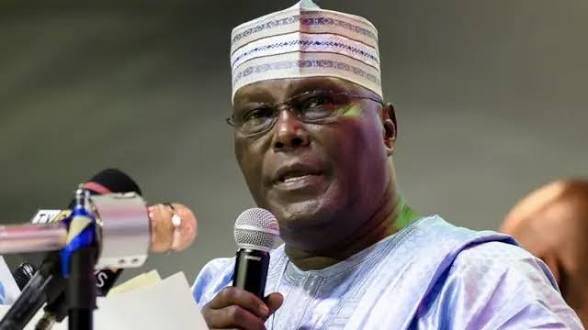
Former Vice‑President and African Democratic Congress (ADC) presidential candidate, Atiku Abubakar, has called for a comprehensive, transparent and independent investigation into the unauthorised disclosure of Nollywood actor Emeka Ike’s voter registration details by Lere Olayinka, media aide to the Minister of the Federal Capital Territory, Nyesom Wike. In a statement on Tuesday, 2 June 2026, Atiku warned that the leak, which originated from a restricted Independent National Electoral Commission (INEC) administrative portal, has placed the credibility of the 2027 general election under serious threat.
The controversy erupted on 30 May 2026, when Olayinka posted screenshots on X showing details of Ike’s voter registration transfer from Imo State to the FCT, which took place on 15 May. The post questioned the actor’s eligibility to contest a House of Representatives seat in Abuja. The images, which included Ike’s application number, registration centre, Voter Identification Number, profile picture, name and date of application, appeared to come from INEC’s restricted administrative backend. The publication sparked outrage, with many Nigerians accusing Olayinka of unauthorised access to a password‑protected system reserved for INEC officials.
In a press statement on 2 June, INEC confirmed it had launched a thorough investigation. The commission disclosed that preliminary findings from its audit trail indicated no external hacking or breach of its broader voter database, which holds records of over 90 million registered voters. Instead, the information was accessed through valid user credentials assigned to personnel participating in the ongoing Continuous Voter Registration (CVR) exercise, but was subsequently released without authority. INEC said it had identified the specific user account involved and questioned relevant personnel. It also announced that the Department of State Services (DSS) had independently commenced a parallel investigation.
Reacting to INEC’s admission, Atiku, through his Senior Special Assistant on Public Communication, Phrank Shaibu, demanded answers to what he described as “more troubling questions” about internal controls and possible political interference. “INEC’s statement has moved this issue beyond conjecture. The Commission has now confirmed that voter information was accessed through credentials assigned to personnel participating in the ongoing CVR exercise and that such information was released without authority. That admission alone should concern every Nigerian,” Atiku said.
The former vice‑president argued that the absence of an external hack did not diminish the gravity of the incident but deepened concerns over institutional safeguards. “What makes this entire episode impossible to ignore is that the information in question did not emerge from a whistleblower, an investigative journalist, or an anti‑corruption agency. It was publicly released by Lere Olayinka, spokesman to the Minister of the Federal Capital Territory, Nyesom Wike,” he noted.
Atiku then drew a direct link between the leak and Wike’s recent political pronouncements. “Only days before this controversy erupted, Minister Wike publicly declared with remarkable certainty that Atiku Abubakar would not secure up to ten per cent of the votes in Rivers State in the 2027 presidential election. It was an astonishing claim. Not because politicians are forbidden from making predictions, but because of the confidence, precision, and finality with which it was delivered.” He questioned whether that confidence was mere political theatre or evidence that certain political actors believe they enjoy privileged access to institutions that the constitution requires to remain neutral.
The former vice‑president demanded a complete “chain of custody” of the accessed information: who retrieved it, who requested it, who received it, and how it left INEC’s custody. He insisted that the episode had become a direct test of whether Nigeria’s electoral institutions are genuinely insulated from partisan influence. “The credibility of the 2027 election will not be determined solely on election day. It is being shaped right now by the willingness of institutions to demonstrate transparency, accountability, and independence. Nigeria cannot afford a situation where confidence in electoral institutions is weakened before campaigns have even properly commenced,” he said.
While welcoming the DSS’s independent investigation, Atiku made clear that Nigerians would hold it to an exacting standard, and that identifying a user account was only a beginning, not an end. Meanwhile, Emeka Ike, who has described Olayinka’s action as “the height of political rascality”, has threatened legal action against the FCT minister’s aide. Speaking on Channels Television’s Morning Brief, Ike said: “He is telling every Nigerian that whoever you are, I can pull your information from anywhere and I can do what I want. Actions are ready, I’m ready to take him on.”
As of 3 June 2026, Olayinka had not deleted the post, and the DSS and INEC investigations were ongoing. The episode has intensified debate over data privacy, internal security at INEC, and the extent to which political actors might exploit access to electoral information, casting a long shadow over preparations for the 2027 general elections.
📩 Stone Reporters News | 🌍 stonereportersnews.com
✉️ info@stonereportersnews.com
📘 Facebook: Stone Reporters News
🐦 X (Twitter): @StoneReportNew
📸 Instagram: @stonereportersnews
Add comment
Comments