

Published by Oravbiere Osayomore Promise.
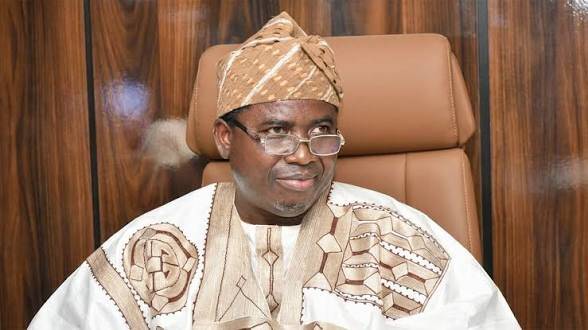
ABUJA, Nigeria – The Independent National Electoral Commission has dealt a firm blow to political parties hoping to conduct primaries outside the approved timeline, declaring that any primary election held after the May 30 deadline is automatically invalid unless a higher court rules otherwise. The announcement, made on June 5, 2026, by INEC National Commissioner Mohammed Kudu Haruna, comes amid a heated legal dispute over the commission’s authority to set deadlines for party primaries ahead of the 2027 general elections.
The commission had originally scheduled the conduct of party primaries from April 23 to May 30, 2026, as part of its revised timetable for the 2027 polls. That window has now closed, and INEC is enforcing it strictly. “Obviously, for now, any primary held outside INEC’s May 30 deadline will be invalid unless the Court of Appeal overturns the Federal High Court judgment in INEC’s appeal,” Haruna said in a chat with The Punch. “In other words, for now, the political parties are better advised to be guided by the existing Act.”
The warning follows a ruling by Justice Mohammed Umar of the Federal High Court in Abuja, who on May 21, 2026, nullified aspects of INEC’s electoral guidelines. Delivering judgment in a suit filed by the Youth Party, Justice Umar held that INEC could not lawfully shorten timelines already provided under Section 29(1) of the Electoral Act 2026. The court ruled that the commission lacked statutory power to impose restrictive timeframes for primaries, candidate nominations, and submission of membership registers. “INEC cannot lawfully abridge or limit that statutory period by prescribing a shorter timeframe in its 2027 election timetable,” the judge held.
INEC swiftly appealed the decision on May 25, filing nine grounds of appeal before the Abuja Division of the Court of Appeal. The commission, through its legal team led by Chief Alex Izinyon, a Senior Advocate of Nigeria, also sought a stay of execution of the trial court’s judgment. In its appeal, INEC argued that the trial court erred by failing to pronounce on the jurisdictional issue of the suit being hypothetical and academic. The commission maintained that its timetable was issued in line with its constitutional and statutory responsibilities. Less than 24 hours after INEC filed its appeal, another Federal High Court judge, Justice James Omotosho, affirmed INEC’s constitutional authority to issue and alter election timetables, though he stressed that such powers must be exercised within the limits set by the Electoral Act.
The legal confusion has thrown political parties into disarray. Many parties had scrambled to conduct primaries before the May 30 cutoff, while others delayed, hoping the court ruling would force INEC to extend the window. The National Democratic Coalition, still embroiled in internal disputes over delayed primary results, now faces the prospect of having its candidates locked out of the ballot if party chapters failed to complete valid exercises before the deadline. Other parties, including the African Democratic Congress, have ordered rerun primaries in several constituencies after appeals committees uncovered irregularities such as omission of aspirants from ballot papers and insufficient evidence that voting took place.
Reactions from legal experts have been mixed. Senior Advocate of Nigeria Magaji Mato described the Federal High Court judgment as a reaffirmation of constitutional supremacy over administrative discretion, arguing that the ruling is binding on INEC and all political actors. Another SAN, Dayo Akinlaja, said any regulations made against the provisions of the law are bound to be nullified by the courts. Meanwhile, figures including former Presidential Advisory Committee Against Corruption chairman Itse Sagay and ADC founder Chekwas Okorie have urged INEC not to appeal the judgment, warning that doing so could deepen public distrust in the electoral process.
The stakes are high. The 2027 general election calendar has already been significantly reshaped. Following the repeal of the Electoral Act 2022 and the enactment of the Electoral Act 2026, INEC shifted the presidential and National Assembly elections from February 20, 2027, to January 16, 2027. Governorship and state assembly elections will now hold on February 6, 2027. The revised timetable, signed by INEC Chairman Professor Joash Amupitan, set the primary window from April 23 to May 30, 2026, with campaigns for presidential and National Assembly polls beginning on August 19, 2026.
Political parties that conducted primaries after May 30 now face an uncertain future. INEC has warned that any attempt to submit candidates from such exercises will be rejected. The commission has also tightened its nomination portal, making it impossible for parties to upload candidate lists generated from primaries held outside the approved timeline. This has forced several parties to rush their legal teams to verify the exact timestamps of their nomination paperwork. Incumbent lawmakers who recently defected from the ruling All Progressives Congress to opposition parties in hopes of securing alternative tickets after losing their primaries are particularly vulnerable.
For now, the Court of Appeal holds the key. If INEC wins its appeal, the May 30 deadline will stand, and all primaries conducted after that date will remain invalid. But if the appellate court upholds Justice Umar’s ruling, INEC may be forced to reopen the primary window, triggering a fresh round of political maneuvering just months before the 2027 elections. Until then, Haruna’s message to political parties is clear: comply with the existing Act and the deadlines it contains. The commission has shown no willingness to grant extensions or make exceptions. As Nigeria inches closer to the 2027 polls, the battle over party primaries has become the first major test of the country’s electoral resilience under the new legal framework.
📩 Stone Reporters News | 🌍 stonereportersnews.com ✉️ info@stonereportersnews.com | 📘 Facebook: Stone Reporters News | 🐦 X (Twitter): @StoneReportNew | 📸 Instagram: @stonereportersnews
Add comment
Comments