

Reported by: Ijeoma G | Edited by: Gabriel Osa
ABUJA, Nigeria — June 5, 2026 — The Centre for Legislative Accountability and Democratic Integrity (CLADI), a civil society organisation, has petitioned the Department of State Services (DSS) to investigate allegations that members of Nigeria’s House of Representatives received financial inducements in connection with the contest for the position of Minority Leader.
The petition, dated June 5 and signed by CLADI’s National President, Dr. Usman Ibrahim Abdullahi, and National Secretary, Barrister Chika Nwafor, calls for an urgent probe into claims that some opposition lawmakers were allegedly offered as much as $50,000 each to support a preferred candidate for the leadership position. The organisation argued that the allegations, if proven, would constitute a serious threat to the integrity of the National Assembly and Nigeria’s democratic institutions.
The controversy follows the race to replace former Minority Leader, Kingsley Chinda, who recently vacated the position after leaving the opposition caucus. Attention has since focused on Ikenga Ugochinyere, who emerged as the preferred candidate of a majority of opposition lawmakers seeking to fill the vacancy.
According to CLADI, widespread reports alleging financial inducement have raised concerns that demand investigation by security and anti-corruption agencies. The group urged the DSS to determine whether money exchanged hands during consultations and endorsement processes leading to the selection of candidates for minority leadership positions. It also called for scrutiny of relevant financial records, communications and other materials that could help establish the facts.
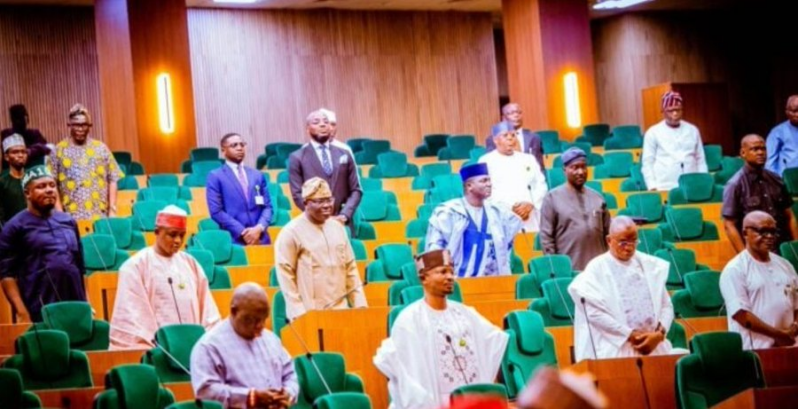
The petition comes amid an already tense dispute within the House of Representatives over the minority leadership contest. During plenary on June 4, Deputy House Spokesperson Philip Agbese alleged that his signature had been forged on a document circulated as evidence of support for Ugochinyere’s candidacy. Agbese told lawmakers that he never signed any endorsement document and denied reports that he or other lawmakers received financial incentives in exchange for their support.
The allegation triggered a heated exchange on the floor of the House. Ugochinyere rejected the forgery claim and insisted that the endorsement process was legitimate. He maintained that Agbese had personally signed the nomination document and promised to provide evidence and witnesses to support his position. The disagreement escalated into a rowdy session before Speaker Abbas Tajudeen intervened and called lawmakers to order.
Further developments emerged when members of the minority caucus publicly defended the endorsement process. A group of lawmakers backing Ugochinyere denied any forgery and stated that the signatures were genuine. They said that 61 members of the minority caucus voluntarily endorsed his nomination for Minority Leader.
The dispute intensified after the caucus released what it described as video evidence allegedly showing Agbese signing the nomination document. Supporters of Ugochinyere argued that the footage disproved claims of forgery and demonstrated that the endorsements were made willingly. Agbese, however, continued to question the circumstances surrounding the use of his signature and called for a formal investigation into the matter.
CLADI said the allegations surrounding both the endorsement process and the reported financial inducements have the potential to undermine public confidence in the legislature if not properly addressed. The organisation stressed that leadership positions in democratic institutions should emerge through transparent consensus and established parliamentary procedures rather than through monetary influence.
The group further urged the DSS to identify and prosecute any individuals found culpable, regardless of political affiliation or status. It warned that failure to investigate the allegations could create a dangerous precedent in which parliamentary leadership positions become vulnerable to financial manipulation.
As of Friday, neither the DSS nor anti-corruption agencies had publicly announced the commencement of an investigation. The House leadership has also not issued a formal determination on the allegations raised during plenary. Speaker Abbas previously indicated that the matter would be addressed through appropriate channels while discussions among minority caucus members continue.
The unfolding controversy highlights growing divisions within the opposition bloc in the House of Representatives at a time when lawmakers are seeking to reorganise their leadership structure. Whether the allegations of bribery and forgery are substantiated remains to be determined, but the dispute has already generated significant attention and renewed calls for transparency in the selection of principal officers within Nigeria’s legislature.
📩 Stone Reporters News | 🌍 stonereportersnews.com
✉️ info@stonereportersnews.com | 📘 Facebook: Stone Reporters News | 🐦 X (Twitter): @StoneReportNew | 📸 Instagram: @stonereportersnews
Add comment
Comments