

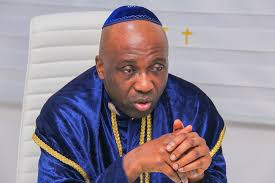
Public commentary attributed to Nigerian cleric Primate Elijah Ayodele has generated widespread attention after remarks circulating online appeared to criticise Nigeria’s First Lady, Senator Oluremi Tinubu, over her public engagements and response to security concerns involving schoolchildren in Oyo State. The comments, which have not been independently verified in full, have been shared across social media platforms and political discussion forums, prompting debate over their context, accuracy, and intent.
According to the circulating statements, Primate Ayodele is alleged to have drawn a comparison between recent actions by the First Lady, represented here by Oluremi Tinubu, and the public posture adopted by former Nigerian First Lady Patience Jonathan during the 2014 Chibok kidnappings crisis. In the remarks, he reportedly suggested that symbolic public protest or heightened visibility would have been more appropriate in response to ongoing insecurity concerns affecting students. These assertions have not been corroborated by official transcripts or primary recordings released by his ministry or affiliated organisations.
Security incidents involving schoolchildren in Nigeria, particularly in the northern and southwestern regions, have remained a persistent national concern over the past decade, with repeated calls from civil society groups for stronger preventive measures and improved intelligence coordination. The specific reference to Oyo State in the circulated remarks relates to earlier reports of kidnappings in the region, though details of the incident cited in the viral quote remain unclear and unverified in the absence of official confirmation. Authorities in Oyo State and federal agencies have, in other contexts, urged caution regarding the spread of unverified claims that may inflame public sentiment or distort ongoing investigations.
The remarks have triggered mixed reactions across Nigeria’s political and religious landscape. Supporters of the cleric argue that his comments reflect frustration over persistent insecurity and perceived gaps in governmental communication with affected communities. Critics, however, contend that the statements risk politicising sensitive security matters and unfairly targeting individuals based on partisan interpretations. Political analysts note that such exchanges often intensify during election cycles, particularly when public figures comment on governance and humanitarian issues, though they caution against drawing conclusions about electoral outcomes from isolated statements circulating online without verified sourcing.
In recent years, Oluremi Tinubu, who serves as Nigeria’s First Lady and represents Lagos Central in the Senate prior to her current role, has maintained visibility through social welfare initiatives, empowerment programmes, and public engagements targeting women and youth development. Her office has often emphasised humanitarian outreach, including distribution of resources to various groups, which supporters describe as part of broader national development efforts. At the same time, public scrutiny of the activities of high-profile political figures in Nigeria remains intense, particularly where security concerns intersect with governance narratives. The circulating remarks have therefore been interpreted through divergent political lenses, reflecting broader tensions in public discourse.
Weeks of online circulation surrounding the remarks have also highlighted the speed at which politically sensitive statements travel across Nigerian social media ecosystems, where short clips and selectively edited quotations often gain traction before verification is possible. Fact-checking organisations operating in West Africa have repeatedly warned that misattributed or decontextualised quotes attributed to public figures can distort public understanding of governance debates, especially when they involve high-profile religious leaders or political officeholders. In this case, the absence of an officially released transcript or verified recording from the ministry associated with Primate Ayodele complicates efforts to confirm the exact wording, context, or intended audience of the remarks that have been widely shared. Nevertheless, the public reaction underscores broader sensitivities in Nigeria regarding the role of public officials and their families in addressing insecurity, particularly in regions affected by repeated incidents of abductions and communal violence.
Political commentators note that statements made by influential religious leaders often carry significant weight in shaping public discourse, even when such statements are contested or later clarified. Government officials have in past instances urged restraint in the dissemination of unverified claims, emphasising the importance of relying on confirmed information during sensitive national security discussions. While the remarks continue to circulate widely, there has been no independently confirmed statement from Oluremi Tinubu or her office addressing the specific allegations contained within the quoted message. Similarly, no verified public response has been issued by Primate Ayodele’s ministry clarifying whether the remarks were taken from a sermon, interview, or informal public address.
The broader political environment in Nigeria ahead of future electoral cycles continues to amplify scrutiny of both government officials and influential religious voices, particularly when commentary intersects with governance and security challenges. Analysts observing the media landscape also point to the role of digital platforms in accelerating the spread of politically charged narratives, where context is frequently lost in rapid sharing and reposting. In such environments, distinguishing between verified statements and commentary that has been altered or paraphrased becomes increasingly difficult for the general public. Observers of Nigerian political communication trends stress that clarity from official sources remains essential in preventing misunderstandings that may escalate into broader public controversy. The present controversy, while widely discussed, remains subject to verification, and its final interpretation depends on authoritative confirmation that has not yet been publicly released. As discussions continue across media platforms, the incident reflects the broader challenge of managing information flow in a highly polarised digital environment where political, religious, and security narratives frequently intersect. Public institutions and commentators alike continue to emphasise the need for restraint, verification, and context when interpreting statements attributed to prominent figures, particularly in sensitive national conversations. In the absence of confirmed audio, video, or official documentation, the remarks remain part of an ongoing information dispute rather than an established factual record. Until such verification emerges, the statements circulating online should be treated as unverified claims subject to revision as new evidence becomes available. This approach aligns with standard journalistic practice in handling politically sensitive material that has not been conclusively authenticated by primary sources. The discussion is expected to continue in public forums, reflecting ongoing debates about accountability, communication, and leadership expectations in Nigeria’s political landscape. Verification remains ongoing across credible institutions.
📩 Stone Reporters News | 🌍 stonereportersnews.com
✉️ info@stonereportersnews.com | 📘 Facebook: Stone Reporters News | 🐦 X (Twitter): @StoneReportNew | 📸 Instagram: @stonereportersnews
Add comment
Comments