

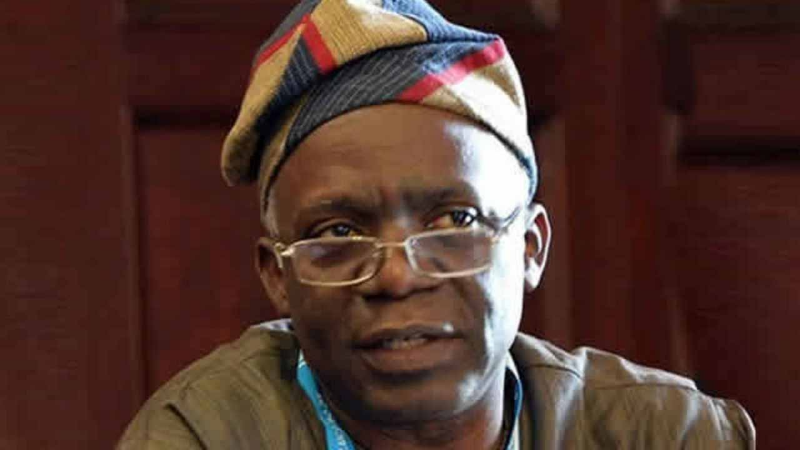
Human rights lawyer and Senior Advocate of Nigeria (SAN), Femi Falana, has accused state governors of abandoning their constitutional responsibilities in the management and oversight structure of the Nigeria Police Force, arguing that the current security framework has been weakened by institutional neglect.
Falana made the remarks during a live interview on Channels Television on Friday, June 6, 2026, while discussing renewed national debates over the possible creation of state police in Nigeria. He argued that contrary to widespread public perception, Nigeria does not operate a purely federal police system but a federation-based policing structure that constitutionally involves both federal and state authorities.
According to Falana, the Nigeria Police Force is designed under the constitution to be supervised through the Nigerian Police Council, a body that includes the President of the Federal Republic, the Inspector General of Police, the Chairman of the Police Service Commission, and all 36 state governors as members.
He stated that the council structure gives governors a formal role in policing oversight, but alleged that since the return to democratic rule in 1999, state governors have failed to actively participate in its operations. He described this as an abdication of constitutional responsibility that has contributed to inefficiencies in policing and broader security challenges across the country.
Falana also questioned the functioning of the Police Council itself, noting that it has not been consistently convened despite its constitutional importance. He argued that key decisions affecting the appointment and removal of senior police leadership are meant to pass through the council, but in practice, he said, the body has become largely inactive.
He further stated that the President cannot unilaterally appoint or remove the Inspector General of Police without the involvement of the council, but alleged that the institution is effectively bypassed due to its failure to meet regularly. He described the council as the only major security institution in Nigeria that does not function as constitutionally intended.
Falana maintained that this breakdown in governance has contributed to growing insecurity and has intensified calls for the establishment of state-controlled police structures as a potential solution to localized security challenges. He argued that the current system places excessive operational control at the federal level while sidelining constitutional mechanisms that should ensure shared responsibility.
The comments come amid ongoing national debate over policing reforms in Nigeria, with policymakers, legal experts, and civil society organizations divided on whether state police would improve security coordination or create additional risks related to political control of security forces.
Security issues remain a central concern in Nigeria, with various levels of government continuing to face pressure to address kidnapping, armed violence, and communal conflict in different regions. Discussions around restructuring policing arrangements have gained renewed attention in recent years as incidents of insecurity persist.
At the time of reporting, there has been no official response from the Presidency or the Nigeria Police Force addressing Falana’s specific remarks on the functionality of the Police Council or the alleged abdication of duties by state governors.
The debate over policing structure is expected to continue in legislative and policy circles as Nigeria explores possible reforms to its security architecture.
📩 Stone Reporters News | 🌍 stonereportersnews.com
✉️ info@stonereportersnews.com | 📘 Facebook: Stone Reporters News | 🐦 X (Twitter): @StoneReportNew | 📸 Instagram: @stonereportersnews
Add comment
Comments