

Reported by: Ijeoma G | Edited by: Oravbiere Osayomore Promise.
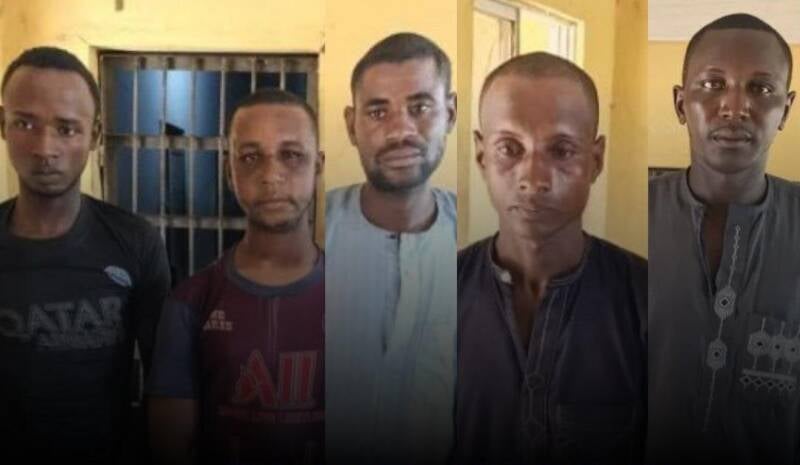
Troops of the Joint Task Force (JTF) Operation Savannah Shield have arrested five suspected bandit and terrorist informants in two separate intelligence‑driven operations in Niger State, recovering substantial cash amounts, mobile phones, an MP3 device laden with propaganda, and a photograph of a beheaded individual that security officials say suggests possible links to terrorist activities. The arrests, announced in a statement on Sunday, June 7, 2026, by the Acting Media Information Officer of the JTF North Central Headquarters, Captain Jamilu Yahaya, mark a significant blow to the support networks that enable armed banditry and terrorism to thrive across the North‑Central region.
In the first operation, troops on a routine fighting patrol along the Doro axis in Wawa, Borgu Local Government Area, apprehended three suspects on Saturday, June 6, 2026. Preliminary investigations reportedly revealed that the suspects were members of a bandit group operating in Duru, along the fringes of the Kainji Lake National Park – a vast conservation area straddling the border between Niger and Kwara States that has increasingly become a hideout for criminal elements fleeing security pressure in other zones. Items recovered from the three suspects included two Tecno keypad phones, one MP3 device, and a cash sum of ₦113,400.
The MP3 device proved particularly incriminating. According to military sources, it contained recorded propaganda and inciting messages, including a narration claiming responsibility for the abduction of an individual in Kaduna State and the collection of a ransom amounting to ₦60 million (₦60,000,000.00). The presence of such audio recordings raises the possibility that criminal groups are now systematically documenting their operations – perhaps for internal coordination, recruitment, or psychological warfare – a development that could provide intelligence analysts with valuable insights into their methods and networks. The suspects and recovered exhibits are currently in military custody for further investigation, while efforts are ongoing to track and apprehend other members of the criminal network.
In a separate operation, troops of the 221 Battalion under Operation Savannah Shield arrested two additional suspects during a routine patrol along the perimeter fence of a military cantonment. Investigations revealed that the suspects had allegedly been deployed as reconnaissance elements to gather intelligence on the military facility – essentially, spies tasked with monitoring troop movements, identifying vulnerabilities, and potentially facilitating future attacks on the base. A search of one suspect’s mobile phone uncovered a disturbing photograph showing a beheaded individual, dated May 2, 2026, which security officials said suggests possible links to terrorist activities. Items recovered from the second set of suspects included one Android mobile phone, one Tecno keypad phone, a motorcycle, and a cash sum of ₦86,100.
The two operations underscore a growing military focus on informants and intelligence networks, often described as the backbone of insurgencies and banditry. Without actionable intelligence on troop movements, security patrol timetables, and vulnerable community gatherings, armed groups operate at a significant disadvantage. By targeting informants, the military aims to blind criminal networks, forcing them to rely on riskier and less reliable methods of gathering information. Captain Yahaya underscored this strategic shift in his statement, noting that “the Task Force remains resolute in its mandate to deny criminal elements freedom of action and sustain pressure on all threats to peace and security within the region.”
Kainji Lake National Park, adjacent to the area where the first three suspects were operating, has long presented unique security challenges. Its dense vegetation, rugged terrain, and proximity to the border with the Republic of Benin make it an ideal refuge for bandits, kidnappers, and other criminal elements. Over the past two years, security sources have documented an increase in bandit activity around the park’s fringes, with criminal groups using the park as a staging ground for attacks on nearby communities and as a transit route for stolen goods and kidnapped victims. The arrests along the Doro axis represent a targeted effort to dismantle the support networks that enable these park‑adjacent criminal operations.
The arrests were not the only action in the region. Just days earlier, on June 4, troops of the 221 Battalion in collaboration with the Nigeria Immigration Service (NIS) arrested a suspected terrorist informant in Kara and Wawa communities of Borgu LGA, acting on intelligence about individuals allegedly linked to terrorist activities. That suspect, whose identity has not been made public, was said to have been on the security watchlist for some time. His capture suggests a sustained, multi‑agency intelligence operation targeting informant networks across Borgu LGA and beyond. The recovery of a phone containing a beheaded victim’s photograph, dated May 2, 2026, could potentially link the arrested suspects to specific acts of violence, providing evidence for future prosecution.
The cumulative effect of these operations is being felt across the region. Captain Yahaya said the successful operations reflect the military’s resolve to dismantle criminal support structures and that the task force remains resolute in denying criminal elements freedom of action and sustaining pressure on all threats to peace and security within the region. Local communities in Borgu and surrounding LGAs have long complained about the presence of informants who feed information to bandits, often relatives or neighbours whose betrayal goes undetected until an attack occurs. The public identification and arrest of informants therefore serves not only a tactical purpose but also a psychological one, potentially deterring others from collaborating with criminal groups.
Investigations are ongoing, and all five suspects remain in custody. The military has not disclosed whether any of the suspects have provided additional intelligence leading to further arrests, but sources familiar with the operations suggest that interrogations are already yielding actionable leads. The recovered cash, mobile phones, and audio recordings are being subjected to forensic analysis, which may uncover additional connections to other criminal cells operating across the North‑Central region.
The arrests also highlight the importance of community intelligence in combating insecurity. In recent weeks, residents of affected areas have been urged to report suspicious activities to security agencies, a request that has yielded tangible results. Captain Yahaya, in his statement, reiterated the task force’s commitment to aggressive patrols and intelligence‑driven operations aimed at strengthening security across affected communities. For the people of Borgu LGA, these arrests offer a glimmer of hope that the shadowy networks enabling violence are finally being targeted. But as long as banditry persists and informants remain willing to sell their neighbours’ security for profit, the fight is far from over.
📩 Stone Reporters News | 🌍 stonereportersnews.com ✉️ info@stonereportersnews.com | 📘 Facebook: Stone Reporters News | 🐦 X (Twitter): @StoneReportNew | 📸 Instagram: @stonereportersnews
Add comment
Comments