

Published by Oravbiere Osayomore Promise.
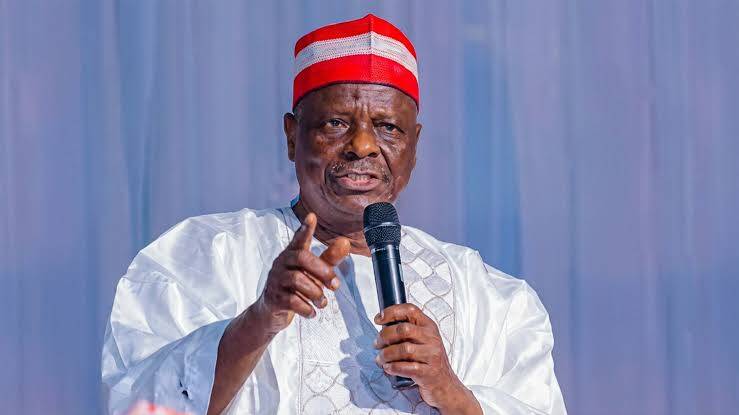
ABUJA, Nigeria – The vice‑presidential candidate of the Nigeria Democratic Congress (NDC), Senator Rabiu Musa Kwankwaso, has threatened to dump the party following the replacement of several candidates submitted by his Kwankwasiyya bloc in Kano State, a move that could shatter the fragile opposition alliance against President Bola Tinubu in the 2027 general election.
The crisis erupted after the Kano State leadership of the NDC altered the candidate list to enforce a 60‑40 power‑sharing formula between the Kwankwasiyya movement and the party’s original structure. A document signed by the Kano State NDC Chairman, Hon. Hussaini Isah Mairiga, confirmed that the adjustments were necessary to correct an alleged breach of the agreement governing the distribution of elective positions. The document was copied to NDC National Leader Senator Seriake Dickson, Kwankwaso himself, and the party’s North‑West Zonal Chairman, Alhaji Muhammadu Rabi’u Sabo Bakinzuwo. According to the agreement, the Kwankwasiyya bloc was entitled to 60 percent of party positions and electoral tickets, while the original NDC structure retained 40 percent.
The revised list approved new candidates for several federal constituencies, including Kumbotso, Nassarawa, Kano Municipal, Doguwa/Tudun Wada, Dawakin Tofa/Rimin Gado/Tofa, Sumaila/Takai, and Gwale. Adjustments were also made to State House of Assembly tickets in Dala, Tarauni, Kumbotso, Ungogo, and Dawakin Kudu. Party officials said the decision was triggered by concerns that the initial nominations did not adequately reflect the agreed balance between the two groups, threatening to spark a wider internal dispute if left unaddressed.
NDC spokesperson Comrade Ibrahim Waya defended the action, stating that the changes were necessary to preserve internal harmony and avoid an escalation of disagreements. “There was an understanding on the 60‑40 sharing formula between the party leadership and Senator Kwankwaso. The action was taken urgently to avoid a crisis within the party,” Waya said. Party officials also emphasised that the adjustments were aimed at implementing an agreement that Kwankwaso himself had accepted when he joined the NDC alongside Peter Obi from the African Democratic Congress in early May.
Behind the official language of power‑sharing, a bitter contest is unfolding. Senior NDC officials have accused Kwankwaso of attempting a hostile takeover of the party’s structure in Kano. The party’s North‑West Vice Chairman, Mohammed Rabiu Serina, and Kano State Chairman Hussaini Isa Mariga alleged that after Kwankwaso joined the NDC, he sought full control of its Kano machinery and excluded non‑Kwankwasiyya members from its nomination process. “All available nomination forms for the State House of Assembly, House of Representatives, Senate and governorship positions in Kano were reserved exclusively for Kwankwaso’s loyalists,” they said. They claimed that neither the state chairman nor other long‑standing party officials were given access to nomination forms. Serina said that repeated interventions by NDC National Leader Seriake Dickson and the National Working Committee failed to resolve the dispute, and that Dickson personally met Kwankwaso on two occasions to seek a compromise.
The ongoing tension marks the first major test of the coalition between Kwankwaso and Peter Obi since the NDC unveiled its presidential ticket on May 31, 2026. The alliance was widely seen as the most formidable opposition force ahead of the 2027 election, but the candidate replacement dispute has exposed deep institutional fault lines. According to multiple sources, Kwankwaso is considering withdrawing from the NDC if his original candidates are not reinstated. Such a departure would likely collapse the coalition, leaving the NDC without its most influential northern figure barely six months before the election. An NDC insider said: “The issue is not just about numbers, but about trust and respect for agreements reached by all stakeholders”.
The tension in Kano coincides with a growing wave of internal crises across the NDC in states including Imo and Anambra, where disputes over candidate selection have raised concerns about the party’s readiness for the 2027 election cycle. Meanwhile, members of the Kwankwasiyya camp have expressed growing frustration that their sacrifices for the party are being disregarded. At the same time, pioneer NDC members argue that they cannot be reduced to spectators in a structure they helped build.
As of the time of this report, neither Senator Kwankwaso nor the NDC national leadership had issued an official statement on the matter. For now, the candidate list stands. But the political silence is deceptive. Behind closed doors, a high‑stakes negotiation is underway to determine whether the Kwankwasiyya movement will remain inside the NDC or walk away. For a party that needed no further crises, the outcome will determine whether the NDC goes to the 2027 polls as a united force or as a cautionary tale of what happens when the music of political power‑sharing stops and not everyone is willing to sit down.
📩 Stone Reporters News | 🌍 stonereportersnews.com ✉️ info@stonereportersnews.com | 📘 Facebook: Stone Reporters News | 🐦 X (Twitter): @StoneReportNew | 📸 Instagram: @stonereportersnews
Add comment
Comments