

Reported by: Ijeoma G | Edited by: Oravbiere Osayomore Promise.
The NDC was officially registered by the Independent National Electoral Commission (INEC) on February 5, 2026, following a Federal High Court order. It was the 21st political party in Nigeria, born from the ashes of a 2017 application that had been tied up in legal battles for years. Shortly after its registration, the party executed a stunning political coup: it absorbed the political structures of former Labour Party candidate Peter Obi and former Kano State governor Rabiu Kwankwaso. In May 2026, the NDC unveiled its presidential ticket, with Obi at the top and Kwankwaso as his running mate. The alliance of the third- and fourth-place finishers from the 2023 election was immediately framed as the most credible opposition to President Bola Tinubu's re-election bid.
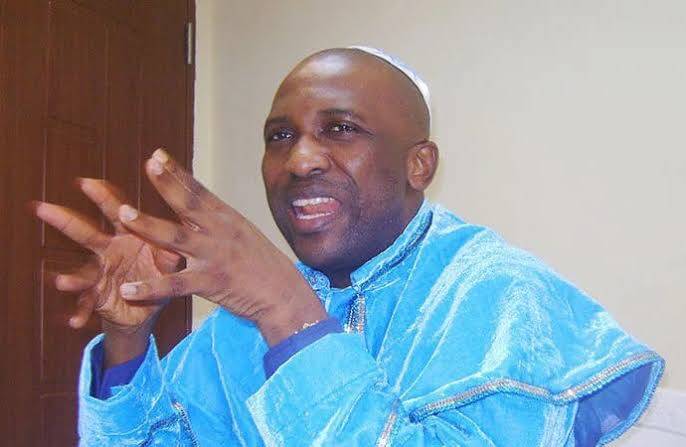
Primate Ayodele, known for his yearly prophecies delivered on over 146 pages, has consistently warned against the coalition. On June 5, he specifically warned that Kwankwaso "will negatively affect" Obi's presidential ambition, describing Obi as "too desperate and unable to see beyond what he wants." By June 9, his condemnation had broadened to the party itself. In a signed statement by his media aide, Osho Oluwatosin, the cleric stated: "NDC as a party can't really go far; it's a party of political errand boys." He alleged it was "a political set-up programmed to capture politicians."
While Ayodele spoke of a trap, the party has provided ample evidence of its own internal chaos. The most explosive dispute erupted in Kano State, where the NDC leadership rejected a list of candidates submitted by Kwankwaso's Kwankwasiyya movement. The party cited a pre-existing power-sharing formula that allocated 60% of tickets to the new entrants and 40% to founding members, arguing the list violated the agreement. The resulting crisis nearly saw Kwankwaso storm out of the coalition he had just joined, forcing the party’s national leader, Seriake Dickson, to host him in a tense, late-night meeting in Abuja to avert a total collapse.
The fissures in the party are not limited to Kano. In Obi’s political stronghold of Anambra State, the party’s primaries delivered a political earthquake, sweeping aside several established figures, including the reported defeat of incumbent Senator Victor Umeh. This outcome has placed Obi in a difficult position, forcing him to choose between upholding the grassroots verdict or accommodating powerful political allies. Political observers described the primaries as a “referendum on the credibility of the party’s internal democratic process.”
On a national scale, critics and rival parties have seized on the turmoil. An official of the All Democratic Alliance, Ahidjo Karlahi, has filed a suit at the Federal High Court in Abuja, seeking to revoke the NDC’s registration, alleging that the party failed to meet constitutional requirements. Party chieftains have also been accused of failing to release the results of primary elections more than ten days after they were conducted, raising serious questions about transparency.
As the cleric’s words echo in the political wilderness, the NDC finds itself trapped. It is trapped between the legal challenge to its existence and the internal struggle for control of its machinery. It is trapped between the grand ambition of its presidential ticket and the parochial factionalism of its state chapters. And as Primate Ayodele warned, politicians who "rushed themselves" into the party may soon discover that a coalition built on political convenience, without a genuine structural foundation, often collapses under the weight of its own contradictions. With the 2027 election approaching, the party’s key test is no longer just about defeating the incumbent, but about surviving itself.
📩 Stone Reporters News | 🌍 stonereportersnews.com ✉️ info@stonereportersnews.com | 📘 Facebook: Stone Reporters News | 🐦 X (Twitter): @StoneReportNew | 📸 Instagram: @stonereportersnews
Add comment
Comments