

Reported by: Ijeoma G | Edited by: Oravbiere Osayomore Promise.
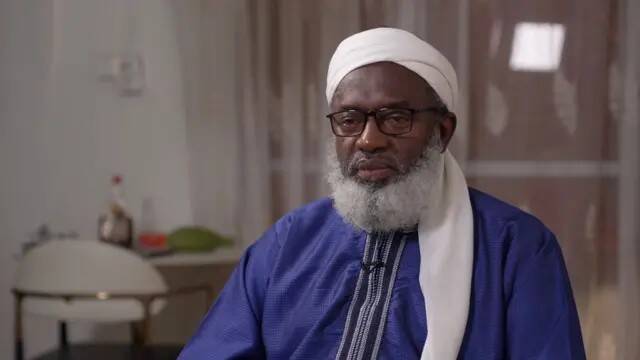
Controversial Islamic cleric Sheikh Ahmad Abubakar Gumi has dared his critics, declaring that no individual or group can stop him from travelling to any part of Nigeria, as he accused South‑West political actors of weaponising “Islamophobia” to link him to a dangerous conspiracy involving the Islamisation of Oyo State. The fiery statement, made in a Facebook post on Tuesday, comes amid a complex political storm that ties together a controversial November 2025 visit to Ibadan, a viral video from kidnapped schoolchildren, and a fierce battle over the narrative of mass abductions in the South‑West.
Sheikh Gumi was responding to lingering outrage over his appearance at the Southern Nigerian Ulama Summit at the University of Ibadan on November 19, 2025. Critics alleged that the prominent northern Muslim scholar was part of a sinister plot to “Islamise” the South‑West and impose northern religious ideologies on the region. Dismissing the allegations, Gumi said he was not invited by any individual or Muslim group from the South‑West. “I was in Ibadan not by the invitation of any SW Muslim individual or group, but as a representative of the Coalition of Northern Muslim Ulama,” he wrote. He attributed the backlash to a growing irrational fear of Islam, stating that he now fully understands how “Islamophobia is shaping politics in the South‑West”. The core of his defence was a blunt challenge to his accusers: “Can anybody stop me from going anywhere in Nigeria?”.
The fresh wave of criticism against the cleric coincided with a harrowing development in the ongoing hostage crisis in Oyo State. On May 15, armed bandits attacked three schools in the Oriire Local Government Area, abducting about 45 children, teachers, and a school principal. As the nation agonised, a flurry of unverified social media reports claimed that the abductors had made bizarre political demands, including the immediate implementation of Sharia law in the South‑West state, the payment of a ₦1 billion ransom, and the supply of two Toyota Hilux vehicles.
In a dramatic and chilling intervention, one of the abducted victims, school principal Mrs. Rachael Alamu, spoke from captivity in a viral video on Monday, June 8. While terrorists flanked her, she appeared to debunk the Sharia law rumours, directly contradicting the reports that had dominated headlines. “They are not asking for Sharia law; they are not asking for weapons; they are not asking for money,” she stated in the video, adding that the abductors’ true demand remains the release of some of their associates currently held in government custody. “Please, don’t play politics with our lives,” she pleaded.
Seizing on this development, Gumi argued that the false Sharia reports were a deliberate attempt to smear him and northern Muslims. He claimed that the narrative was fabricated by “dirty local politics” to fuel ethnic and religious divisions. His position was bolstered by the Muslim Rights Concern (MURIC), which described the Sharia demand reports as “a lie from the pit of Jahannam (hell)”, inserted by enemies of Islam to tarnish the faith.
The controversy exposes the deep schism between Nigeria’s northern and southern regions. Sheikh Gumi has been a polarising figure for years, often drawing the ire of security officials and the public for his controversial role as a negotiator with armed bandits. His frequent visits to forest hideouts and advocacy for amnesty have long fuelled suspicions in the South that the crisis is being managed for political gain, rather than being decisively crushed.
As the nation prepares for the 2027 general elections, the security crisis has inevitably become a central political weapon. Opposition politicians are using the rising death toll and the frequency of mass abductions as ammunition against the administration of President Bola Tinubu. Sheikh Gumi’s emergence in this political confrontation suggests that northern hawks are pushing back against what they see as the southern demonisation of their leaders and their faith.
“I now understand how Islamophobia is shaping politics in the South‑West,” Gumi reiterated, framing his critics as pawns in a larger anti‑Northern agenda. But for the families of the 45 captives still held hostage in the dense forests of Oyo State, this is not a game of politics. For them, the difference between a rumour of demanding Sharia and the reality of a demand for a prisoner swap could be the difference between a swift resolution and a catastrophic failure of state rescue. As the politicians trade blame, the children remain in the bush, waiting for salvation.
📩 Stone Reporters News | 🌍 stonereportersnews.com ✉️ info@stonereportersnews.com | 📘 Facebook: Stone Reporters News | 🐦 X (Twitter): @StoneReportNew | 📸 Instagram: @stonereportersnews
Add comment
Comments