

Reported by: Ijeoma G | Edited by: Oravbiere Osayomore Promise.
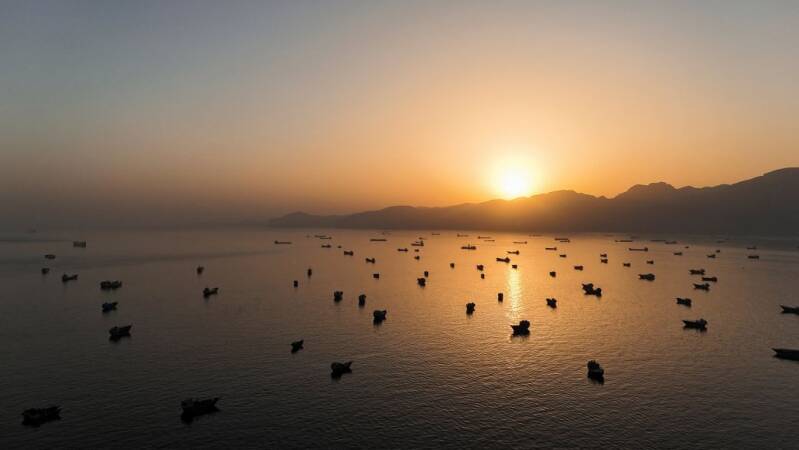
A rapidly escalating military confrontation between the United States and Iran entered a dangerous new phase on Thursday, June 11, 2026, after Iran's top military command announced the complete closure of the strategic Strait of Hormuz, a chokepoint through which roughly one-fifth of global oil supplies pass. The announcement followed a second consecutive night of US "self-defence" strikes against Iranian military targets ordered by President Donald Trump as part of an intensified campaign to force Tehran into a new nuclear and security deal.
The latest wave of American attacks began at 5:15 p.m. Eastern Time on Wednesday, June 10, with US Central Command announcing the completion of operations approximately four hours later. In a social media post, CENTCOM stated that US Marine Corps, Air Force, and Navy assets had fired precision munitions targeting Iranian military surveillance capabilities, communications systems, and air defence sites across the country. "The strikes are in response to Iran's unwarranted and continued aggression," CENTCOM said. "US forces remain vigilant, lethal and ready".
Iranian media reported explosions in multiple southern locations near the strait, including the port city of Bandar Abbas, Qeshm Island, and the towns of Minab and Sirik. Iranian sources also reported hits by "enemy projectiles" in the cities of Kargan and Sirik. The operation marked the second night of US attacks, following initial strikes on June 9 in retaliation for the downing of a US Army AH-64 Apache helicopter near the strait, which Trump blamed on Iran.
In response, Iran's Khatam al-Anbiya Central Headquarters, the supreme command of the Iranian military, announced in a statement broadcast by state television that the Strait of Hormuz was now "completely closed" to all vessels, including oil tankers and commercial ships. "From this moment, due to insecurity in the region, the Strait of Hormuz is declared closed to the passage of all vessels, including oil tankers and commercial ships, and any traffic will be targeted," the statement said.
The Islamic Revolutionary Guard Corps separately confirmed that the strait would remain closed "until further notice" and warned that any vessel attempting to transit the waterway would be targeted. Iranian media reported that IRGC naval forces had already struck "two vessels attempting to illegally pass through the Strait of Hormuz". Iranian state television also reported "heavy clashes and exchange of fire" in the strait between US forces and IRGC naval units.
Iran also launched retaliatory strikes against US military assets across the region. The IRGC claimed it had attacked 18 US military targets at airbases in Kuwait and Bahrain, with Bahrain's interior ministry confirming that air raid sirens had been sounded. Iranian forces also claimed to have fired 12 ballistic missiles at Jordan's Muwaffaq Salti Air Base and launched drone strikes at other US facilities in the region.
Despite Iran's announcement, the Pentagon swiftly rejected Tehran's claim. US Central Command insisted that commercial shipping was still moving through the strategic waterway. "Commercial ships are continuing to transit in and out of the Strait of Hormuz tonight," CENTCOM said in a post on X. The command also denied Iranian state media reports that US naval vessels operating near the strait had been struck by missiles or drones, calling those reports "false".
The escalating crisis sent shockwaves through global energy markets. Brent crude futures jumped 2.5% to above $95 a barrel, while US West Texas Intermediate crude gained 2.9% to $92.63 a barrel. The Strait of Hormuz typically handles about 20% of global oil and gas shipments, and Iran's blockade of the waterway has already disrupted trade flows and kept crude prices elevated.
Kuwait temporarily closed its airspace early on Thursday, citing "security concerns and risks to civilian aviation" following the Iranian attacks. Bahrain also activated air defence systems, with authorities reporting that incoming aerial threats had been intercepted.
The military escalation has effectively shattered a fragile ceasefire agreed between the two sides in early April, following months of devastating conflict that began in late February. Speaking at the White House on Wednesday, Trump vowed to continue military pressure until Tehran agrees to a deal. "We hit them hard yesterday, and we're going to hit them again hard today," Trump told reporters. Defence Secretary Pete Hegseth, visiting CENTCOM headquarters in Florida, framed the strikes as a diplomatic tool. "If we need to negotiate with bombs, we'll negotiate with bombs, and we're very good at it," Hegseth warned. "Iran has a chance to make a good deal, a great deal, and they haven't been willing to do it."
Iran's UN envoy, Amir Iravani, told the Security Council that no sustainable agreement can be achieved through threats or force, declaring that Tehran would "never submit" to pressure. Iranian officials have also dismissed Trump's claims of direct contact, with state media quoting a senior official who said the president's assertion that Iranian officials had asked him to stop the strikes was "false" and "only intended to avoid war".
As the tit‑for‑tat strikes continue for a second day, the crisis has raised urgent questions about whether diplomacy remains possible, with Washington threatening further military action and Tehran refusing to negotiate under pressure.
📩 Stone Reporters News | 🌍 stonereportersnews.com ✉️ info@stonereportersnews.com | 📘 Facebook: Stone Reporters News | 🐦 X (Twitter): @StoneReportNew | 📸 Instagram: @stonereportersnews
Add comment
Comments