

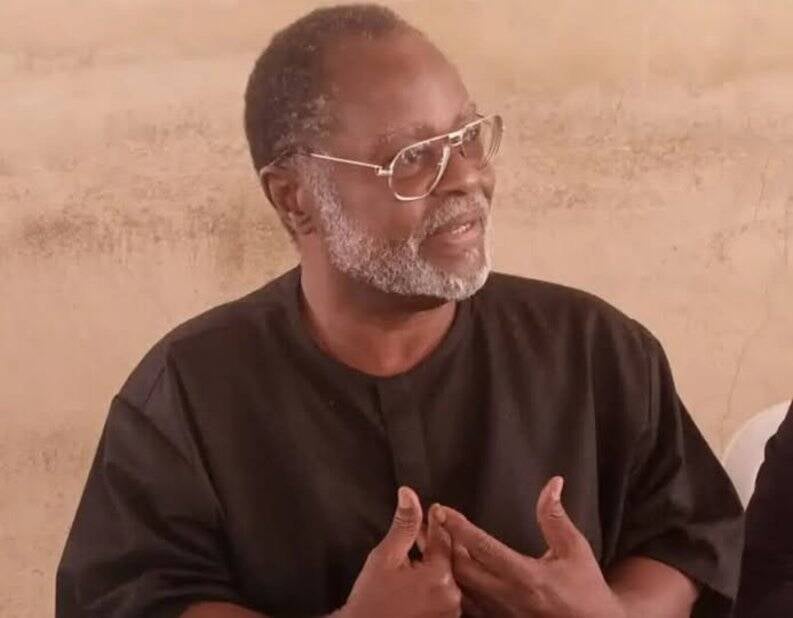
A senior fellow at the Abuja School of Social and Political Thought, Professor Udenta O. Udenta, has expressed concern over the trajectory of Nigeria’s democratic experience, arguing that successive election cycles have consistently produced poorer outcomes for citizens. His comments come as the country marks 27 years of uninterrupted civilian rule, a milestone often viewed as a significant achievement in Nigeria’s political history since the return to democracy in 1999.00
Speaking during a televised interview on Trust TV, Udenta reflected on what he described as structural weaknesses within Nigeria’s democratic system. He argued that while the framework of democracy is formally in place, its substance has not delivered the expected dividends to the population. According to him, the recurring pattern of electoral cycles yielding what he termed less effective leadership raises questions about the suitability and evolution of the current political arrangement.
Udenta characterized Nigeria’s democratic model as largely imported, suggesting that it did not emerge organically from the country’s historical or socio-political development. He maintained that the system was adopted from external models and imposed on local realities without sufficient adaptation to indigenous governance traditions or civic expectations. This, he said, has contributed to a disconnect between democratic structures and the lived experiences of ordinary citizens.
In his remarks, he emphasized that the presidential system in use is costly and often results in what he described as excessive public spending. He noted that the structure allows political office holders significant access to state resources, which, in his view, raises concerns about efficiency and accountability. While he did not allege specific wrongdoing in individual cases, he pointed to systemic tendencies that he believes encourage wasteful governance practices.
The professor further argued that when governance systems are not designed with the welfare of the population as their central focus, citizens tend to struggle with identifying with such systems. He suggested that this misalignment between institutional design and public needs contributes to widespread dissatisfaction with democratic governance in the country.
Udenta also reflected on broader implications of Nigeria’s electoral processes, stating that repeated cycles of elections have not translated into improved governance outcomes. Instead, he claimed that each cycle tends to produce leadership that performs less effectively than its predecessors, thereby reinforcing public skepticism about political progress.
Nigeria’s democracy, restored in 1999 after years of military rule, has often been described by scholars and political observers as one of the most prominent in West Africa. The country has conducted multiple general elections since the transition, with varying degrees of credibility and challenges, including electoral disputes, voter apathy, logistical issues, and concerns over institutional independence. Despite these challenges, democratic continuity has been maintained, and power has transferred between civilian administrations through electoral processes.
The June 12 commemoration, which marks the annulled 1993 presidential election widely regarded as a pivotal moment in Nigeria’s democratic struggle, continues to serve as a symbolic reminder of the country’s political evolution. Against this backdrop, debates over the quality and effectiveness of Nigeria’s democracy remain active among academics, policymakers, and civil society actors.
Udenta’s remarks contribute to this ongoing discourse, particularly at a time when questions about governance, accountability, and citizen engagement remain central to national conversations. His critique aligns with broader scholarly debates on whether imported democratic models can fully accommodate the complexities of post-colonial societies such as Nigeria.
While supporters of Nigeria’s democratic system point to sustained civilian rule and institutional development as evidence of progress, critics often highlight persistent challenges such as corruption, insecurity, economic inequality, and uneven development outcomes. These contrasting perspectives continue to shape discussions about the future direction of governance in the country.
As Nigeria reflects on another year of democratic governance, Udenta’s observations underscore the continuing tension between institutional continuity and performance expectations. His comments highlight the need for ongoing evaluation of how democratic systems function in practice and whether they adequately respond to the needs of the population they are intended to serve.
Public debate around Nigeria’s democratic performance has also been influenced by recurring concerns over election management, political accountability, and the cost of governance at federal and state levels. Analysts have frequently pointed to the financial burden of maintaining executive and legislative structures, arguing that reform discussions remain central to improving efficiency and public trust in institutions.
Civil society organizations and advocacy groups have, in various forums, continued to call for stronger institutional reforms aimed at improving transparency, strengthening electoral credibility, and enhancing citizen participation in governance. These discussions often emphasize the importance of building democratic systems that reflect local realities while maintaining global standards of accountability.
Since the return to civilian rule in 1999, Nigeria has experienced alternating periods of political optimism and public frustration, shaped by changing administrations and shifting policy priorities. The endurance of democratic institutions, however, remains a key reference point for both domestic and international observers assessing the country’s political development.
Constitutional reform debates have also gained attention in recent years, with stakeholders examining potential adjustments to governance structures, federal arrangements, and electoral frameworks. These conversations reflect ongoing efforts to address perceived gaps between democratic ideals and practical outcomes in governance delivery.
Across West Africa, Nigeria’s democratic experience is often viewed as influential due to its regional size and political weight, with its electoral trends closely watched by neighboring states undergoing their own democratic transitions. Observers note that the country’s ability to maintain civilian rule, despite internal pressures, continues to shape broader discussions on democratic consolidation in the region. Younger populations, increasingly engaged through digital platforms, are also contributing to evolving political discourse, demanding greater accountability and responsiveness from leaders while pushing for reforms that align governance with socioeconomic realities.
These dynamics continue to shape national conversations on governance reforms as policymakers and citizens assess pathways toward strengthening institutional trust and improving democratic performance in coming years across the country.
📩 Stone Reporters News | 🌍 stonereportersnews.com
✉️ info@stonereportersnews.com | 📘 Facebook: Stone Reporters News | 🐦 X (Twitter): @StoneReportNew | 📸 Instagram: @stonereportersnews
Add comment
Comments