

Reported by: Ijeoma G | Edited by: Oravbiere Osayomore Promise.
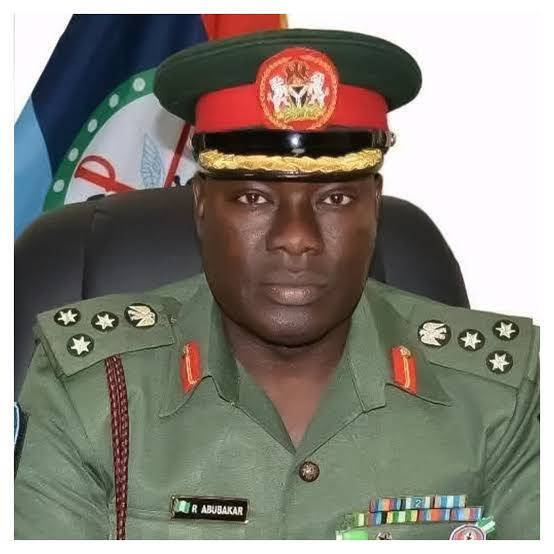
A former military spokesman abducted alongside his wife in Katsina State more than two weeks ago has died while still in the hands of his captors, in a case that has triggered rare public rebuke from retired generals and reignited fierce debate about the government's capacity to protect even its most senior citizens. The Katsina State Government announced the death of retired Major General Rabe Abubakar, 61, on Saturday, June 13, 2026, saying he succumbed to complications from diabetes and hypertension while being held by bandits. But retired military officers and civil society groups swiftly rejected that explanation, arguing that the true cause of death was state failure.
General Abubakar, who served as Director of Defence Information at Nigeria's Defence Headquarters between 2015 and 2017, was abducted alongside his wife, Hajiya Amina Abubakar, on May 30, 2026, while travelling along the Marabar Musawa–Kafinsoli Road in Matazu Local Government Area of Katsina State. The couple were heading to a family wedding in Katsina city when armed men near Zakin Baure village ambushed their vehicle, opened fire, and forced their red Peugeot 406 car to a halt. The driver escaped with gunshot injuries, but the retired general and his wife were marched into a nearby forest. A video that surfaced on June 6 showed the elderly couple in captivity, with the general displaying an apparent injury to his left leg and his wife appealing directly to government authorities for the release of detained bandits and the return of seized livestock.
The Katsina State Government confirmed the retired general's death in a statement issued by the Commissioner for Internal Security and Home Affairs, Dr. Nasiru Mu'azu. "It is with profound sadness that we confirm the General's death while in bandits' captivity. Despite the relentless and concerted efforts of the State Government and various Security Agencies to secure his safe release, the situation ended in this tragedy," the commissioner said. The statement added that "the deceased retired general died a natural death from complications of diabetes and hypertension."
That explanation drew immediate and sharp rebuttal from retired military officers, who argued that a man abducted against his will and denied access to medical care for two weeks did not die a natural death. Jamilu Aliyu Charanchi of the Coalition of Northern Groups (CNG) issued a forceful statement rejecting any suggestion that the retired general perished from natural causes. "There is nothing natural about dying in the hands of bandits," Charanchi said. "A man abducted from his home or along the road and held captive by criminals did not die a natural death—he died because the state failed in its most sacred responsibility: protecting the lives and property of its citizens."
Charanchi warned that the death of a retired Major General in captivity raised fundamental questions about the safety of ordinary Nigerians. "When even a retired major general can be kidnapped and perish in captivity, what hope remains for ordinary Nigerians? This tragedy is a damning indictment of the worsening insecurity ravaging our nation. No amount of official wording can whitewash this painful reality." The CNG leader's comments reflected a broader frustration shared by many Nigerians who have watched banditry escalate across the North‑West despite repeated assurances from authorities.
Reacting to the death, President Bola Tinubu expressed shock and sorrow, describing the incident as a tragic reminder of the country's security challenges. In a State House statement issued on Saturday, the President said, "Bandits, kidnappers, and sponsors of terror should now surrender or face the full force of the Nigerian State. These windows of surrender will not remain open forever. And no mercy will be shown to those who trade in the blood of Nigerians." The President also stated that General Abubakar's death should serve as a defining moment in the nation's counter‑terrorism strategy, adding that the government would never negotiate with armed groups on any terms.
The Defence Headquarters also issued a statement mourning the late officer. The Director of Defence Information, Major General Samaila Uba, said the military had deliberately withheld public comment on the abduction to avoid jeopardising ongoing rescue efforts. "Every operational resource was deployed in the hope of securing his safe return," the statement read. The DHQ described Abubakar as a distinguished officer who made immense contributions to counter‑insurgency operations and whose commitment to duty remained a shining example for all personnel of the Armed Forces of Nigeria.
General Abubakar was laid to rest on Saturday evening at about 6:00 p.m. at the Gidan Dawa Cemetery, located opposite his residence in Katsina metropolis. Funeral prayers were attended by a large crowd of mourners, including top government officials, security chiefs, senior military officers, traditional title holders, political associates, family members and well‑wishers. For many at the burial ground, the late general's tragic end symbolised the painful reality facing thousands of Nigerians who remain vulnerable to criminal attacks despite ongoing efforts to restore peace and security. The whereabouts and condition of his wife, Hajiya Amina Abubakar, remain unknown.
The death of a former military spokesman in captivity marks a grim milestone in Nigeria's struggle with banditry, as it demonstrates that even the country's most decorated citizens are not safe from the criminal networks that have turned vast stretches of the North‑West into a lawless frontier. As the nation mourns, the question that lingers is not just how a retired general could be taken, but whether the government can finally turn the tide against an enemy that respects neither rank nor retirement.
📩 Stone Reporters News | 🌍 stonereportersnews.com ✉️ info@stonereportersnews.com | 📘 Facebook: Stone Reporters News | 🐦 X (Twitter): @StoneReportNew | 📸 Instagram: @stonereportersnews
Add comment
Comments