

Reported by: Oahimire Omone Precious | Edited by: Oravbiere Osayomore Promise.
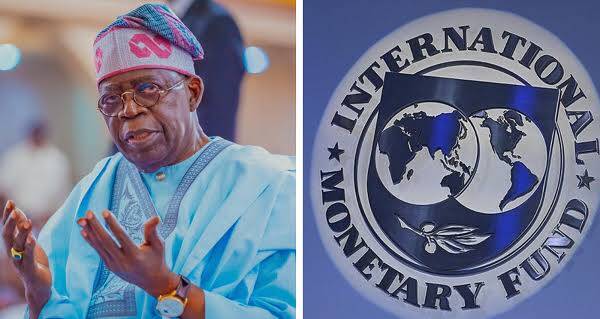
The International Monetary Fund (IMF) has urged the Nigerian government to introduce new taxes on fuel products and telecommunications services as part of a broader push to boost revenue and create fiscal space for development spending. The recommendation, contained in the IMF’s 2026 Article IV Consultation report, calls for extending Value Added Tax (VAT) to petroleum products, introducing excise duties on telecom services, and raising the VAT rate, among other measures. However, the Fund has also issued a caution, stating that the timing of any new taxes must account for the country’s rising poverty levels and worsening food insecurity.
In its 2026 Article IV Consultation report, the IMF said that despite the recent overhaul of Nigeria’s tax system, additional tax measures would still be needed over the medium term. “Further tax policy changes will likely be needed—such as increasing the VAT rate, extending VAT to fuel products, rationalising tax expenditures in particular VAT exemptions on extractive industries and some customs duties, and introducing telecom excises—to complement administrative gains,” the Fund stated. The Washington‑based institution, however, warned that the timing of any new taxes must be carefully managed to avoid exacerbating existing burdens on citizens. “The timing of reforms must consider the poverty and food insecurity situation and ensure that the cash transfer system is in place and funded,” the Fund added.
The IMF projected that a combination of revenue‑enhancing tax policies could generate additional revenues equivalent to 3.9 percent of Nigeria’s Gross Domestic Product (GDP) within three years of implementation. The single largest contributor would be a two‑percentage‑point increase in the VAT rate, which could yield 0.8 percent of GDP. Other proposed measures include extending VAT to fuel products, which is expected to be one of the politically most contentious proposals, alongside the introduction of excise duties on telecommunications services. The IMF also recommended rationalising tax expenditures, removing pioneer status incentives, revising free zone regulations, reforming capital gains taxation, adjusting personal income tax structures, and imposing a top‑up tax on multinational corporations and large firms. The category labelled “others”, which includes telecom excise duties and a possible carbon tax on fuel, is projected to add an additional 0.4 percent of GDP.
Beyond new tax policy measures, the IMF said Nigeria could generate even larger gains through stronger tax administration. It projected that administrative reforms, including fiscalisation, electronic invoicing, and the expansion of taxpayer identification, could yield an additional 3.1 percent of GDP. The IMF noted that some recently enacted tax reforms in Nigeria would temporarily reduce government revenue because they were designed to provide relief to households and small businesses, but it estimated a net revenue increase of 4.6 percent of GDP over the medium term.
The recommendations are likely to trigger fresh debate across the country, given the sensitivity surrounding fuel prices and telecommunications costs. A previous attempt by the Federal Government to introduce a five percent excise duty on telecom services faced widespread opposition from operators, subscribers, and consumer advocacy groups before it was eventually suspended and later scrapped. Telecommunications companies have consistently argued that the sector is already burdened by multiple taxes, rising energy costs, foreign exchange pressures, and infrastructure challenges, warning that any additional levy would ultimately be passed on to consumers through higher call and data charges. Similarly, proposals linked to fuel taxation have generated opposition from labour unions and private sector groups amid concerns over rising living costs following the removal of petrol subsidies and increases in transport and food prices.
The IMF’s latest recommendation comes as it projects that Nigeria will need stronger revenue mobilisation efforts to sustain planned increases in public spending and support vulnerable households. While the Fund acknowledged the potential revenue gains from the proposed measures, it stressed that the implementation of any new taxes must be balanced against the social realities of poverty and food insecurity. It insisted on the need for a functional and adequately funded cash transfer system to cushion vulnerable households before introducing additional taxes.
The Federal Government has not yet issued an official response to the IMF’s specific tax recommendations, but Finance Minister Taiwo Oyedele earlier described the IMF’s 2026 Article IV report as an “independent validation” of the government’s economic reform programme. However, some economists have expressed reservations, particularly regarding the risk of increasing poverty and the potential for the new taxes to deepen hardship for citizens already struggling with the cost of living. The proposal is expected to face stiff resistance from labour unions, consumer advocacy groups, and private sector stakeholders, who have consistently opposed additional fiscal burdens on households and businesses.
As Nigeria continues to navigate the delicate balance between revenue mobilisation and the protection of its most vulnerable citizens, the IMF’s call for new taxes on fuel, calls and data is likely to remain at the centre of national debate in the coming months. The government’s handling of the issue, including its commitment to expanding social protection programmes, will determine whether the proposed reforms gain traction or stall in the face of widespread public opposition.
📩 Stone Reporters News | 🌍 stonereportersnews.com ✉️ info@stonereportersnews.com | 📘 Facebook: Stone Reporters News | 🐦 X (Twitter): @StoneReportNew | 📸 Instagram: @stonereportersnews
Add comment
Comments