

Reported by: Oahimire Omone Precious | Edited by: Oravbiere Osayomore Promise.
The Federal Government on Thursday inaugurated a Presidential Task Force on Ebola Virus Disease Preparedness, pledging a proactive strategy to keep Nigeria free of the disease and avoid the confusion and scramble that marked the 2014 outbreak. Chief of Staff to the President, Femi Gbajabiamila, who chairs the task force, said the government is prioritising prevention over reaction and that “Nigeria must not be caught off guard.” The inauguration follows President Bola Tinubu’s approval on June 9 of the task force’s establishment and the immediate release of N10 billion as emergency intervention funding to strengthen the country’s response capability against possible disease outbreaks, according to multiple news reports and a State House statement.
Speaking at the State House in Abuja on Thursday, June 18, 2026, Gbajabiamila told officials and stakeholders that Nigeria has recorded no cases of Ebola and that all efforts are now focused on keeping that number at zero. “Right now, there’s no case reported, and that’s good news,” he said. “All hands have to be on deck to make sure the measures we are taking are preventive and not curative.” He recalled the chaos of the 2014 outbreak, when a carrier entered the country and authorities scrambled to respond, and said the government was determined not to repeat that experience. “We don’t want to be in the situation we were last time, where we had a carrier in the country and we’re all running helter-skelter,” he said.
Gbajabiamila disclosed that the task force had already established several subcommittees to coordinate surveillance, border control, immigration management and emergency response. He said the government was working closely with states that host international airports—Lagos, Kano, Rivers, Enugu and the Federal Capital Territory—to strengthen monitoring and rapid response. He also stressed that Nigeria’s land borders were receiving unprecedented attention because of the high volume of cross-border movements. “Normally when people talk about emergency preparedness and cross-border diseases such as this, they think about airports,” he said. “But now we’re covering not just the airports; we’re putting a lot of emphasis on land borders. We have a lot of cross-migration through the land borders, and the Border Control Development Agency is involved, immigration is involved, and a lot of the border communities are involved.”
He added that the government had drawn valuable lessons from the 2014 outbreak and was building stronger structures to eliminate gaps in preparedness. “What we want is a zero case, as we have now. We want to maintain a zero case,” he said. He expressed confidence in Nigeria’s capacity to lead Africa in epidemic preparedness and response. “We will not follow; we will lead,” he declared.
The Director-General of the Nigeria Centre for Disease Control and Prevention (NCDC), Dr. Jide Idris, who attended the inauguration, confirmed that surveillance systems at major points of entry, especially airports, had been strengthened and adapted to the Ebola threat. He said there were no recorded cases in Nigeria, but warned against complacency. “We don’t have any Ebola case here now, but we need to be prepared,” Idris said. “However, just in case one slips in, we want to be prepared nationally to identify and deal with the case.” He explained that the preparedness framework brings together multiple government institutions, including the ministries of health, interior and education, as well as immigration, border control agencies and state governments.
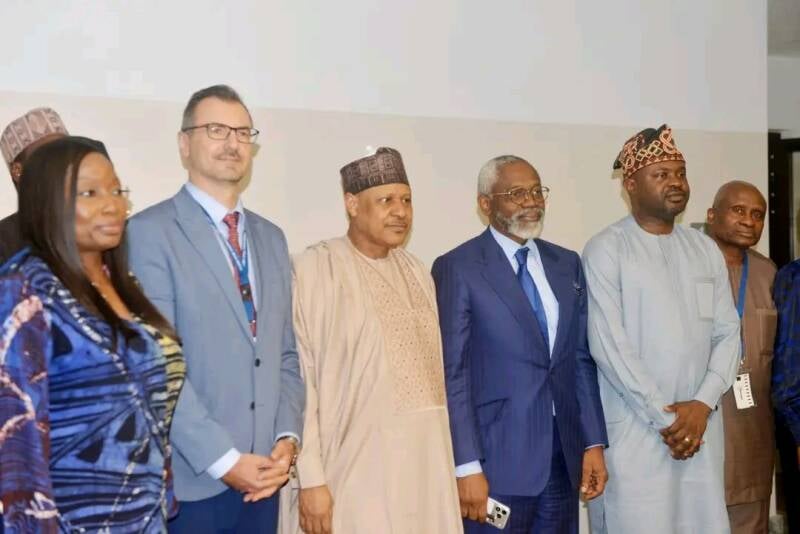
Others present at the inauguration included the Minister of Information and National Orientation, Mohammed Idris; Minister of Interior, Olubunmi Tunji-Ojo; Managing Director/Chief Executive Officer of the Federal Airports Authority of Nigeria (FAAN), Olubunmi Kuku; WHO Representative and Head of Mission in Nigeria, Dr. Pavel Ursu; Lagos State Commissioner for Health, Professor Akin Abayomi; Enugu State Commissioner for Health, Prof. George Ugwu; and representatives from Rivers State and the FCT. The task force is expected to coordinate with security, aviation and diplomatic agencies to regulate flights from affected regions and designate specific terminals for high-risk arrivals to strengthen containment procedures, according to earlier presidential directives.
The inauguration follows a period of heightened vigilance across Africa after fresh Ebola concerns in some countries. The NCDC had earlier classified Nigeria as being at high risk of Ebola importation due to increasing international travel, population movement and the country’s porous borders. On June 1, Idris disclosed that Nigeria was only 59 per cent prepared for a potential outbreak, even as health authorities intensified surveillance and tightened entry protocols. The activation of the task force and the release of N10 billion are seen as critical steps to close that gap and ensure the country is not caught off guard. With no cases yet reported, Nigeria’s goal remains clear: zero Ebola.
📩 Stone Reporters News | 🌍 stonereportersnews.com ✉️ info@stonereportersnews.com | 📘 Facebook: Stone Reporters News | 🐦 X (Twitter): @StoneReportNew | 📸 Instagram: @stonereportersnews
Add comment
Comments