

Reported by: Ijeoma G | Edited by: John. O
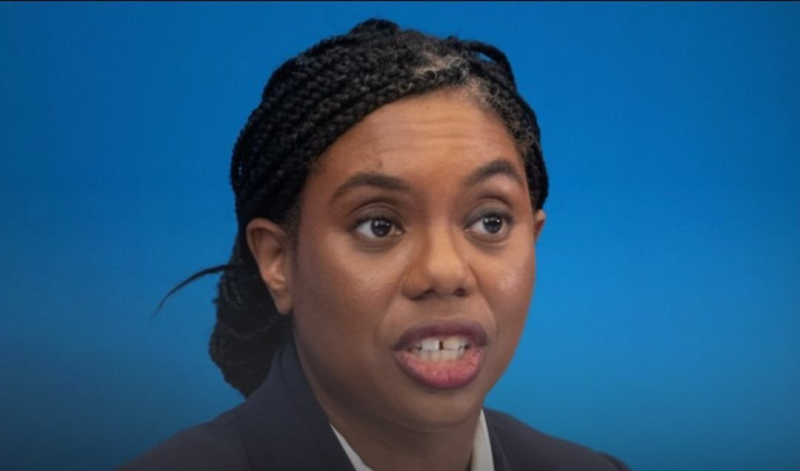
The leader of the United Kingdom Conservative Party, Kemi Badenoch, has criticised Nigeria’s decades-long electricity crisis, arguing that the country’s vast oil resources have failed to improve citizens’ lives because of what she described as poor public policy and ineffective governance.
Badenoch made the remarks during an interview with The Spectator, a British political magazine, where she discussed how her childhood experiences in Nigeria influenced her political beliefs, particularly her views on economic management, energy policy, and the role of government. The comments were reported on June 13, 2026, with further coverage published on June 14, 2026.
Speaking about Nigeria’s position as an oil-producing nation, Badenoch said the country’s natural resources had not translated into reliable public services, particularly electricity supply.
“Nigeria is an oil-producing country that has never had electricity,” Badenoch said during the interview. She argued that having valuable resources underground does not automatically create prosperity without effective policies that allow those resources to benefit citizens.
“It is very easy to have resources under the ground, but stupid public policy means that you can’t use them,” she added.
The comments have generated renewed debate about Nigeria’s power sector, which has faced decades of challenges despite the country being one of Africa’s largest oil producers. Nigeria has struggled with electricity generation capacity, transmission limitations, distribution problems, and infrastructure deficits, leaving many households and businesses dependent on alternative sources of power.
Badenoch, who was born in the United Kingdom to Nigerian parents and spent part of her early life in Nigeria, said her experiences growing up in the country shaped her political outlook. She explained that witnessing economic difficulties in a resource-rich country influenced her belief that strong institutions and sound policies are necessary for development.
During the same interview, Badenoch also criticised what she described as excessive government control of economic activities. She compared some policies she opposes in Britain with approaches she associated with Nigeria’s military governments of the 1980s and 1990s.
“And I see quite a lot of what Ed Miliband is doing as being very much like what the Nigerian military dictatorships were doing in the 1980s and 1990s,” Badenoch said.
The Conservative Party leader was referring to her disagreement with policies she believes expand state control and redistribution without sufficient focus on economic growth and productivity.
“The government’s going to take control. We know what’s best. We’re going to redistribute. These are stupid ideas that eventually just bankrupt the country,” Badenoch stated.
Her remarks have drawn reactions because of her personal connection to Nigeria and her position as leader of one of Britain’s major political parties. Supporters of her argument say the statement highlights the importance of effective governance, investment, and institutional strength in transforming natural resources into public benefits.
However, critics argue that Nigeria’s development challenges cannot be attributed to a single factor. They point to a combination of historical, economic, infrastructure, security, and administrative issues that have affected the country’s ability to deliver stable electricity and broader public services.
Nigeria’s electricity crisis has remained a major national issue since independence, with successive governments introducing reforms aimed at improving generation and distribution. The country privatised parts of its electricity sector in 2013, but many consumers continue to experience unreliable power supply.
Energy experts have repeatedly noted that Nigeria’s large population, growing industrial needs, and limited infrastructure require significant investment and long-term policy consistency to achieve dependable electricity access.
Badenoch’s comments have therefore reopened a wider conversation about the relationship between natural resources and national development. While oil wealth has provided significant revenue for Nigeria over decades, questions remain about how effectively those resources have been converted into infrastructure, employment opportunities, and improved living standards.
The debate surrounding her remarks reflects a broader issue faced by many resource-rich nations: the challenge of ensuring that natural wealth translates into sustainable development and better quality of life for citizens.
📩 Stone Reporters News | 🌍 stonereportersnews.com
✉️ info@stonereportersnews.com | 📘 Facebook: Stone Reporters News | 🐦 X (Twitter): @StoneReportNew | 📸 Instagram: @stonereportersnews
Add comment
Comments