

Reported by: Ijeoma G | Edited by: Oravbiere Osayomore Promise.
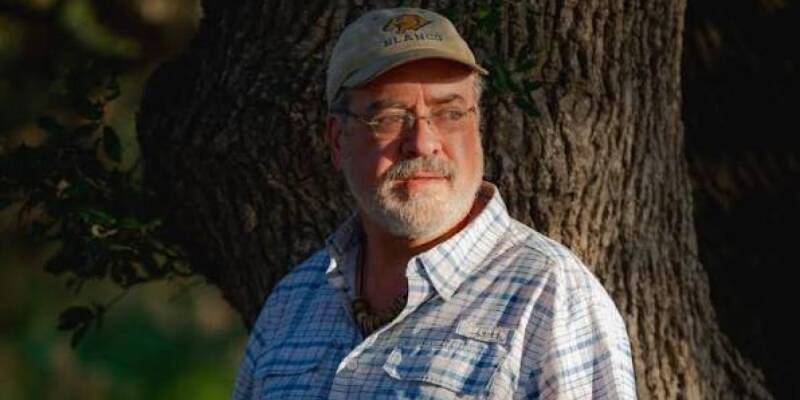
A United States-based humanitarian worker and missionary has launched a blistering attack on the United Nations, accusing the global body of deliberately covering up widespread religious persecution and mass killings in Nigeria. Mike Arnold, a former mayor of Blanco, Texas, who has conducted multiple fact-finding missions to the country, vehemently rejected the preliminary findings of a recent UN investigation, dismissing the report as flawed, legally inaccurate, and complicit in concealing what he describes as a genocide against Christian communities.
Arnold's reaction followed the release of a report by the UN Special Rapporteur on freedom of religion or belief, Professor Nazila Ghanea, who conducted a 12-day fact-finding visit to Nigeria from June 8 to 19, 2026, at the invitation of the Nigerian government. In a statement shared on his X handle on Tuesday, Arnold argued that the investigation was compromised from the outset because it was conducted at the invitation of the authorities whose actions he claims are under scrutiny. "The UN just released a report from a twelve-day Nigeria investigation by its Special Rapporteur on freedom of religion or belief. Finding: no evidence of religious persecution," Arnold wrote, adding: "One detail sets the table: the Rapporteur was there at the invitation of the Nigerian government".
The UN report, which was presented in Abuja, identified widespread insecurity, violence, and a pervasive culture of impunity as the principal obstacles to religious freedom, rather than formal religious discrimination. Ghanea acknowledged that concerns over insecurity dominated virtually all discussions during her visit, which included meetings with government officials, religious leaders, civil society groups, and victims of violence. She warned against simplistic characterisations of Nigeria's religious landscape, describing the country as a nation of "multiple, multilayered diversities and rich pluralism". While she noted allegations of "systematic discrimination faced by Christians throughout the north" and "a narrower bandwidth of rights for Muslims in the south", she maintained that the violence was driven by a complex mix of terrorism, banditry, farmer-herder conflicts, ethnic tensions, and criminality.
Arnold, however, dismissed these conclusions, accusing the rapporteur of applying an incorrect legal standard. He argued that the report's reasoning appeared to be that there was no evidence of a direct government order authorising the killing of Christians, and therefore no basis for concluding that genocide or religious persecution was taking place. "The Rapporteur's reasoning: she did not see a direct government order to kill Christians. No instruction from Abuja, up and down the chain of command, ordering one religious group destroyed. Therefore — not genocide. Not persecution. Move along," Arnold said. Drawing comparisons with the 1994 Rwandan genocide, he argued that international law does not require proof of a formal government directive before acts can be classified as genocide. "In 1994, Hutu militias — not the Rwandan military, not a government chain of command — killed 800,000 Tutsi in 100 days. The International Criminal Tribunal ruled it genocide. The killers didn't have government memos in their pockets. They had machetes and a mission. Intent to destroy a group is the standard. Not a signed order," he stated.
Arnold also criticised the geographical scope of the UN investigation, claiming the Special Rapporteur failed to visit some of the communities most affected by violence. According to him, the UN official travelled to Abuja, Jos, and Kano but did not visit locations such as Barkin Ladi, Benue State, Taraba State, Southern Kaduna, or Gwoza—areas that have repeatedly recorded deadly attacks in recent years. He further alleged that the rapporteur spent much of her visit meeting government officials and religious leaders rather than victims in affected communities. Arnold pointed to portions of the report where, according to him, the Special Rapporteur admitted that the scale of violence in parts of Nigeria "could qualify as genocide" and that legal experts consulted during the mission could not conclusively rule out the possibility. He also referenced submissions reportedly made to the UN by international advocacy organisations, including the European Centre for Law and Justice, Genocide Watch, and 21Wilberforce, which he said provided evidence of anti-Christian violence prior to the mission.
Arnold further accused the UN of previously downplaying the humanitarian crisis in Nigeria's internally displaced persons camps. Recalling his work with displaced communities in Abuja, he claimed that the UN refugee agency had documented the camps in earlier reports but later denied their existence. Citing figures claiming that more than 185,000 Christians and non-jihadist Muslims have been killed since 2009, over 20,000 churches destroyed, and approximately 12 million people displaced, he accused the UN of helping to conceal the scale of the crisis. "The only certain conclusion from the report is that the UN Rapporteur is either corrupt, complicit, or a complete ignoramus. And her Oxford position likely rules out ignoramus," Arnold said. "The United Nations is not a neutral observer in Nigeria's genocide. It is a participant in covering it up".
Arnold's accusations are the latest in a series of interventions by the former Texas mayor, who has been a vocal campaigner on the issue of Christian persecution in Nigeria. In October 2025, he unveiled findings from his own investigation, describing what he called a "calculated, ongoing genocide" against Christian communities. His blunt assessment, delivered during a visit at the invitation of the Nigerian government, reportedly left officials in "deathly silence". Church and civil society leaders in Nigeria welcomed his report as a long-overdue vindication, with Emeka Umeagbalasi, director of the International Society for Civil Liberties and Rule of Law, stating: "The government brought them here to cover up atrocities, but Arnold's team saw the truth—and said it". Intersociety's own data, which Arnold has cited, claims that between 2010 and October 2025, over 185,000 people have been killed—125,000 of them Christians, alongside 60,000 non-violent Muslims.
However, Arnold's claims have also generated sharp disagreement. Critics have accused him of painting a picture of Christian persecution while ignoring the composition of Nigeria's security leadership. Some have described his narrative as "deeply inflammatory and not backed by credible evidence from mainstream human rights or conflict monitoring groups". The UN Special Rapporteur's report has generated debate among religious freedom advocates, human rights organisations, and security analysts. Ghanea is expected to present a full report with findings and recommendations to the UN Human Rights Council in Geneva in March 2027. For now, the competing narratives underscore the deep divisions over the nature of violence in Nigeria and the role of the international community in addressing it.
📩 Stone Reporters News | 🌍 stonereportersnews.com
✉️ info@stonereportersnews.com | 📘 Facebook: Stone Reporters News | 🐦 X (Twitter): @StoneReportNew | 📸 Instagram: @stonereportersnews
Add comment
Comments