

Reported by: Ijeoma G | Edited by: Oravbiere Osayomore Promise.
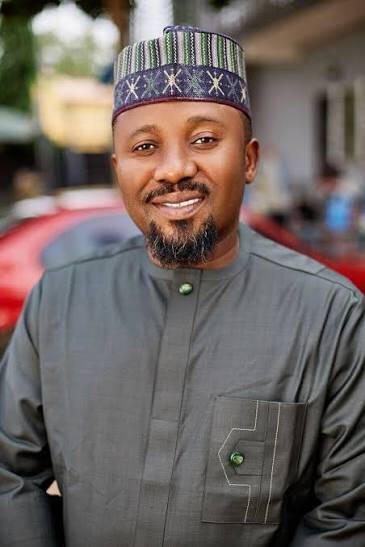
The African Democratic Congress candidate for the Zangon Kataf/Jaba Federal Constituency, Engineer Seth Bakut MNSE, has condemned in the strongest terms the remarks attributed to Islamic cleric Sheikh Yahya Jingir during a political gathering in Kano on August 8, 2026, describing the reported use of derogatory language against Christians as deeply offensive, unacceptable, and a direct threat to Nigeria's fragile religious coexistence. Jingir, who serves as the National Chairman of the Council of Ulama of Jama'atu Izalatil Bid'ah Wa'Ikamatis Sunnah (JIBWIS), made the remarks at a campaign event tagged "Abba Go Again" organised in support of Kano State Governor Abba Kabir Yusuf, who was reportedly present at the event.
Speaking in Hausa at the gathering, the octogenarian Islamic scholar based in Jos, Plateau State, praised President Bola Ahmed Tinubu for promoting a Muslim-Muslim ticket in the 2023 presidential election and reaffirmed his unwavering support for the arrangement. "Special thanks to my (political) hero, Bola Tinubu who raised the flag of this political ideology, describing it as a purely Muslim-Muslim coalition," Jingir declared. The cleric acknowledged opposition to the idea from Christians and other religious groups but questioned whether his advocacy amounted to wrongdoing. "I am aware that the infidels are embittered by this word," he said, referring to Christians as "Kafirai". He then urged Muslims at the event to obtain their Permanent Voter Cards ahead of future elections. "I urge all of us here to go and get our voters' cards ready. Let's show the infidels their limit, who claim they are more populous than us in Nigeria. They are lying!" Jingir declared.
Reacting to the remarks on August 9, 2026, Bakut said the concern was not only about the choice of a Muslim-Muslim ticket but also what he described as the apparent impunity and disrespect reflected in the language used against fellow citizens on the basis of their faith. The ADC candidate said calling fellow Nigerians "Kafirai" was deeply offensive and unacceptable, stressing that political and religious differences should never become a basis for insulting or dehumanising citizens. Bakut argued that religious scholarship carries a responsibility to promote peace, tolerance and mutual respect, rather than language capable of deepening religious divisions. "Our differences in faith should never become a justification for insulting or dehumanizing one another," he said.
Bakut particularly appealed to the people of Southern Kaduna not to allow political or religious differences to divide them, urging citizens to defend the dignity of every individual while retaining the freedom to disagree politically. According to him, Nigerians can hold different political and religious views without compromising peaceful coexistence, mutual respect and the unity of the country. The ADC candidate also expressed increased respect for Rt. Hon. Chibuike R. Amaechi, citing the former Rivers State governor's position as a reason for his commendation. "We must learn not to take disrespect from anyone!" Bakut stated. He urged citizens to approach sensitive political and religious issues with wisdom and restraint, while rejecting statements that could heighten tension between Nigeria's religious communities, and concluded by calling for wisdom and praying for the continued unity and protection of the people.
Bakut's condemnation was swiftly echoed by human rights lawyer and activist Deji Adeyanju, Esq., who described Jingir's comments as divisive and capable of fuelling religious tension in the country. Adeyanju said Nigeria is a plural society whose Constitution recognises and protects religious diversity, arguing that religious leaders should respect the country's plurality and use their influence to promote peace and unity. "I condemn the recent rhetoric of Sheikh Yahya Jingir as divisive and capable of fuelling religious tension," Adeyanju said. He questioned whether the Muslim-Muslim ticket had addressed the economic and security challenges facing Nigerians. "Has the Muslim-Muslim ticket put food on the tables of Nigerians, solved insecurity, unemployment, inflation, or strengthened the Nigerian passport and Nigeria's standing in the world?" he asked. Adeyanju urged Nigerians to look beyond religious identity when assessing political leadership and instead judge leaders by their impact on the lives of citizens. He warned that rhetoric which pits one faith against another could deepen existing divisions and fuel agitations across the country. "Clerics and politicians must stop provoking law-abiding citizens and learn to respect our different religions, cultures and ethnicities. Nigeria belongs to all of us," Adeyanju said.
The criticism was not limited to Bakut and Adeyanju. Nigeria's Ambassador-designate to South Africa, Femi Fani-Kayode, also weighed in, describing Jingir's comments as "highly provocative" and warning against what he called extremist rhetoric. "I have immense respect for Sheikh Jingir, but I am constrained to point out that the extremist rhetoric he has indulged in here is most unhelpful, and neither is it true," Fani-Kayode wrote on X. "Worse is the fact that it is highly provocative. Kindly take note that it is a very slippery and dangerous slope to take and is best avoided". Former Minister of Youth and Sports, Solomon Dalung, also condemned the comments as a distortion of democratic politics, warning that Nigeria risks sliding into what he called "a dangerous form of religious majoritarianism" if political leadership becomes a contest over which faith has more followers. Dalung stressed that Nigeria is not a religious trophy to be claimed by whichever faith can establish a numerical advantage, and noted that a Muslim-Muslim ticket does not put food on a Muslim family's table, secure communities from kidnappers, create jobs, or repair the country's collapsing infrastructure.
The reactions come amid renewed political debate over religious balancing, Muslim-Muslim tickets and the role of religious identity in Nigeria's politics ahead of the 2027 general elections. The Muslim-Muslim ticket, which saw President Bola Tinubu and Vice President Kashim Shettima, both Muslims, run on the same ticket in 2023, was a subject of intense debate and criticism from Christian leaders who argued it violated the country's unwritten policy of religious balance in presidential tickets. Despite the opposition, the ticket won the election, and discussions about its potential repetition in 2027 have already begun to polarise the nation once again. Jingir's remarks—particularly his reference to Christians as "infidels" and his call to "show them their limit"—have raised concerns among observers about the potential for increased religious tensions in the run-up to the 2027 elections. As of the time of this report, the Kano State Government and Governor Abba Kabir Yusuf's office had not issued any official response to Jingir's comments. The Presidency also remained silent on the cleric's remarks. With Nigeria already grappling with security challenges, economic hardship, and deepening social divisions, the cleric's words serve as a stark reminder of the fragility of the nation's religious coexistence and the high stakes of the coming electoral cycle.
📩 Stone Reporters News | 🌍 stonereportersnews.com
✉️ info@stonereportersnews.com | 📘 Facebook: Stone Reporters News | 🐦 X (Twitter): @StoneReportNew | 📸 Instagram: @stonereportersnews
Add comment
Comments