

Reported by: Ijeoma G | Edited by: Oravbiere Osayomore Promise.
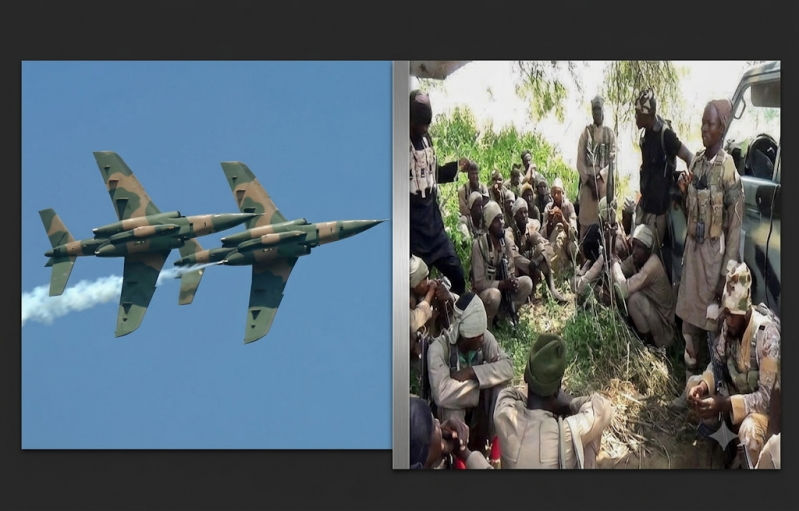
The Nigerian Air Force has dealt a significant blow to the Islamic State West Africa Province, killing nine of its fighters, including a key commander responsible for the movement and protection of senior terrorist leaders, in a precision airstrike conducted on Saturday, August 8, 2026, within the dense expanse of the Sambisa Forest in Borno State. The operation, executed following credible intelligence on terrorist activities in the area, targeted a group of fighters moving towards a suspected hideout, according to a statement issued on Sunday by the Director of Public Relations and Information, NAF Headquarters, Air Commodore Ehimen Ejodame.
The strike was the culmination of a meticulous intelligence, surveillance and reconnaissance operation. Acting on actionable intelligence, the NAF deployed a Remotely Piloted Aircraft to conduct persistent ISR operations over the forest, enabling the military to identify and track the terrorists as they navigated towards their enclave. Following positive identification and confirmation of the target, the aircraft executed a precision engagement on the location. A subsequent battle damage assessment confirmed significant effects on the targeted compound, with several terrorists neutralised in the operation.
Among those killed was Abu Khalid Al Muhajir, a commander described by the NAF as a prominent figure responsible for providing special security escorts for the movement of senior ISWAP members. His death, according to the Air Force, represents a significant operational setback for the terrorist group given his intimate knowledge of routes, terrain, and tactical movements that linked major terrorist enclaves within the Sambisa Forest and surrounding areas. The loss of such a figure is expected to disrupt ISWAP's leadership protection arrangements, the movement of high-value personnel, and the coordination of activities across its various enclaves.
The success of the operation highlights the growing effectiveness of intelligence-driven air operations in the North-East. The NAF's ability to integrate persistent surveillance with precision strike capabilities allowed it to detect and neutralise terrorist elements before they could regroup or launch further attacks. Further intelligence received after the strike confirmed that nine ISWAP fighters were killed in total, while several others sustained varying degrees of injuries. The Air Force also indicated that some of the terrorists affected by the strike were linked to elements suspected to have participated in the recent ambush of Nigerian troops along the Bita-Yamtage axis in Gwoza Local Government Area of Borno State.
The Sambisa Forest has long served as a stronghold for both Boko Haram and ISWAP factions, providing a vast and treacherous terrain that has shielded terrorist operations for over a decade. The forest's dense vegetation and intricate network of routes have made it a critical logistics and staging hub for attacks across the Lake Chad Basin region. While military campaigns have repeatedly targeted the area, the insurgents have consistently adapted, using the forest's natural cover to evade capture and regroup. The elimination of a key commander like Abu Khalid Al Muhajir, however, represents a more targeted degradation of the group's operational capabilities.
The Nigerian Air Force has reiterated its commitment to sustaining intelligence-led and precision air operations in coordination with surface forces. The service said it would continue to conduct these operations to degrade terrorist capabilities, restrict their freedom of movement, and improve security for communities affected by insurgency in the North-East. This latest strike is part of a broader campaign that has seen a series of successful operations against terrorist enclaves in recent months, reflecting an intensified push to dismantle the insurgents' operational infrastructure before they can exploit the coming dry season for further offensives.
The elimination of Abu Khalid Al Muhajir is particularly significant given his role as a security coordinator for senior ISWAP leaders. His knowledge of the forest's terrain and his ability to facilitate the movement of high-value targets made him a critical asset to the group. His death is likely to create a leadership vacuum and force the group to divert resources to secure its remaining commanders, potentially disrupting its operational tempo. Intelligence sources suggest that the strike has already caused disarray within ISWAP's ranks, as the group scrambles to reassess its security protocols and identify potential informants.
As the military continues its operations, the focus remains on consolidating gains and preventing the terrorists from re-establishing their foothold. The NAF has assured that it will maintain the momentum, using a combination of advanced technology and actionable intelligence to target terrorist elements wherever they may be hiding. For the communities in Borno and the wider North-East, the strike offers a glimmer of hope that the relentless campaign against insurgency is making tangible progress. However, the fight is far from over, and the military's ability to sustain such precision operations will be critical in determining the long-term outcome of the conflict.
📩 Stone Reporters News | 🌍 stonereportersnews.com
✉️ info@stonereportersnews.com | 📘 Facebook: Stone Reporters News | 🐦 X (Twitter): @StoneReportNew | 📸 Instagram: @stonereportersnews
Add comment
Comments