

Reported by: Ijeoma G | Edited by: Oravbiere Osayomore Promise.
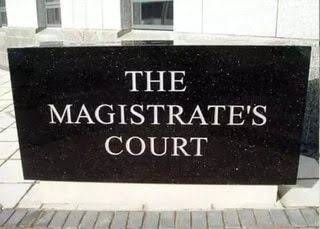
It was meant to be a desperate plea for mercy, a final cry from the edge of existence. Instead, the man who stood on a bridge in Kano, holding a placard that begged for his life to be saved, found himself on the other side of the law – not as a victim in need of care, but as a suspect in a criminal case. Ismail Sulaiman Bacirawa, a resident of Kano, was on Sunday, August 9, 2026, arraigned before Magistrate Hadiza Muhammad Hassan of Magistrate's Court No. 21 in Kano on allegations that he attempted to commit suicide. The prosecution counsel, Usman Abdullahi and Aisha Humaira, presented the case before the court, while the court official, Auwal Abdullahi, interpreted the charge to the defendant.
Bacirawa's ordeal began when he was allegedly found on a bridge in an apparent attempt to jump off it. Security personnel from Hausawa Police Station reportedly intervened and succeeded in bringing him down safely. When the officers found him, he was holding a placard bearing the inscription: "I have children, Your Excellency the Governor, please save my life". The exact circumstances that drove him to that bridge remain unclear, but the placard suggests a man burdened by circumstances he could no longer bear – a father desperate enough to place his fate in the hands of the state's highest authority.
But the state's response was not the compassionate intervention he may have hoped for. After the charge was interpreted to him, the court held that it lacked jurisdiction to entertain the case. Magistrate Hassan subsequently ordered that Bacirawa be remanded in a correctional facility until August 20, 2026, when he is expected to be brought back before the court. The remand order effectively transforms a man who was pulled from the brink of death into a prisoner awaiting trial for the crime of trying to end his own life.
The case has thrust into sharp focus Nigeria's controversial legal stance on attempted suicide. Under the Criminal Code Act, which applies in the southern states, and the Penal Code, which applies in the northern states where Sharia-influenced laws operate, attempted suicide remains a criminal offence. Section 327 of the Penal Code provides that "whoever attempts to commit suicide and does any act towards the commission of such offence shall be punished with imprisonment for a term which may extend to one year or with fine or with both". The law, inherited from colonial-era statutes, treats self-harm not as a mental health crisis but as a misdemeanour against the state.
This legal framework has long been criticised by human rights advocates and medical professionals who argue that criminalising suicide attempts discourages people from seeking help and exposes already vulnerable individuals to further trauma. The World Health Organisation has repeatedly called for the decriminalisation of suicide, noting that punitive laws are a barrier to effective suicide prevention. In Nigeria, a coalition of mental health organisations has been campaigning for the repeal of these archaic provisions, but legislative action has been slow. The case of Bacirawa is a stark reminder of the human cost of this legal inertia.
Bacirawa's arrest and remand also raise troubling questions about the response of security agencies to mental health crises. Rather than being referred to a hospital or a social welfare programme, he was taken to a police station, charged, and brought before a magistrate. The police officers who pulled him from the bridge may have saved his physical life, but the system into which they delivered him has now placed his freedom at risk. The court's decision to remand him rather than grant bail or order a psychiatric evaluation suggests a system ill-equipped to distinguish between criminal intent and a cry for help.
The placard Bacirawa held – "I have children, Your Excellency the Governor, please save my life" – speaks to a deeper crisis. It suggests a man who believed that only the intervention of the governor could save him, a testament to the desperation that pervades communities where economic hardship, unemployment, and lack of social safety nets have become the norm. Kano State, like much of northern Nigeria, has been grappling with poverty, inflation, and a cost-of-living crisis that has pushed many families to the breaking point. While the exact reasons for Bacirawa's actions are not yet known, his plea to the governor points to a systemic failure that extends far beyond one man's personal struggle.
The case has also sparked debate on social media, with many Nigerians expressing outrage that a man who clearly needed psychological support was instead remanded in custody. Some have questioned the priorities of a legal system that pursues charges against a suicide survivor while bandits and kidnappers roam free. Others have called on Governor Abba Kabir Yusuf to intervene, not just in Bacirawa's case, but in addressing the broader economic and social conditions that drive people to such desperate measures.
As Bacirawa awaits his next court appearance on August 20, his children are left without a father, and the question of what drove him to that bridge remains unanswered. The court will eventually decide whether he is guilty of the offence with which he has been charged. But regardless of the outcome, his case has already exposed the fault lines in Nigeria's approach to mental health and the law. In a country where suicide is the third leading cause of death among young people, according to some studies, the criminalisation of attempted suicide is not just an anachronism – it is a public health disaster. Until the laws are changed and the system is reformed, every man or woman who survives a suicide attempt risks being punished for the very act of surviving.
📩 Stone Reporters News | 🌍 stonereportersnews.com
✉️ info@stonereportersnews.com | 📘 Facebook: Stone Reporters News | 🐦 X (Twitter): @StoneReportNew | 📸 Instagram: @stonereportersnews
Add comment
Comments