

Reported by: Oahimire Omone Precious | Edited by: Oravbiere Osayomore Promise.
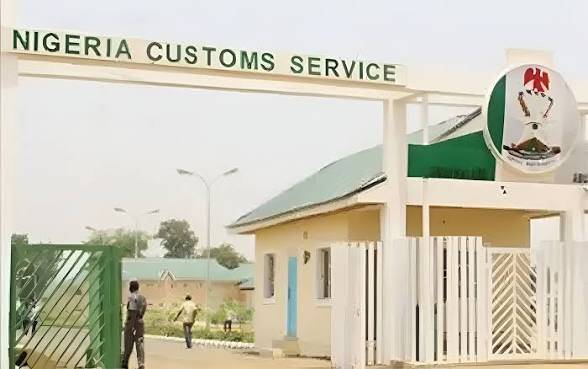
The Nigeria Customs Service has mounted a robust and detailed defence against a series of allegations contained in an investigative report by SaharaReporters, firmly dismissing claims of a surge in smuggling, revenue leakage, recruitment irregularities, and succession manipulation as a "misrepresentation" of its operational and administrative realities. The Customs Service, through its National Public Relations Officer, Deputy Comptroller Abdullahi Aliyu Maiwada, released a comprehensive response on Thursday, August 13, 2026, addressing each of the allegations raised in the SaharaReporters publication of August 7, 2026.
The investigative report had alleged intensified smuggling activities along the Seme, Idiroko, Ilaro, Ipokia, and Igbeti-Kishi corridors in Ogun and Oyo States, and raised concerns about the manipulation of the "846" Extended Procedure Code, which is used for vehicles with non-standard Vehicle Identification Numbers (VINs). SaharaReporters also alleged weaknesses in Customs valuation procedures at major ports, including Apapa, Tin Can Island, and PTML Area Commands, suggesting that these loopholes were being exploited to under-declare and undervalue imported vehicles. The report also questioned the integrity of the recent recruitment exercise for Assistant Superintendents of Customs II (ASC II) and alleged manipulation of succession within the service.
In a statement that pulled no punches, Maiwada declared that the claim of a "surge" in smuggling along the affected land border corridors "does not reflect the true state of enforcement operations." He argued that the volume and frequency of seizures recorded by Customs, and routinely presented during media briefings by Area Controllers, demonstrated that the Service was actively combating illegal trade. "Our responsibility is to reduce smuggling to the barest minimum, not to claim that it can be completely eradicated," Maiwada said, reiterating the Service's commitment to enforcing Federal Government restrictions while facilitating legitimate trade.
On the contentious 846 valuation code, which SaharaReporters had portrayed as a tool for manipulation, the Customs spokesman provided a detailed explanation that sought to debunk the narrative of a loophole. He clarified that the 846 code is an established digital tool within the Customs portal, specifically designed for vehicles with non-standard or non-compliant VINs. These include specialised heavy equipment, classic models, customised vehicles, and vintage builds that cannot be automatically assessed through the standard VIN-Valuation database. Maiwada explained that standard vehicles are processed automatically through a system tied directly to global manufacturer specification databases, "removing human discretion." In contrast, non-standard 846 applications are "subject to mandatory secondary approval by designated Valuation Officers and Area Controllers." He added that discrepancies uncovered during post-clearance audits routinely trigger Demand Notices for the recovery of short-collected duties and the suspension of offending clearance licences, and noted that revenue collection at Apapa, Tin Can Island, and PTML had hit historic highs under the current framework of digital oversight.
Addressing the recruitment allegations, the Service maintained that the entire exercise—from application through computer-based testing, physical screening, and final shortlisting—was conducted under the direct supervision and authorisation of the Nigeria Customs Service Board, in line with the Nigeria Customs Service Act, 2023, and Federal Character Commission guidelines. Maiwada clarified that the published list reflects candidates granted provisional offers of appointment, subject to further medical verification, background checks, and formal acceptance.
On allegations of succession manipulation and favouritism, the NCS stated that promotions are governed strictly by the Public Service Rules, the Nigeria Customs Service Act, 2023, and established career progression structures "anchored on seniority, merit as demonstrated in promotion examinations, and the availability of establishment vacancies." The Service also defended its leadership training programmes, describing human capital development as a key pillar of its strategic vision.
Perhaps most significantly, the Customs Service welcomed calls for independent investigations, stating that it had "nothing to fear from legitimate scrutiny." "We do not fear, evade or oppose legitimate scrutiny," Maiwada said, stressing that the Service regularly cooperates with the National Assembly, the Economic and Financial Crimes Commission (EFCC), the Independent Corrupt Practices and Other Related Offences Commission (ICPC), and the Office of the National Security Adviser. The Service reaffirmed its commitment to transparency and accountability, warning that any officer or stakeholder found involved in corruption, revenue leakage, or administrative misconduct would face disciplinary action and prosecution.
The Customs Service's forceful rebuttal comes at a time when the agency has been under intense scrutiny over its revenue generation and anti-smuggling efforts. The Service has consistently exceeded revenue targets in recent years, setting new collection records through improved efficiency, automation, and the blocking of revenue leakages. A coalition of civil society organisations recently commended the Customs leadership for its reforms in trade facilitation, border security, and technology, noting that the Service was "delivering on revenue, smarter trade facilitation, more effective anti-smuggling operations, and result-driven environmental protection."
The allegations from SaharaReporters, however, have touched a nerve, forcing the Customs leadership to publicly defend its operations and processes. The Service's willingness to engage with the allegations and invite scrutiny suggests a confidence in its systems, even as it acknowledges that smuggling remains a persistent challenge. As Maiwada put it, the goal is not to eliminate smuggling entirely but to reduce it to the barest minimum. Whether the Service's explanations will satisfy its critics remains to be seen, but for now, the Customs has drawn a clear line in the sand, declaring that the allegations of smuggling, revenue leakage, and manipulation are a "misrepresentation" of its reality.
📩 Stone Reporters News | 🌍 stonereportersnews.com
✉️ info@stonereportersnews.com | 📘 Facebook: Stone Reporters News | 🐦 X (Twitter): @StoneReportNew | 📸 Instagram: @stonereportersnews
Add comment
Comments