

Reported by: Oahimire Omone Precious | Edited by: Oravbiere Osayomore Promise.
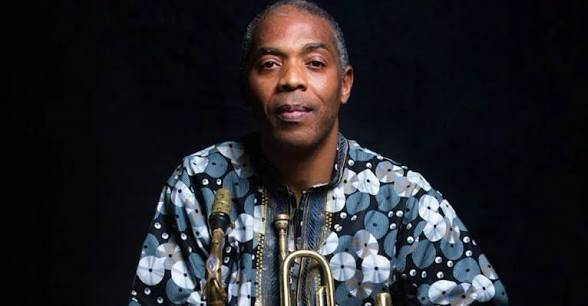
Afrobeat musician and social critic Femi Kuti has stirred fresh debate across Nigeria with his latest remarks on President Bola Tinubu's administration, arguing that the President should not be held solely responsible for the country's problems. In a recent episode of the Good News Naija podcast, Kuti insisted that the real culprit is institutional corruption, particularly a compromised judiciary that failed to stop Tinubu from contesting the 2023 presidential election despite what he described as multiple allegations against him.
Kuti's intervention comes amid widespread public frustration over economic hardship, rising living costs, unemployment and insecurity under the Tinubu administration. While many Nigerians have directed their anger at the President, Kuti offered a more structural critique, arguing that the political system and the citizens who allowed it to function are equally complicit. “Do you think Tinubu is the problem? The judiciary that didn’t stop him from getting there in the first place is a problem. If all the allegations against him are true, how did he contest?” he asked during the podcast, in remarks widely reported by Daily Post, SaharaReporters and Naija News on August 13, 2026.
The musician's argument centres on the failure of Nigeria's institutions to uphold integrity and accountability. He stressed that if the judiciary had functioned properly, Tinubu would not have been able to run for office given the controversies surrounding his past. “If we had men and women of calibre and integrity, he wouldn't have been able to contest in the first place,” Kuti said. He expanded his critique to encompass the broader political class, describing it as a closed, interconnected elite that transcends party lines and government changes. He pointed to the case of Nuhu Ribadu, the pioneer chairman of the Economic and Financial Crimes Commission (EFCC), who was removed from the anti-graft agency and is now serving as Tinubu's National Security Adviser. “This same Ribadu is now Tinubu's Security Adviser. You see, it is the same people. They go to the same parties, they go to the same weddings, they hug themselves, they do everything together,” Kuti observed, highlighting what he described as a revolving door among Nigeria's political elite.
Kuti also criticised the EFCC's history, recalling that former President Olusegun Obasanjo established the commission to fight corruption, but its first high-profile target was Obasanjo's own daughter, Iyabo. He noted that Ribadu was later removed from his position, allegedly because his investigations were becoming too uncomfortable for the political establishment. The musician's remarks reflect a deep-seated skepticism about the effectiveness of anti-corruption efforts and the integrity of those tasked with enforcing accountability.
Beyond his critique of the political class, Kuti expressed concern about the psychological toll of systemic corruption on young Nigerians. He warned that the persistence of institutional failure risks destroying the faith of an entire generation in the possibility of a better future. “A young boy of 15 that has this history or 20, when he sees what is going on, where is your belief in the system? Where is your belief that you have a future in this country?” he asked. His comments underscore a growing sense of disillusionment among Nigerian youth, who have faced economic hardship, limited opportunities and a political system that often appears impervious to change.
Kuti's remarks have drawn a mixed response. Some have praised his willingness to look beyond the figure of the President and confront deeper structural issues, while others have criticised him for appearing to let Tinubu off the hook. However, the musician made it clear that his intention was not to absolve the President but to broaden the scope of accountability. He argued that corruption has become so entrenched across different sectors that changing individual leaders alone would not solve Nigeria's problems. “The issue is that they didn't stop him from getting there in the first place,” he said, placing the burden of responsibility on the institutions and the citizens who allowed the system to persist.
Kuti's intervention comes at a time of intense political debate ahead of the 2027 elections, with opposition figures and civil society groups increasingly vocal about governance failures. His focus on institutional corruption rather than individual leadership has added a new dimension to the conversation, challenging Nigerians to look beyond the occupant of the presidency and confront the systemic decay that enables poor governance. Whether his call for institutional reform will resonate with a public weary of hardship remains to be seen, but his remarks have ensured that the debate over Nigeria's future will not be confined to the actions of one man.
📩 Stone Reporters News | 🌍 stonereportersnews.com
✉️ info@stonereportersnews.com | 📘 Facebook: Stone Reporters News | 🐦 X (Twitter): @StoneReportNew | 📸 Instagram: @stonereportersnews
Add comment
Comments