

Reported by: Oahimire Omone Precious | Edited by: Oravbiere Osayomore Promise.
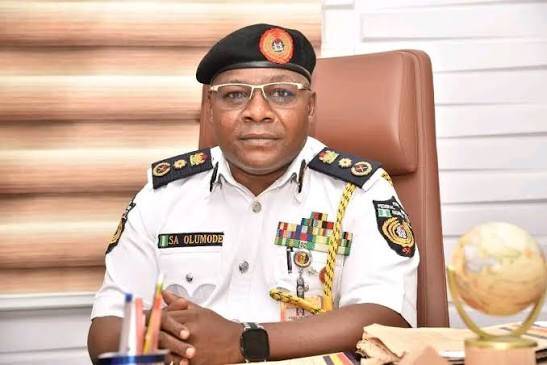
The Federal Government has issued a direct and urgent appeal to wealthy Nigerians, philanthropists, business leaders and corporate organisations, declaring that firefighting is not the sole responsibility of the state but a shared duty that demands immediate private-sector investment in fire stations across the country. Controller General of the Federal Fire Service, Adeyemi Samuel Olumode, made the call on Thursday, August 13, 2026, at a One-Day National Stakeholders' Summit on Fire Safety held in Abuja, where he also marked his first anniversary in office by inducting 37 Public Relations Officers drawn from the 36 states and the Federal Capital Territory into the Nigerian Institute of Public Relations.
Speaking under the theme "Building a Resilient Fire Service for the 21st Century," Olumode stressed that Nigeria requires a multiplicity of strategically located fire stations to bring emergency response closer to communities and drastically reduce response times. He cited the Offa Descendant Association Fire Station, Oyo Town Fire Station, Idanre Fire Station, Bonny Island Fire Station and Kugbo Fire Station as powerful examples of what can be achieved when individuals, communities and organisations invest directly in the safety of their people. "Wealthy individuals, philanthropists, businesses and corporate organisations can make a real difference by investing in fire stations, as this will help protect lives and property," he said. "Firefighting is not the responsibility of government alone."
The Controller General's appeal comes at a time when Nigeria's fire service infrastructure remains critically inadequate, with many states lacking functional fire stations and equipment to respond to emergencies. The Offa Community in Kwara State recently constructed and donated a modern Area Command Office to the Federal Fire Service, a gesture Olumode described as a major investment in public safety and a model for community-driven development. He commended the community and called on traditional rulers, development associations and other well-meaning Nigerians to emulate such initiatives through public-private partnerships.
Olumode also revealed that the summit coincided with exactly one year since he assumed office on August 14, 2025, an anniversary he said provided an opportunity to reflect on the Service's achievements. These include the rehabilitation of 40 firefighting appliances, the supply of two modern firefighting appliances and over 2,000 pieces of personal protective equipment, as well as the training of more than 700 cadet officers in basic firefighting who have since been deployed across commands. The Service has also strengthened specialised capacity through counter-terrorism training in collaboration with the Office of the National Security Adviser and the armed forces, alongside ongoing upgrades to the National Fire Academy, which he said would become the best in Africa for training firefighters once reopened.
The induction of the 37 PROs marked a historic moment, being the first time officers from all 36 states and the FCT had been brought together for a coordinated and structured training programme toward professional recognition and certification. "This is much more than issuing certificates. We are professionalising the way the Federal Fire Service communicates with Nigerians," Olumode said. "Our PROs must understand strategic communication, crisis communication, media relations, stakeholder engagement, public education, reputation management and the challenges created by misinformation, particularly during emergencies." He added that a fire incident is not only an operational occurrence but also a communication one, stressing that public trust remained central to the Service's ability to protect lives and property.
The Controller General commended the Tertiary Education Trust Fund for its collaboration on fire safety in tertiary institutions, as well as the Tony Elumelu Foundation for partnering with the Service on fire safety preparedness training for 7,740 ordinary Nigerians, with a target of reaching 10 persons in every local government area. He also appreciated the Nigerian Institute of Public Relations and Rightangle PR for supporting the Service's professional communication capacity, alongside government and private-sector partners and members of the media.
Olumode called on the public to play its part during emergencies by giving fire appliances a clear path, keeping unnecessary crowds away, and sharing verified information with responders. He stressed that the Service had also strengthened specialised capacity through counter-terrorism training in collaboration with the Office of the National Security Adviser and the armed forces, alongside ongoing upgrades to the National Fire Academy.
The call for private-sector investment in fire stations follows the Federal Government's earlier announcement of plans to establish fire stations in all 109 senatorial districts across the country. That initiative, announced in February 2026, was part of a nationwide strategy to strengthen emergency response and reduce fire disasters. However, the government has acknowledged that public funding alone cannot meet the scale of the challenge, making private-sector partnerships essential to expanding coverage and improving rapid response.
Olumode's appeal also comes amid growing concerns over the state of Nigeria's fire service infrastructure. A recent report indicated that about 90 per cent of federal fire stations lack functional fire engines, highlighting the urgent need for investment in equipment and infrastructure. The Federal Fire Service has also called on the National Assembly to fast-track the repeal and re-enactment of the Federal Fire Service and Rescue Act, as well as to include the establishment of fire stations in constituency projects to improve response times across the country.
The Controller General's message was clear: firefighting is everyone's responsibility, and the wealthy and corporate organisations must step up to fill the gap left by insufficient public funding. By investing in fire stations, they are not just donating to charity but saving lives and protecting property. The examples of Offa, Oyo, Idanre, Bonny Island and Kugbo demonstrate that community-driven initiatives can work, and Olumode has challenged other communities and individuals to follow suit.
As Nigeria continues to grapple with the devastating impact of fire outbreaks, from market blazes to residential infernos, the need for a robust and well-equipped fire service has never been more urgent. The Federal Government has made its position clear: it cannot do it alone. The ball is now in the court of Nigeria's wealthy and corporate organisations to answer the call and help build a safer, more resilient nation.
📩 Stone Reporters News | 🌍 stonereportersnews.com
✉️ info@stonereportersnews.com | 📘 Facebook: Stone Reporters News | 🐦 X (Twitter): @StoneReportNew | 📸 Instagram: @stonereportersnews
Add comment
Comments