

Published by Osasere Edomwonyi Ikpoba
2. Kwankwaso Says Northern Governors Have Failed, Can't Face 2027 Electorate
3. 'They Have Excelled in Failure' — Kwankwaso Slams APC Northern Governors as 2027 Looms
---
'Many Northern Governors Can't Even Campaign Due to Poor Performance' — Kwankwaso
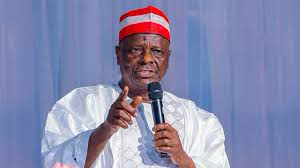
Former Kano State Governor and National Leader of the Nigeria Democratic Congress (NDC), Senator Rabiu Musa Kwankwaso, has launched a blistering attack on governors from the northern region, declaring that many of them have performed so poorly that they cannot even campaign for re-election in the 2027 general elections. Kwankwaso made the remarks on Wednesday, September 2, 2026, while addressing the Nigerian Political Summit held in Ilorin, Kwara State, where he also issued a strong warning to President Bola Tinubu's administration.
Kwankwaso, a former presidential candidate and one of the most influential political figures in the North, did not mince words in his assessment of the APC governors from the region. According to him, the record of the APC's northern governors is so dismal that they will be unable to face the electorate. He specifically singled out Governor Umar Bago of Niger State, accusing him of failure and saying that "even Almighty God cannot help him win re-election". "Governors in the North, they are doing very badly. Many of them cannot even campaign. Many of them cannot campaign. Governor Umar Bago of Niger State is a complete failure and cannot even campaign for re-election," Kwankwaso declared. "Even his campaign director knows that he has failed and will not come out. I don't want to mention their names, but many of them have excelled in failure".
The former governor also took a swipe at his own successor in Kano State, Governor Abba Kabir Yusuf, hinting that his performance had been underwhelming and that he may have to face consequences come 2027. "In Kano State, my successor cannot come out and campaign. He will not, and he may have himself to blame," Kwankwaso said. The comments are particularly significant given that Yusuf was elected under the New Nigeria Peoples Party (NNPP), a party that Kwankwaso once led before his defection to the NDC.
Kwankwaso, who leads the opposition coalition under the NDC, also used the platform to highlight the deteriorating political landscape, accusing the APC-led Federal Government of mismanaging the country's resources and failing to address the economic and security challenges facing the nation. He criticised the government's handling of the economy, saying Nigerians were facing unprecedented hardship due to what he described as the Tinubu administration's wrong economic policies. "Today, the economic policies that are being implemented are a disservice to our people. The people are suffering, and the government is not doing enough to address the situation," he said.
Addressing the wider opposition movement, Kwankwaso expressed confidence that the NDC, in alliance with other opposition parties, would be able to defeat the APC in the 2027 elections. He noted that the opposition's "Government of National Competence" proposal was gaining traction across the country and that the coalition had already attracted a wide range of stakeholders from different political parties and civil society organizations. "We are determined to rescue this country from the grip of the APC, which has failed to deliver on its promises. The people are ready for change, and we will provide that change in 2027," he declared.
Kwankwaso's remarks come just a day after a coalition of 18 opposition parties met in Abuja to consolidate their alliance ahead of the 2027 polls. The meeting, which was attended by leaders of the NDC, ADC, PDP, PRP, SDP, APM, and other smaller parties, was aimed at finalising a common platform that would see the opposition field a single presidential candidate and a unified legislative agenda. However, the coalition has yet to agree on a consensus candidate, with the two leading contenders—Kwankwaso and former Vice President Atiku Abubakar—yet to resolve their differences. The PDP, in particular, has been vocal about its preference for Atiku, while Kwankwaso's NDC has made it clear that the party would field its own candidate unless a workable coalition agreement was reached.
The summit in Ilorin also provided Kwankwaso with a platform to underline his status as a leading figure in the opposition coalition. The former governor reminded the audience of his record in Kano State, where he served two terms and was widely credited with transforming the state's infrastructure and governance. "I have a track record of performance that speaks for itself. I am not a politician who just talks; I deliver results. I am ready to do for Nigeria what I did for Kano State," Kwankwaso said.
Kwankwaso's critique of northern governors was met with a mixed response. While some political observers have praised his frankness, others have pointed to the irony of his criticisms, given that many of the governors he criticised were once his political allies within the APC. However, Kwankwaso's move to align himself with the opposition coalition has repositioned him as a potential kingmaker in the 2027 elections, with some political commentators suggesting that his endorsement could swing the balance in favour of whichever coalition emerges from the current negotiations.
Kwankwaso's comments also underscore the growing political tensions in the North, where the APC faces an increasingly restive electorate. Since the removal of the fuel subsidy and the subsequent economic downturn, President Tinubu's approval ratings have fallen sharply in the region, with many northern voters expressing dissatisfaction with the administration's policies. The opposition has capitalised on this discontent, positioning itself as the alternative that can restore hope and prosperity to the region.
Kwankwaso's broader political ambitions are well known. Since leaving the APC, he has sought to build a political coalition capable of challenging the ruling party at the federal level. His defection to the NDC and his subsequent alliance with other opposition parties are part of a long-term strategy to position himself as a viable presidential candidate in 2027. While he has not yet declared his candidacy, his recent comments and political activities suggest that he is positioning himself for a return to the national stage.
Kwankwaso's claim that many northern governors cannot campaign in 2027 due to their poor performance is a direct challenge to the APC's dominance in the region. If he is proven right, it could signal a seismic shift in the region's political landscape, with the opposition poised to make significant inroads. However, the APC is unlikely to take these criticisms lying down, and the party is already mobilizing its resources to counter the opposition's narrative ahead of the 2027 elections. The coming months will be critical in determining the direction of northern politics and the shape of Nigeria's political landscape leading up to the 2027 elections.
📩 Stone Reporters News | 🌍 stonereportersnews.com
✉️ info@stonereportersnews.com | 📘 Facebook: Stone Reporters News | 🐦 X (Twitter): @StoneReportNew | 📸 Instagram: @stonereportersnews
Add comment
Comments