

Published by Oravbiere Osayomore Promise.
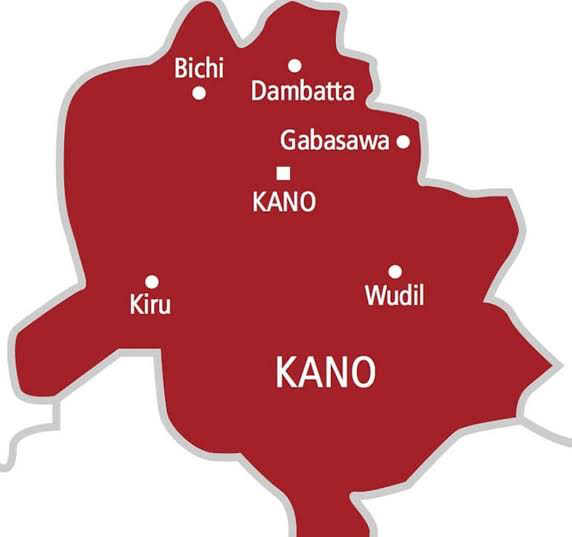
The Kano State Council for Prerogative of Mercy Committee, in partnership with the Nigerian Correctional Service, has commenced visits to selected custodial centres across the state as part of a renewed and aggressive push to decongest correctional facilities and improve the welfare of inmates. The committee, led by its Chairperson, Hajiya Azumi Bebeji, has been interacting with inmates and reviewing the myriad challenges affecting their welfare, rehabilitation, and eventual reintegration into society. According to Bebeji, the inmates appealed for government intervention in several areas, and she assured them that their concerns had been noted and would be addressed within the available resources and the relevant legal framework. She reaffirmed the compassionate disposition of the Kano State Government under Governor Abba Kabir Yusuf, urging the inmates to remain hopeful and continue to pray for the government.
The Controller of Corrections for the Kano State Command, Ahmed Lakpene, commended the committee for its intervention, describing the initiative as a significant step towards reducing congestion and improving conditions in custodial centres. Lakpene said the intervention was in line with the Nigerian Correctional Service Act of 2019, which prioritises human custody, rehabilitation, reformation, and the successful reintegration of inmates into society. He pledged the command’s continued collaboration with the Kano State Government, the Prerogative of Mercy Committee, and other stakeholders to promote safer, more humane, and rehabilitation-focused custodial facilities across the state. This partnership signals a growing recognition that the challenges facing Nigeria’s correctional system cannot be solved by the correctional service alone and that a multi-stakeholder approach involving the judiciary, executive, and civil society is essential.
The decongestion drive in Kano is not a new phenomenon, but it has gained significant momentum in recent months. In August 2026, the Chief Judge of Kano State, Justice Dije Abdu Aboki, conducted a jail delivery exercise at the Kurmawa and Goron Dutse Custodial Centres, where she reviewed the cases of 82 awaiting-trial inmates. Following due consideration of their health conditions and other circumstances surrounding their continued detention, she ordered the immediate release of seven inmates on medical grounds. The exercise, which was attended by the Chief Registrar of the High Court, the Director of Public Prosecutions, representatives of the Commissioner of Police, Legal Aid Council officials, and other critical stakeholders in the administration of criminal justice, reaffirmed the judiciary’s commitment to protecting the rights of persons in custody and ensuring that no individual is detained beyond what is permitted by law. Justice Aboki stressed the need for justice to be administered fairly and without unnecessary delays, while the Controller of Corrections, Lakpene, urged the released inmates to regard their freedom as an opportunity to turn a new page in their lives, remain law-abiding, and refrain from acts that could bring them into conflict with the law.
Beyond the jail delivery exercises, the Kano State Command of the Nigerian Correctional Service has also recorded significant progress in the use of non-custodial sentences. In the first quarter of 2026 alone, the command recorded 151 non-custodial sentences, a milestone derived from reports received from courts across the state. A breakdown of the data indicated that Magistrates’ Courts secured 85 convictions under non-custodial sentences, High Courts recorded six convictions, and Shari’a Courts accounted for 60 convictions. This increasing adoption of non-custodial sentencing by judicial officers, particularly in cases involving minor offences, aligns with international best practices aimed at fostering rehabilitation while reducing overcrowding in custodial facilities. Non-custodial measures, as provided under the Nigerian Correctional Service Act of 2019, include community service, probation, parole, restorative justice, and other court-directed interventions. These measures are designed to address custodial congestion while facilitating the rehabilitation and reintegration of offenders into society. Lakpene commended the judiciary for its sustained synergy with the service in advancing non-custodial sentencing, describing the development as a progressive and impactful approach consistent with global standards in modern corrections administration.
The Kano State Government has also demonstrated a commitment to addressing the root causes of prolonged pre-trial detention through the work of the Criminal Justice Reform Committee on Prolonged Detention, chaired by former Director of Public Prosecutions, Barr. Shaaibu Sule. The committee, which has been engaging with key justice sector institutions, identified several cases of interest and, as part of its preliminary recommendations, proposed the discharge of ten inmates. It also advocated for the digitalisation of criminal justice processes and the introduction of an effective case-tracking system to facilitate speedy trials and reduce custodial congestion. During a courtesy visit to the Controller of Corrections, Barr. Sule commended the Kano State Command of the Nigerian Correctional Service for its cooperation and underscored the importance of sustained collaboration among the correctional service, the judiciary, and the Office of the Attorney-General in addressing pre-trial cases. Lakpene expressed appreciation to the committee for its visit and its reform-driven interventions, reaffirming the command’s commitment to supporting all lawful initiatives aimed at decongesting custodial centres, particularly through the reduction of the awaiting-trial inmate population.
The decongestion efforts in Kano are part of a broader national conversation about the state of Nigeria’s correctional facilities, which have long been plagued by overcrowding, inadequate funding, and poor living conditions. According to the Nigerian Correctional Service, the country’s custodial centres have a combined capacity for about 57,000 inmates but hold over 75,000, with awaiting-trial inmates constituting more than 70 per cent of the population. This overcrowding has serious implications for the health, safety, and dignity of inmates, many of whom are held for months or even years without trial. The situation has been exacerbated by delays in the justice system, insufficient legal representation, and the slow pace of court proceedings. The Kano State Government’s decision to prioritise decongestion is therefore a welcome development that should be replicated across the country. However, the success of these efforts will depend on sustained commitment, adequate funding, and a willingness to address the systemic issues that have contributed to the crisis in the first place. The Prerogative of Mercy Committee’s visits, the Chief Judge’s jail delivery exercises, and the Criminal Justice Reform Committee’s recommendations are important steps in the right direction, but they are not a silver bullet. For Kano’s custodial centres to truly become places of rehabilitation and reformation rather than warehouses of neglect and despair, the government must continue to invest in the justice system, strengthen the use of non-custodial measures, and ensure that the rights and dignity of all persons in custody are upheld.
📩 Stone Reporters News | 🌍 stonereportersnews.com
✉️ info@stonereportersnews.com | 📘 Facebook: Stone Reporters News | 🐦 X (Twitter): @StoneReportNew | 📸 Instagram: @stonereportersnews
Add comment
Comments