

Reported by: Oahimire Omone Precious | Edited by: Oravbiere Osayomore Promise.
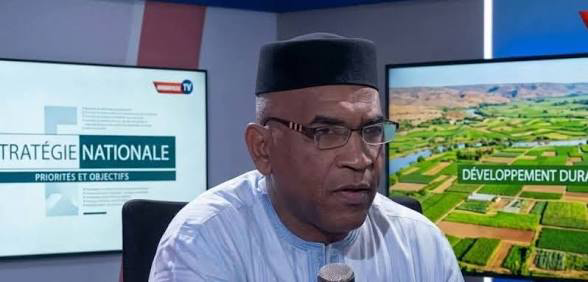
Dakar — A Malian journalist was sentenced to two years in prison on Monday, September 14, 2026, for remarks he made on a television programme about the security situation in northern Mali, in a ruling that press freedom organisations have described as the latest example of the military junta's determination to silence critical voices.
Abderhamane Keita, an editor at the daily Le Témoin newspaper, was taken into custody in early June and charged with "undermining national unity and the credibility of the state" and "publishing and disseminating false or misleading information". His offence was asserting on a live television programme that the northern city of Kidal was being run by the leader of the jihadist group Jama'at Nusrat al-Islam wa al-Muslimeen, the al-Qaeda-linked outfit known as JNIM. Since late April, JNIM and its Tuareg separatist allies have waged a series of attacks aimed at weakening the country's junta rulers, including taking Kidal and assassinating the minister of defence. Keita's statement, in other words, was not an invention. It was a fact on the ground. And for that, he will spend two years in prison.
Keita appeared before the country's national cybercrime unit last week, with his verdict announced Monday. His lawyer told AFP that they would appeal the decision. The media watchdog Reporters Without Borders called Keita's conviction "unjust" and a "new way of criminalising journalism". The head of the group's sub-Saharan Africa bureau, Sadibou Marong, said it "sends out a particularly troubling signal to media professionals in Mali and the region". RSF added that Mali's authorities should "put an end to the use of the justice system against journalists".
Keita is not an isolated case. On August 3, Chahana Takiou, editor of the biweekly 22 Septembre, was sentenced to one year in prison, six months of which were suspended, plus a fine of 500,000 CFA francs. Takiou had been arrested on June 8 after publicly criticising the authorities for prosecuting a fellow journalist, Youssouf Sissoko, under the cybercrime law rather than Mali's press laws. Sissoko, publishing director of L'Alternance, was sentenced to two years in prison and a fine of one million CFA francs in March 2026 for an article critical of the military ruler of neighbouring Niger. The pattern is unmistakable: journalists who report on security failures or criticise the junta are being prosecuted under cybercrime legislation that was never intended to govern the press.
The International Press Institute has warned that the escalating use of cybercrime provisions to target journalists is a "deeply alarming trend" that continues to intensify across Africa, including in Mali. The institute called on Malian authorities to release all journalists imprisoned in connection with their work and to end the misuse of criminal and cybercrime provisions to suppress critical reporting. The International Federation of Journalists has similarly condemned the sentences, noting that since the military junta seized power in 2020, freedom of speech and media freedom have been severely restricted, with an alarming increase in the intimidation, harassment and imprisonment of journalists.
Mali has been wracked since 2012 by a serious security crisis, fuelled by violence from jihadists allied to al-Qaeda or the Islamic State group, along with criminal gangs and armed separatists. In recent years, the junta that came to power in two successive coups in 2020 and 2021 has taken numerous measures against the press and critical voices, dissolved political parties and banned associations' political activities. The cybercrime unit that sentenced Keita was established to enforce offences involving digital and telecommunications technologies, but it has become a tool for silencing dissent. The president of Maison de la Presse, the national umbrella organisation of press defence groups, Dante Bandiangou, said the country needs laws that protect journalists in the course of their profession. "The expansion of digital technology must be an opportunity and not an obstacle to the thriving of press freedom," he told the IPI.
Keita's appeal is expected to be filed in the coming days. But for a journalist whose only crime was stating on television what the entire country already knew, the sentence is a warning to every reporter in Mali: tell the truth about the war, and the war will be brought to your door. The junta's message is clear. The question is whether Mali's journalists will be allowed to keep speaking, or whether the prison cell will become the new newsroom.
📩 Stone Reporters News | 🌍 stonereportersnews.com
✉️ info@stonereportersnews.com | 📘 Facebook: Stone Reporters News | 🐦 X (Twitter): @StoneReportNew | 📸 Instagram: @stonereportersnews
Add comment
Comments