

Reported by: Ijeoma G | Edited by: Oravbiere Osayomore Promise.
The Musa Lukuwa Jumu'at Mosque in Mabera, Sokoto metropolis, is now a sealed crime scene. Its gates are locked, its worshippers scattered, and its imam, Sheikh Musa Ayuba Lukuwa, is recovering from knife wounds to his neck and left hand. The man who attacked him is dead, beaten to death by the very worshippers who had gathered for Friday prayers. And the Sokoto State Government is now trying to contain the fallout from an incident that has exposed the dangerous fault lines running through the state's religious landscape.
It began on Friday, September 11, 2026, shortly after Sheikh Lukuwa led the Jumu'at prayer. According to police reports, a young man among the worshippers approached the cleric and stabbed him twice in the neck. The attack was swift and brutal. But what happened next was equally brutal. Other worshippers overpowered the assailant and beat him to death before police could arrive. By the time the Divisional Police Officer and his team reached the scene, the alleged attacker was already dead. Sheikh Lukuwa was rushed to the Specialist Hospital in Sokoto, where he received treatment for his injuries and was later discharged.
The violence did not end at the mosque. Tension spilled into the streets. Protests erupted in parts of the metropolis, with youths taking to the streets in anger. Businesses along Sahara, Bello Way, and Aliyu Jodi shut their doors as security operatives moved into strategic locations to prevent further violence. The city held its breath. A single act of violence had threatened to ignite a broader conflagration, and the authorities knew it.
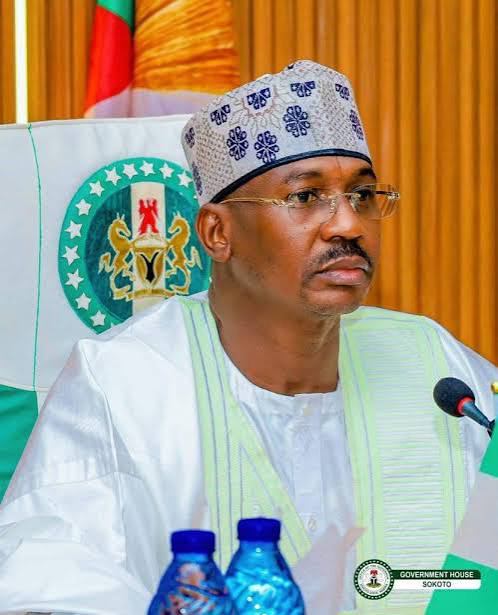
The Sokoto State Government responded quickly. On Tuesday, September 15, 2026, the Director-General of Media and Publicity, Abubakar Bawa, issued a statement announcing the immediate closure of the mosque and the constitution of a committee of Islamic scholars to investigate the incident. "The government has ordered a full investigation into the attack and killing at Musa Lukuwa Jumu'at Mosque, Mabera, and ordered the closure of the mosque, being the crime scene, till further notice," Bawa said. The mosque will remain sealed to preserve evidence and facilitate the investigation.
But the government's response went beyond the operational. It also addressed the religious dimensions of the crisis, which had been simmering for weeks before the stabbing. The statement dissociated the government from "any person of any status that hides under the pretext of religion to undermine or disrespect the Holy Prophet Muhammad (PBUH), his parents, his household and his companions." It reaffirmed the state's "total obedience and respect" for the Prophet and urged residents to promote peace, love, and compassion. The government appealed to residents to refrain from inflammatory statements capable of undermining the peaceful coexistence for which Sokoto is known.
The background to the attack is as complex as it is troubling. Reports suggest that the stabbing may have been connected to a previous sermon delivered by Sheikh Lukuwa, which some Islamic scholars and their followers considered offensive to the parents of Prophet Muhammad. That sermon had already generated tension. A man identified as Mai Barewa had allegedly threatened Lukuwa and one of his senior students over the sermon. Mai Barewa was arrested and arraigned before a court, but the case was still ongoing when the attack occurred. Lukuwa and his followers had reportedly submitted a written complaint to the Sokoto State Government four days before the stabbing, raising concerns over threats against them. The attack on Friday was not a sudden eruption of violence; it was the culmination of weeks of escalating hostility that had been reported to the authorities but not prevented.
The government's decision to constitute a committee of Ulamas to examine the "remote and immediate causes" of the crisis is a recognition that the incident cannot be understood in isolation. The committee has been tasked with investigating the underlying religious tensions and advising the government on measures to prevent further escalation. But the committee's work will be delicate. The issues at stake touch on deeply held religious sensitivities, and any recommendation that is seen as taking sides could inflame rather than calm the situation.
For the people of Sokoto, the closure of the mosque is a painful reminder of the fragility of peace in a state that has long prided itself on religious harmony. The mosque was not just a place of worship; it was a community institution, a gathering point for the faithful, a symbol of the shared religious identity of the Mabera community. Its closure leaves a void that will not be easily filled. The worshippers who gathered there on Friday are now scattered, uncertain of when they will be able to return, and grappling with the knowledge that their place of prayer has become a crime scene.
The police have confirmed that no arrests have been made in connection with the lynching of the alleged attacker. The investigation is ongoing, and the government has assured residents that it will protect lives and property while the committee and security agencies carry out their work. But for a community that has already lost two lives—the cleric's attacker, and the attacker himself—the promise of protection rings hollow. The violence has already happened. The question now is whether the government's response can prevent it from happening again.
Sokoto has seen religious tensions before. The state has a long history of debates over Islamic orthodoxy, and the line between theological disagreement and violent confrontation has sometimes been crossed. The current crisis is a reminder that those tensions remain close to the surface, and that a single spark—a knife, a sermon, a threat—can ignite them. The government's probe panel and the closure of the mosque are necessary steps, but they are not sufficient. What is needed is a sustained effort to address the underlying grievances, to rebuild trust between communities, and to ensure that the rule of law, rather than mob justice, is the mechanism through which disputes are resolved. Until that happens, the peace of Sokoto will remain fragile, and the next attack may only be a matter of time.
📩 Stone Reporters News | 🌍 stonereportersnews.com
✉️ info@stonereportersnews.com | 📘 Facebook: Stone Reporters News | 🐦 X (Twitter): @StoneReportNew | 📸 Instagram: @stonereportersnews
Add comment
Comments