

Reported by: Ijeoma G | Edited by: Oravbiere Osayomore Promise.
The United Nations has delivered a sobering verdict on Nigeria's agricultural economy: the country is losing an estimated $2.3 billion every year, equivalent to about two per cent of its Gross Domestic Product, because women farmers do not have equal access to land, finance, technology, agricultural services, and markets. The assessment was presented in Abuja on Tuesday, September 15, 2026, at a high-level dialogue and farmers market held at the United Nations House to mark the 2026 International Year of the Woman Farmer. The event, themed "Advancing Women's Leadership and Economic Power in Nigeria's Agrifood System," was organised by the Food and Agriculture Organisation, the International Fund for Agricultural Development, the World Food Programme, UN Women, and the United Nations Information Centre, alongside the All Farmers Association of Nigeria.
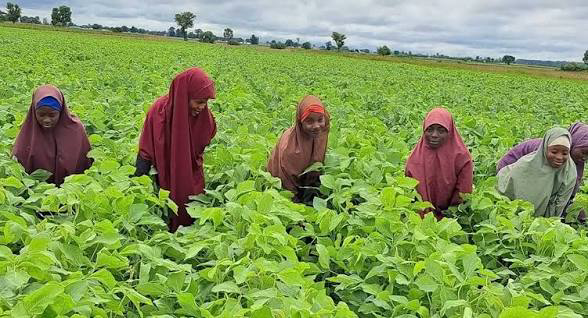
The figures are staggering, but the human reality behind them is even more troubling. Agriculture contributes between 22 and 25 per cent of Nigeria's GDP, and more than 70 per cent of rural households depend on the sector for all or part of their income and food security. Women account for an estimated 37 per cent of labour in crop production alone. They cultivate crops, rear livestock, process farm produce, participate in fisheries and aquaculture, transport and trade food, run small agribusinesses, and play a central role in household nutrition. Yet they remain concentrated at the lower-value end of agricultural value chains, while control over productive assets, finance, technology, and major commercial decisions remains disproportionately outside their reach.
Jimmy Owani, the Officer in Charge of the FAO Representation in Nigeria and to ECOWAS, did not mince words. "Women contribute an estimated 37 per cent of labour in crop production alone," he said. "Yet many continue to face barriers in accessing land, finance, agricultural services, improved technologies and leadership opportunities. As a result, female-managed farms often record lower productivity, not because of differences in ability, but because of unequal access to resources and opportunities." He described the cost of this inequality as substantial, noting that closing the gaps would accelerate agricultural transformation, strengthen food security, and drive inclusive economic growth.
Hussein Gadain, the FAO Representative, reinforced the point with a broader perspective. Globally, women constitute about 41 per cent of the agrifood workforce, and eliminating gender gaps in agricultural productivity and wages could add nearly $1 trillion to the global economy while reducing food insecurity for millions. "Women must be recognised not only as contributors to agrifood systems, but also as decision-makers, innovators, investors and leaders," Gadain said. The FAO called for a shift from programmes that merely seek to "include" women to policies that deliberately expand their economic power and representation in agricultural decision-making.
The International Fund for Agricultural Development disclosed that its investments in Nigeria had reached at least 96,827 women through three major programmes: the Value Chain Development Programme, the Livelihood Improvement Family Enterprises for Niger Delta, and the Special Agro-Industrial Processing Zones. Under the Value Chain Development Programme, 87,888 women were members of supported rural producer organisations, 36,572 received training in crop production technologies, and 50,613 accessed advisory services. The Livelihood Improvement Family Enterprises for Niger Delta trained 17,201 women, while the Special Agro-Industrial Processing Zones trained 5,815 women in improved crop production practices. Chioma Adiele-Okpara, the Country Programme Coordinator representing the IFAD Country Director, said the programmes were also addressing financial inclusion, with 11,003 women accessing savings, 9,568 accessing credit, 11,382 accessing insurance, and 14,654 receiving financial literacy training under the Livelihood Improvement Family Enterprises for Niger Delta.
The World Food Programme said it had worked with farming communities in northern Nigeria over the past five years, reaching 128,000 women through agricultural and resilience-building interventions. Edouard Thiam, the WFP Deputy Country Director, said the support included the provision of seeds, fertiliser and other agricultural inputs, access to equipment and storage facilities, irrigation, market linkages, and the establishment of resilience hubs that bring essential services closer to farmers. He noted that more than 70 per cent of jobs created through its activities had gone to young women, while increased agricultural production had generated opportunities for traders, transporters and processors beyond the farm. "Investing in women farmers is not separate from investing in Nigerian agriculture. It is part of the same ambition to generate greater prosperity," the agency said.
The call for greater investment in women farmers is not merely a matter of equity. It is an economic imperative. Nigeria is grappling with food inflation, unemployment, rural poverty, insecurity, and climate-related disruptions to agricultural production. Leaving the gender gap unaddressed will continue to impose a heavy cost on a country that can ill afford it. The UN agencies warned that the productivity gap was not a reflection of women's ability to farm but largely the result of unequal opportunities. Closing that gap would not only boost agricultural output but also strengthen rural economies, improve household nutrition, and reduce the number of Nigerians living in poverty.
The dialogue brought together government officials, development partners, members of the diplomatic corps, financial institutions, private-sector operators, farmers' organisations, and women farmers. The message from the UN agencies was clear: Nigeria must begin to view women farmers not as beneficiaries of social welfare programmes but as a major economic force whose productivity, enterprise, and purchasing power could significantly influence the country's food security and rural economy. The $2.3 billion annual loss is not an abstract statistic. It is a measure of the opportunity that Nigeria is squandering every year by failing to give women farmers the tools they need to succeed. As the 2026 International Year of the Woman Farmer progresses, the question is whether the government will heed the UN's warning and take the decisive action required to unlock the potential of Nigeria's women farmers, or whether another year will pass with the same loss, the same inequality, and the same unfulfilled promise.
📩 Stone Reporters News | 🌍 stonereportersnews.com
✉️ info@stonereportersnews.com | 📘 Facebook: Stone Reporters News | 🐦 X (Twitter): @StoneReportNew | 📸 Instagram: @stonereportersnews
Add comment
Comments