

Reported by: Oahimire Omone Precious | Edited by: Oravbiere Osayomore Promise.
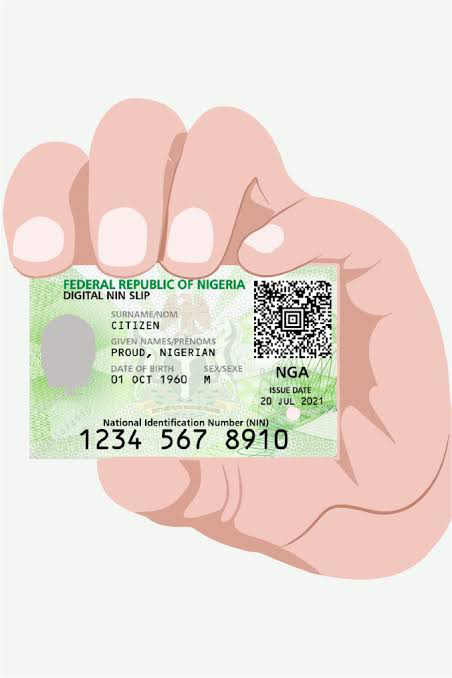
President Bola Ahmed Tinubu has declared that the Federal Government is targeting 95 per cent National Identification Number enrolment coverage by December 2026, even as the national identity database has grown to nearly 140 million records. The President made the disclosure on Wednesday, September 16, 2026, in Abuja at the 8th National Identity Day celebration, where he was represented by his Chief of Staff, Femi Gbajabiamila. The event, themed "Nigeria's Digital Public Ecosystem: Powering Africa's Digital Economy," underscored the administration's push to link the country's digital infrastructure with its economic development agenda.
Tinubu said the government was building the digital infrastructure required to leverage Nigeria's identity system for economic growth. "Nigeria's digital ecosystem must power Nigeria's digital economy and Nigeria's digital economy must help power Africa's economy. Our identity infrastructure will be a critical component of this ambition," he said. The President disclosed that the number of NINs in the national identity database had increased from about 80 million when his administration assumed office to nearly 140 million. He said the national identity infrastructure had also been expanded to accommodate up to 250 million records, while registration had been taken closer to citizens through ward-level enrolment. The government launched a ward-level enrolment drive in February 2026, making free NIN registration available across all 8,809 wards in the country. More than 5,000 enrolment agents have been trained to improve access for persons with disabilities, the elderly, and other vulnerable groups.
The push for universal identity coverage has been a central pillar of the Tinubu administration's digital transformation strategy. The National Identity Management Commission Act 2026, which repealed the 2007 legislation, provided a stronger legal framework for the identity management ecosystem. The new law strengthened safeguards for personal data, increased penalties for identity-related offences, expanded the mandatory use of the NIN across critical sectors, and strengthened governance of the national identity ecosystem. According to the President, integrating the NIN into taxation, banking, healthcare, voter registration, and land transactions would create a system based on "one person, one trusted identity" and facilitate seamless access to government services. He also highlighted the role of identity verification in financial inclusion, noting that NIN-linked verification had supported initiatives such as the Nigeria Education Loan Fund, through which more than 800,000 students had accessed educational financing.
The government is also accelerating the development of a Sovereign Public Key Infrastructure as a trust layer within its broader Digital Public Infrastructure architecture. Tinubu said the initiative would strengthen the foundations required for secure digital signatures, trusted electronic documents, encrypted transactions, and secure government communications. The system would enable businesses to transact digitally with greater confidence while allowing government documents to be authenticated without cumbersome physical processes. He described the development of a robust DPI as critical to healthcare, education, and financial inclusion, reaffirming his administration's commitment to improving access to public services.
The Minister of Interior, Olubunmi Tunji-Ojo, said identity management was central to economic growth, national security, and social inclusion. He noted that Tinubu's assent to the NIMC Act 2026 provided a stronger legal foundation for digital identity management and the country's digital economy. He said a modern state needed reliable population data to improve the planning and delivery of public services, including education, healthcare, and social interventions. Tunji-Ojo urged the commission to expand access to NIN enrolment for Nigerians in the diaspora and accelerate the development of trusted PKI and DPI systems for secure authentication. He also urged Nigerians to enrol for NIN and protect their identity credentials, saying, "Your identity is your digital footprint."
The Minister of Education, Dr Tunji Alausa, said trusted identity management was increasingly important to education planning and access. He disclosed that the ministry was deploying NIN through the Nigeria Education Sector Renewal Initiative, with the identification number serving as the anchor for cleaning up the education database of more than 75 million students from basic to tertiary levels. NIN has become mandatory for JAMB registration and other examinations as part of efforts to curb malpractice, eliminate multiple identities, and improve the accuracy of student records. According to him, integration with NIMC had enabled more than 800,000 students to access financing through the Federal Government's student loan programme.
Despite the progress, the 95 per cent target faces significant obstacles. World Bank data showed that as of June 30, 2026, NIMC had issued NINs to 117.5 million people out of 134.6 million enrolments, leaving a gap of 62.5 million NINs to reach the 180 million target under the World Bank-backed Digital Identification for Development project. NIMC is currently enrolling between 1.5 and 1.8 million people per month. To reach 180 million by December, the pace would need to rise to about 7.4 million per month, more than four times the current rate. The remaining population is also harder to reach, with women, children, rural residents, elderly people, and Nigerians in the diaspora among those still outside the system. Women and girls accounted for about 40.4 million of the NINs issued by June, against a target of 79 million, while children below the age of 16 accounted for 26.3 million, against a target of 60.8 million.
Experts have cautioned that the push for scale must not compromise the quality and reliability of the national identity database. Kelechi Ndieze, founder of Africa Tech Factory, said the success of the programme should not be judged only by the number of people captured, but also by whether the identities are unique, accurate, secure, and usable for verification. An AI and cybersecurity expert, Adeoye Abodunrin, said the real challenge was not simply producing 180 million NIN records but ensuring that they represented trustworthy digital identities. He noted that the urgency to increase enrolment could create pressure to prioritise speed over proper identity verification. A research analyst at the Centre for Democracy and Development, Dengiyefa Angalapu, warned that the quality and usability of the identity system should receive greater attention than simply meeting the December target.
The administration's target of 95 per cent coverage by December is ambitious, and the data suggests that achieving it will require a dramatic acceleration of enrolment. The government has invested in infrastructure, legal reform, and grassroots mobilisation, but the gap between current enrolment rates and the December target remains wide. The coming months will determine whether Nigeria can close that gap without sacrificing the integrity of the identity system it is building. For now, the government is asking Nigerians to enrol, protect their credentials, and embrace the digital future it promises. Whether that future arrives on schedule remains to be seen.
📩 Stone Reporters News | 🌍 stonereportersnews.com
✉️ info@stonereportersnews.com | 📘 Facebook: Stone Reporters News | 🐦 X (Twitter): @StoneReportNew | 📸 Instagram: @stonereportersnews
Add comment
Comments