

Reported by: Oahimire Omone Precious | Edited by: Oravbiere Osayomore Promise.
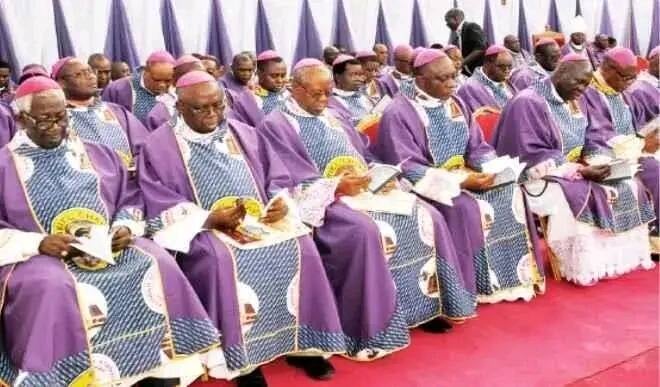
The Catholic Bishops' Conference of Nigeria has issued a stern and unflinching rejection of the proposed Foreign Aid (Regulation, Transparency and Disclosure) Bill 2026, urging the National Assembly and the Federal Government to halt all further steps towards its enactment. The bishops warned that the legislation, which has already passed first and second readings in the Senate, poses a significant threat to religious freedom, humanitarian operations, and the independence of civic organisations across the country. The position was contained in a communiqué issued at the end of the CBCN's Second Plenary Meeting for 2026, held from September 10 to 18 at the Our Lady and St Kizito Pastoral Centre in Ede, Osun State. The document, dated September 19 and signed by the CBCN President, Archbishop Matthew Man-Oso Ndagoso of Kaduna, and the Conference Secretary, Bishop Peter Olukayode Odetoyinbo of Abeokuta Diocese, was read in Catholic parishes across the country during Sunday Masses.
The bishops acknowledged that some provisions of the bill, such as the mandatory registration of foreign aid resources and government supervision of their use, might appear aimed at promoting transparency and accountability. However, they argued that these provisions could have far-reaching and unintended consequences for organisations providing essential humanitarian and social services. Their most pointed objection was to a clause that would empower government authorities to deny registration or refuse renewal where an organisation's activities are considered "not in the national interest." The CBCN warned that this provision would confer broad and undue discretionary powers on government officials, creating a tool that could be weaponised to stifle dissent and silence organisations that fall out of favour with the government of the day. "This Bill, which allows authorities to deny registration or refuse renewals if an organisation's work is deemed 'not in the national interest', gives broad, undue discretionary powers to government officials," the bishops stated.
The bishops further argued that the bill risks creating an unnecessary layer of bureaucracy and duplicating existing regulatory frameworks. They pointed out that non-profit organisations and incorporated trustees, including churches, mosques, other religious bodies, and humanitarian groups, are already strictly regulated by the Corporate Affairs Commission under the Companies and Allied Matters Act and other applicable laws. According to the CBCN, adding another regulatory layer under the guise of transparency would only create confusion, increase the cost of compliance, and give the government excessive control over independent civic space. "Again, the Bill risks creating an unnecessary layer of bureaucracy, duplicating existing laws, and granting excessive government control that could stifle independent civic space," they said.
The bishops' intervention comes amid a chorus of opposition from civil society, human rights organisations, and media bodies. Human Rights Watch had in August urged the National Assembly to reject the bill, arguing that while transparency in foreign aid is a legitimate objective, some of its provisions could give government authorities excessive influence over the funding and activities of independent organisations. In late August, the Socio-Economic Rights and Accountability Project and the Nigerian Guild of Editors also called for the withdrawal of the bill, warning that it threatens civic space and media freedom. The bill, identified as SB.1034 and sponsored by Senator Ibrahim Hassan Dankwambo, was introduced in the Senate in May 2026. It seeks to establish a Foreign Aid Regulatory Commission with sweeping powers to register recipients of foreign aid, collect information, conduct audits and inspections, and impose sanctions, including a minimum fine of N20 million for civil society organisations and private entities, as well as possible suspension or revocation of operating licences.
For the Catholic Church in Nigeria, the stakes could not be higher. The Church operates thousands of schools, hospitals, and charitable institutions that rely on foreign donations and partnerships to serve the poorest and most vulnerable Nigerians. The bishops fear that the proposed law would give the government a chokehold on these operations, allowing it to decide which organisations are "in the national interest" and which are not. In a country where the lines between the state and civil society are increasingly blurred, and where the government has shown a growing intolerance for criticism, the bishops' fears are not unfounded. The bill's supporters, including Senate President Godswill Akpabio, have framed it as a necessary tool to track foreign funding and prevent it from being diverted to criminal or insurgent groups. Akpabio has argued that "if there was no oxygen, Boko Haram would not be existing," suggesting that foreign aid has, in some cases, fuelled insecurity. While the government's concern about the misuse of foreign funds is legitimate, the bishops argue that the solution is not to create a new bureaucracy with unchecked powers, but to strengthen existing oversight mechanisms and enforce the laws that are already on the books.
The bishops' communiqué was not limited to the foreign aid bill. They also expressed deep concern over the worsening security and economic situation in the country, citing insecurity, poverty, poor infrastructure, and governance challenges despite Nigeria's abundant human and natural resources. They lamented the persistence of violence, kidnapping, banditry, illegal mining, and the alleged theft of the country's natural resources, warning that these activities have deprived Nigerians of peace and threatened national unity. The bishops called on the government to intensify efforts to secure communities, create conditions for displaced persons to return to their ancestral homes, and ensure accountability for those responsible for acts of violence. They also called for the decentralisation of the police system, arguing that it should be deployed for the common good rather than personal, ethnic, political, or religious interests. On the economy, they urged the government to create more jobs, support local businesses, and manage economic policies in a way that eases the financial burden on the poor.
As Nigeria prepares for the 2027 general elections, the bishops announced that all dioceses and parishes across the nation will embark on civic education, mobilisation, and end-of-month fasting and prayer with Rosary processions from October to December 2026. They declared December 8, 2026, as a special and national day for prayer and fasting for the success of the elections. They also called on all stakeholders to work for free, fair, and credible polls, encouraging eligible voters to come out en masse and vote according to their consciences. The bishops' decision to mobilise the Church's vast network for civic education and voter mobilisation is a clear signal that they intend to be a powerful voice in the 2027 election season. For now, their immediate priority is to stop the foreign aid bill in its tracks. The National Assembly has been given a clear choice: heed the warning of the bishops and the broader civil society, or risk a confrontation with the Church that could have far-reaching political consequences. The bishops have made their position clear. The ball is now in the lawmakers' court.
📩 Stone Reporters News | 🌍 stonereportersnews.com
✉️ info@stonereportersnews.com | 📘 Facebook: Stone Reporters News | 🐦 X (Twitter): @StoneReportNew | 📸 Instagram: @stonereportersnews
Add comment
Comments