

Reported by Ariajegbe Sylvia Esezobor
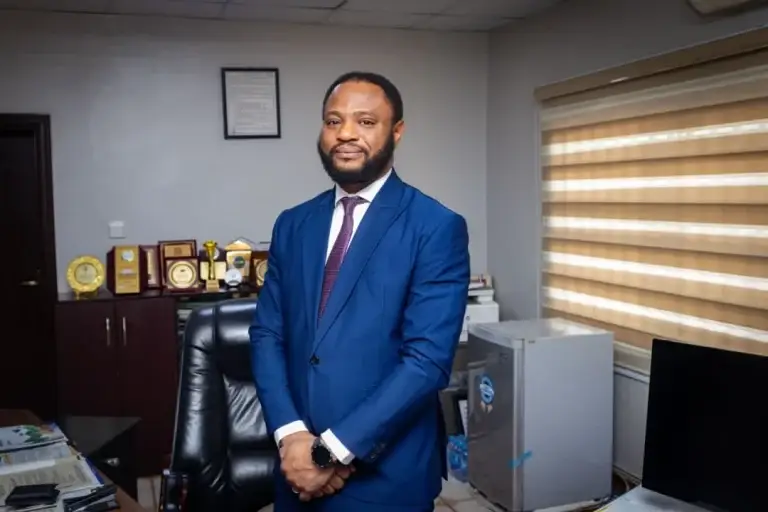
The Managing Director and Chief Executive Officer of the Abuja Electricity Distribution Company, Chijioke Okwuokenye, has said Nigeria can achieve 24-hour power supply, but only if the country confronts the combination of wrong decisions, mismanagement and a chronic lack of accountability that has kept the power sector trapped in a cycle of failure for decades.
In a wide-ranging interview with Punch’s Naomi Chima published on September 19, 2026, Okwuokenye rejected the search for a single solution to Nigeria’s electricity crisis, saying the answer lies in a set of interlocking reforms that begin with holding people accountable. “If you were going to bring it down to a single silver bullet, I’ll tell you that it doesn’t exist,” he said. “But there has been a combination of reasons and, at the heart of it, I would say it’s been a combination of wrong decisions, mismanagement and a lack of accountability.” He said the transformation of AEDC itself is hinged on governance, and that he had told the Minister of Power that no new law, project or policy would change anything unless people are held accountable.
Okwuokenye’s confidence that 24-hour supply is achievable is grounded in the experience of mini-grids, which have delivered uninterrupted power to communities in Nigeria. “There are places in Nigeria where there is uninterrupted power supply. They have not experienced power outages. Mini-grids are doing it,” he said. The challenge, he argued, is scaling that success to the national level, because only at scale can the power sector drive industrialisation and the economic growth Nigeria needs. “The fact is that, yes, it can be done. And yes, we will get it done,” he said.
Central to AEDC’s strategy is the shift towards distributed generation, which brings power generation closer to where demand exists and reduces reliance on an overstretched national grid. Okwuokenye said there is not enough power from the grid to serve every customer, which makes load shedding inevitable. Distributed generation allows AEDC to blend grid power with embedded and renewable sources, achieving both reliability and a reasonable blended cost of energy, since grid power remains cheaper. The company is working with international organisations to pilot smart distribution networks, deploying battery storage solutions in two areas of its network to ensure industrial customers get uninterrupted power, and using drones for customer migration and monitoring. It has already deployed battery and inverter technology for Nigerian Breweries’ Kaduna plant and brought the company back into the distribution network, and now plans to scale that model for industrial customers. AEDC has also approached the Ministry of Works to interconnect solar power plants to the grid.
A key pillar of the plan is the 350-megawatt gas plant being developed by the Nigerian National Petroleum Company in Gwagwalada, which Okwuokenye said will significantly boost supply to Abuja and surrounding communities. The plant is expected to come on stream either in the last quarter of 2026 or sometime in 2027, and AEDC plans to enter a bilateral power supply arrangement with NNPC to source electricity from it. AEDC has also promised near-24-hour power across the Federal Capital Territory, Niger, Kogi and Nasarawa states by 2027, and is constructing a new feeder line to Wuse to deliver at least 20 hours of daily supply, with similar improvements planned for Idu.
Okwuokenye also addressed the economics of the power sector in blunt terms, using a bakery analogy to explain why the current pricing model cannot sustain reliable supply. He said power must be rightly priced and fully accounted for, because a distribution company that buys at one price and sells below cost cannot replenish its stock, and one that cannot account for what it supplies will never have enough revenue to sustain operations. He acknowledged that AEDC is not yet providing world-class service and said the company must demonstrate to customers that there is a pathway to reliability. He called on customers to pay their bills, refrain from energy theft and protect infrastructure from vandalism. He described energy theft as a national menace that should be declared economic sabotage, warning that it discourages investment in the sector and undermines every effort to improve supply.
The CEO’s vision for AEDC extends beyond infrastructure. He said he wants a company where customers take reliable electricity for granted and where staff do their jobs without demanding bribes or appreciation. He described leading a workforce of over 3,000 people and being accountable to more than 1.2 million customers as the biggest responsibility of his career. On the controversy over the Presidential Villa’s adoption of solar power, he said the criticism reflected a misunderstanding, explaining that the State House had simply replaced expensive diesel generation with solar while remaining connected to the grid. He stressed that every effort to bring additional generating capacity into the system should be embraced.
Okwuokenye’s remarks come at a time when Nigerians continue to endure unreliable electricity despite repeated government promises. The Electricity Act 2023, signed by President Bola Tinubu, introduced a decentralised framework that empowers states to establish their own electricity markets and regulatory commissions, and AEDC has transitioned into a holding company structure with subsidiaries for Niger and Kogi states in response. The grid’s fragility was underscored in September 2026 when a nationwide outage left homes and businesses in darkness for hours. For the millions of Nigerians who still measure their days by the hours of darkness rather than light, the question is whether the pathway Okwuokenye describes will produce the outcome he insists is possible, or whether the accountability he demands will remain as elusive as the 24-hour supply he promises.
📩 Stone Reporters News | 🌍 stonereportersnews.com
✉️ info@stonereportersnews.com | 📘 Facebook: Stone Reporters News | 🐦 X (Twitter): @StoneReportNew | 📸 Instagram: @stonereportersnews
Add comment
Comments