

Reported by: Ijeoma G | Edited by: Oravbiere Osayomore Promise.
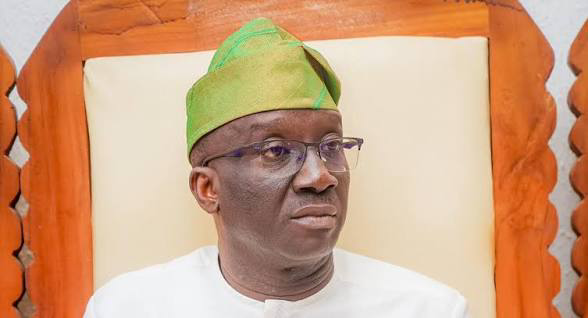
The numbers tell a story that critics say Governor Monday Okpebholo cannot ignore. Edo State's domestic debt has surged by N59.37 billion under his administration, climbing from N113 billion at the end of 2024 to N172.37 billion by March 2026. In just three months, between December 2025 and March 2026, the debt rose by N81.19 billion, an 89 per cent increase that catapulted Edo from 12th to sixth among Nigeria's most indebted states. The Debt Management Office data shows that while the debt declined in the first three quarters of 2025, falling to N76.13 billion by September, it rose again to N91.18 billion by December and then exploded to N172.37 billion by March 2026. The sharpest increase came in the first quarter of 2026, a period that coincided with the Okpebholo administration's push for infrastructure projects, including the controversial N80 billion flyover in Wukari and other road and bridge projects valued at over N134 billion.
The contrast with Abia State could not be starker. On Friday, September 25, 2026, Governor Alex Otti revealed that his administration had reduced Abia's inherited debt from N191.2 billion to N48.4 billion, paying off almost 75 per cent of the loan obligations he inherited. Otti attributed the achievement to a deliberate 20 per cent reduction in the cost of governance and a commitment to keeping capital expenditure at 80 to 82 per cent of the state budget, leaving only 18 to 20 per cent for recurrent spending. "It is a major problem in the country. If you don't manage your costs very well, you will find that year in, year out, you are struggling. You are working hard. You are sweating, but it's not showing," Otti said. He kept the cost of governance within 20 per cent of expenditure and maintained salaries at about 11.9 per cent, even after implementing the new minimum wage. His approach allowed Abia to build about 450 roads without taking fresh loans, while simultaneously reducing its debt burden.
Critics of the Okpebholo administration have been quick to draw the comparison. The Coalition of Registered Political Parties has accused the governor of prioritising President Bola Tinubu's 2027 re-election bid over effective governance, alleging that he lacks the initiative to reduce poverty and tackle the high cost of living in Edo State. Afenifere chieftain, citing Okpebholo's reliance on former Governor Adams Oshiomhole, described his leadership as having a "village mentality" and accused him of doing the bidding of his political benefactor. The Peoples Democratic Party in Edo State accused the administration of having no credible security strategy, alleging that it dismantled the command-and-control framework inherited from the Obaseki administration and abandoned communities like Ekpoma to kidnappers. A report from September 2026 also highlighted that payment memos for completed projects were often sent to the governor's office but remained unattended for months, with the government allegedly adopting a "cherry-picking" approach to approving payments.
The Okpebholo administration has pushed back against the narrative of reckless borrowing. Analysts have pointed out that the state's structured domestic debt, comprising formal loans and bonds, actually fell by about 37 per cent, from N36.03 billion in the fourth quarter of 2024 to N22.60 billion by the first quarter of 2026. They also noted that total liabilities declined from approximately N57.14 billion to N48.42 billion over the same period. The 2025 Debt Sustainability Analysis showed that Edo State remains at moderate risk of debt distress, with total debt as a percentage of revenue projected to peak at 193 per cent in 2027 and 2029, within the 200 per cent threshold. The government has argued that the increase in domestic debt reflects strategic borrowing to fund infrastructure, and that the state's 2026 budget of N939.85 billion allocates 68 per cent to capital expenditure, with N637 billion for capital projects and N302 billion for recurrent spending.
But critics are not convinced. They point to the fact that Otti, a former banker, has demonstrated that a state can reduce its debt while increasing capital spending, by cutting the cost of governance and prioritising productive investment over consumption. They argue that Okpebholo, whose background is in software engineering, has not shown the same level of fiscal discipline. The question they are asking is simple: if Abia can pay down 75 per cent of its inherited debt in three years by cutting governance costs, why is Edo's debt rising so rapidly under Okpebholo? The answer, they say, lies in the choices the governor has made. Otti spent on roads, hospitals, and schools while keeping governance costs low. Okpebholo has spent on projects that critics describe as "white elephant" ventures, while the cost of governance has not been visibly reduced.
The debate is not just about numbers. It is about the philosophy of governance. Otti's approach reflects a belief that government should spend less on itself and more on the people. Okpebholo's approach, as seen by his critics, reflects a belief that government should spend on projects that generate political capital, even if they increase the state's debt burden. The coming months will test whether Okpebholo can learn from Otti's example, or whether Edo State will continue down a path that critics warn could lead to a debt crisis. For now, the DMO data tells its own story: Edo is the sixth most indebted state in Nigeria, and the debt is rising. The question is whether the governor is listening.
📩 Stone Reporters News | 🌍 stonereportersnews.com
✉️ info@stonereportersnews.com | 📘 Facebook: Stone Reporters News | 🐦 X (Twitter): @StoneReportNew | 📸 Instagram: @stonereportersnews
Add comment
Comments