

Reported by: Ijeoma G | Edited by: Oravbiere Osayomore Promise.
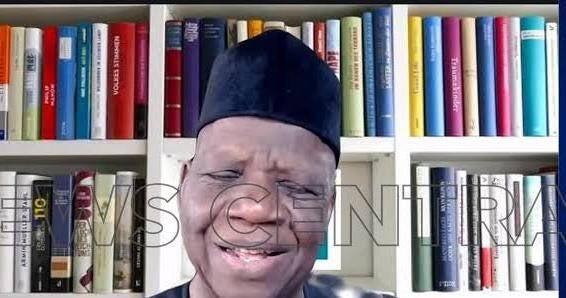
The fuel subsidy debate in Nigeria has been dominated by politicians trading accusations while ordinary citizens bear the crushing weight of rising prices. But a petroleum engineer and economist, Professor Izielen Agbon, has cut through the political noise with a damning verdict: the entire fuel subsidy regime, in its original form and in its removal, is a scam orchestrated by Nigeria's ruling class to enrich themselves at the expense of the masses. Agbon made the declaration during a virtual public discussion organised by the Alliance on Surviving COVID-19 and Beyond, chaired by human rights lawyer Femi Falana, under the theme "Working-Class Solutions to PMS Price Increases and Fuel Subsidy Removal." His intervention reframes a debate that has been reduced to a binary choice between restoring subsidy or maintaining its removal, exposing what he describes as a more fundamental fraud that neither the ruling All Progressives Congress nor the opposition is willing to confront.
Agbon is not a newcomer to this fight. A former Head of the Department of Petroleum Engineering at the University of Ibadan and a former chairman of the Academic Staff Union of Universities at the same institution, he has spent decades analysing Nigeria's oil sector from his base in Texas, United States. He has consistently argued that there is no genuine petrol subsidy in Nigeria, that what the government has historically subsidised is corruption and inefficiency, and that the true cost of producing a litre of petrol in the country is far lower than the prices Nigerians pay. In a 2011 analysis that remains relevant today, he calculated the real cost of a litre of petrol at N33.36 compared to the official price of N65 at the time, exposing the gap between what Nigerians should pay and what they are charged.
His latest intervention goes beyond pricing mechanics. Agbon told the webinar that the Tinubu government is planning to sell shares of the Nigerian National Petroleum Company Limited to private investors immediately after the 2027 general election, reducing the government's stake from a controlling position to a minority holding of about 35 per cent. He alleged that the plan, which he said dates back to 2023, would follow the model already applied to Nigeria LNG, where international oil companies hold a majority stake. "They call it the energy model," Agbon said. "They claim that the Nigerian liquefied gas model is sufficient because the government owns less than 50 per cent, and the international IOCs are the ones that have 51 per cent of the Nigeria LNG." He characterised the plan as a means of transferring effective control over the nation's oil resources into private hands once electoral pressure has passed. "Immediately, we sell the shares of NNPCL to our cronies. And when you get the shares of NNPCL in private hands, what they have done is to just privatize the resources of the nation," he declared.
Agbon's core argument is that the fuel subsidy debate has been deliberately constructed to obscure a simple truth: the ruling class uses the subsidy as a mechanism to loot the public treasury, and when the subsidy becomes politically untenable, it replaces one form of looting with another. During the subsidy era, the beneficiaries were smugglers, oil traders, and a network of politically connected importers who inflated costs and pocketed the difference. When President Tinubu announced "subsidy is gone" in May 2023, prices at the pump tripled from about N200 per litre to over N1,300. The government claimed it saved over N15 trillion between June 2023 and December 2025. But Agbon and other critics have pointed out that in 2025 alone, the Federal Government granted N34 trillion in tax waivers, concessions, and import duty exemptions, according to data from the Nigeria Customs Service. In one year, the government gave away more than it claimed to have saved in three years of "subsidy is gone." The beneficiaries of those waivers were not bus drivers or teachers, but big oil traders, manufacturers, and importers, the very elites the President accuses of feeding fat on subsidy.
"So we took money from the poor at the pump, and returned it to the powerful through the back door," Agbon said. "That is not reform. That is just a money transfer between Nigeria's fat cats." He further noted that subsidy has never truly left the system. NNPCL's own reports show N3.6 trillion in "under-recovery" in 2024 and another N800 billion in the first quarter of 2025, figures that contradict the government's claim that subsidy has been completely removed. The poor continue to pay at the pump, while the ruling class continues to collect through opaque mechanisms that receive little media scrutiny.
Agbon's proposed alternative is a production-cost pricing model that would determine the price of petrol based on the actual cost of crude oil, refining, transportation, distribution, and applicable taxes, rather than the international opportunity cost used under the import-parity model. He said applying this model to the 445,000 barrels-per-day domestic crude allocation reserved for NNPCL refineries could result in a petrol price between N435 and N687 per litre at an exchange rate of N1,333 per dollar. This would make fuel more affordable for workers and small businesses, and would also enable NNPCL to become a price-setter and supplier of last resort, increasing competition and challenging what he described as the oligopolistic influence of the Dangote Refinery. Agbon also advocates for the operationalisation of state-owned refineries and discounted crude oil pricing for domestic use, measures that would reduce Nigeria's dependence on imported petroleum products and insulate consumers from exchange-rate fluctuations.
The political response to Agbon's intervention has been predictable. The Presidency has consistently defended the subsidy removal as necessary to prevent national bankruptcy, with officials arguing that the beneficiaries of the old subsidy regime were not the Nigerian people but fraudsters and non-Nigerians. Governor Alex Otti of Abia State has rejected calls to restore subsidy, saying anyone praying for its return does not mean well for Nigeria. Former Vice President Atiku Abubakar has promised to restore a targeted subsidy if elected in 2027, while the ruling APC has dismissed his proposal as a desperate political gambit. Agbon's analysis suggests that both sides are missing the point. The real debate, he argues, is not whether subsidy should be removed or restored, but who controls the pricing mechanism and who benefits from it. Until that question is addressed, the Nigerian people will continue to pay at the pump while the ruling class collects through the back door.
📩 Stone Reporters News | 🌍 stonereportersnews.com
✉️ info@stonereportersnews.com | 📘 Facebook: Stone Reporters News | 🐦 X (Twitter): @StoneReportNew | 📸 Instagram: @stonereportersnews
Add comment
Comments