

Reported by: Oahimire Omone Precious | Edited by: Oravbiere Osayomore Promise.
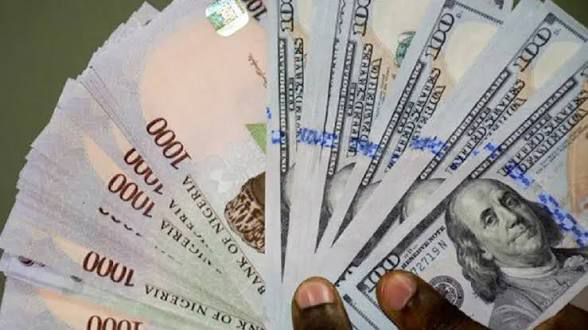
The naira weakened against the United States dollar on Monday, September 28, 2026, slipping to N1,382 per dollar in the parallel market from N1,378 recorded over the weekend, while the official exchange rate also depreciated, widening the gap between the two markets and deepening concerns about liquidity in Nigeria's foreign exchange system.
Data from the Central Bank of Nigeria showed that the indicative exchange rate in the Nigerian Foreign Exchange Market rose to N1,331.5 per dollar from N1,330 per dollar, representing a depreciation of N1.5 for the local currency. The movement in both markets pushed the margin between the parallel and official rates to N50.5 per dollar from N48 per dollar last Friday. While the parallel market premium remains significantly narrower than the yawning gaps of previous years, the simultaneous weakening of the naira in both windows suggests that demand pressures continue to weigh on the currency despite the Central Bank's reform efforts.
The most striking figure in Monday's data was the collapse in trading activity in the official market. The value of interbank turnover in the Nigerian Foreign Exchange Market dropped by 77.7 per cent to $24.73 million from $111.06 million recorded at the weekend. The sharp decline in turnover signals a significant drop in dollar supply at the official window, a development that could intensify pressure on the naira in the coming days if the trend persists. The interbank market is a critical channel for foreign exchange allocation to businesses, importers and investors, and a sustained reduction in turnover could constrain economic activity and force more demand into the parallel market.
The depreciation of the naira on Monday is the latest movement in a currency that has been on a volatile trajectory since the Central Bank floated the exchange rate in 2023. The naira lost a significant portion of its value in the months following the floatation, falling from about N460 per dollar to over N1,500 at its weakest point in 2024. The Central Bank has since introduced a series of reforms, including the clearance of a backlog of foreign exchange obligations, the liberalisation of the Bureau de Change segment, and the adoption of the Electronic Foreign Exchange Matching System, aimed at restoring stability and attracting dollar inflows. By September 2026, the naira had stabilised to some degree, trading in a relatively narrow band compared to the chaos of 2024, but the currency remains vulnerable to fluctuations in oil prices, capital flows and domestic economic conditions.
The narrowing of the parallel market premium has been a bright spot in the Central Bank's reform narrative. In 2024, the gap between the parallel and official rates sometimes exceeded N200 per dollar, creating arbitrage opportunities and undermining confidence in the official market. By mid-2026, that gap had shrunk considerably, with the Central Bank attributing the improvement to increased transparency, tighter enforcement against speculative activities, and improved dollar supply. Monday's margin of N50.5 per dollar, while wider than Friday's N48, is still far below the levels seen during the worst periods of exchange-rate divergence. The Central Bank has consistently argued that a narrower premium is a sign of a more functional foreign exchange market, even if the absolute value of the naira continues to fluctuate.
However, the collapse in interbank turnover raises questions about the durability of the current stability. A drop of nearly 78 per cent in dollar supply at the official window is a significant development that could presage renewed pressure on the naira. The reasons for the decline were not immediately disclosed by the Central Bank, but analysts point to a combination of factors, including reduced inflows from oil sales, lower foreign portfolio investment, and seasonal demand pressures. The third quarter is drawing to a close, and businesses typically increase their dollar demand towards the end of the quarter to meet import obligations, pay dividends and settle other foreign-currency liabilities. If dollar supply does not recover in the coming days, the naira could face further depreciation in both markets.
For ordinary Nigerians, the exchange rate is not an abstract economic indicator. It determines the cost of imported goods, from food and medicine to fuel and machinery. A weaker naira makes imports more expensive, fuelling inflation and eroding household purchasing power. The depreciation of the naira since 2023 has been a major driver of the cost-of-living crisis that has pushed millions of Nigerians into poverty. The relative stability of recent months has provided some relief, but the currency remains fragile, and the events of Monday serve as a reminder that the gains of the past year are not guaranteed.
The Central Bank has not yet issued a statement on Monday's market movements. Governor Olayemi Cardoso has consistently maintained that the bank's priority is to maintain exchange-rate stability, build foreign reserves, and create an enabling environment for investment. The decline in interbank turnover will test the bank's capacity to manage liquidity and ensure that the official market remains a reliable source of foreign exchange for legitimate users. The coming days will reveal whether Monday's weakening is a temporary blip or the beginning of a more sustained depreciation. For now, the naira remains under pressure, the margin between the markets remains wide, and the dollar supply that supports the official window has slowed to a trickle. The Central Bank's next moves will be closely watched.
📩 Stone Reporters News | 🌍 stonereportersnews.com
✉️ info@stonereportersnews.com | 📘 Facebook: Stone Reporters News | 🐦 X (Twitter): @StoneReportNew | 📸 Instagram: @stonereportersnews
Add comment
Comments