

Reported by: Oahimire Omone Precious | Edited by: Oravbiere Osayomore Promise.
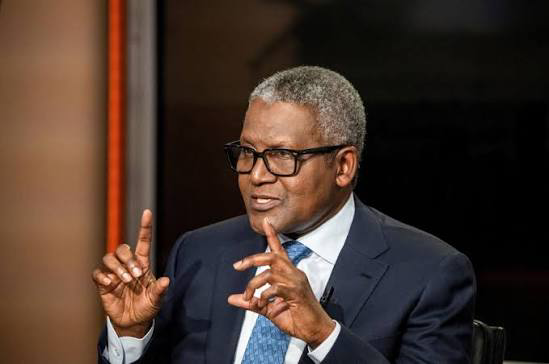
Aliko Dangote, Africa's richest man and the driving force behind the continent's largest oil refinery, has declared that most African countries will be self-sufficient in refined fuel by 2030, as he prepares to break ground on a $16 billion refinery on the Kenyan coast that he says will help end the continent's dependence on imported petroleum products. In an interview with Agence France-Presse in Nairobi on Tuesday, September 29, 2026, Dangote said the new facility would be part of a broader effort to stop Africa exporting raw materials and buying back finished products at a premium. "By 2030, the majority of African countries will be self-sufficient," he said. "It does not matter where it is refined, but it should be in the African continent, on the soil of Africa."
The refinery, planned for Lamu County on Kenya's northeastern coast, is expected to have a capacity of 700,000 barrels per day and will take about 30 months to build. The groundbreaking ceremony is scheduled for Wednesday, September 30, 2026, with Kenyan President William Ruto expected to preside alongside Dangote. The project has not been without controversy. A Kenyan court ordered a temporary halt to site activities on Friday, September 25, after 133 farmers and residents filed a petition alleging they would be forcibly evicted from their ancestral land without adequate compensation or a resettlement plan. The Malindi Environment and Land Court directed that the status quo be maintained until October 14. Dangote Group has said the court order will not halt the groundbreaking ceremony, though it may affect site activities. The company has estimated the project will cost between $15 billion and $16 billion, with completion targeted for 2030.
Dangote's vision extends far beyond a single refinery. His group is already operating a 650,000-barrel-per-day refinery in Nigeria and plans to expand that capacity to 1.4 million barrels per day. Combined with the proposed Kenyan facility and other projects, Dangote Group is targeting a total refining capacity of 2.1 million barrels per day across Africa by 2030, which would position it among the world's largest refining operators. The expansion is part of a broader $40 billion investment plan covering refining, petrochemicals, fertiliser and manufacturing, with the group aiming to grow annual revenue from about $20 billion to $100 billion by the end of the decade. Dangote has described the strategy as a bet on Africa's capacity to feed, power and industrialise itself. "We must consolidate this progress," he said earlier this year, referring to the momentum behind the continent's refining push.
The argument Dangote makes is both economic and political. For decades, Africa has exported crude oil and other raw materials at a fraction of their value and imported finished goods at full price, a paradox that has enriched intermediaries and impoverished producers. "The biggest problem is that we export raw materials at maybe 5 to 10 percent of its value, and then we end up buying at 100 percent of its value," Dangote told AFP. "We are exporting jobs, because when we keep exporting raw materials, you are creating jobs out there. And when you buy finished products from them… you are importing poverty, because you are not actually creating any jobs here." His proposed solution is to build refining capacity on African soil, so that crude oil extracted from African fields is processed into petrol, diesel, aviation fuel and petrochemicals within the continent, creating jobs, retaining value and reducing dependence on foreign supply chains.
The Kenyan refinery is a central pillar of that strategy. It is also part of the Lamu Port-South Sudan-Ethiopia transport corridor, a multibillion-dollar infrastructure project that includes railways, pipelines, a power plant, roads and airports designed to connect Kenya's Lamu port to South Sudan and Ethiopia. The refinery is expected to reduce eastern Africa's reliance on imported refined products, a goal that has gained urgency as the region grapples with high fuel costs and supply chain disruptions. Kenyan President William Ruto has been a vocal supporter of the project, saying his government was fast-tracking administrative processes to prevent delays. Ruto described the refinery as a regional project that would support industrial activities in East Africa, create jobs and improve technical skills. Dangote has said the Kenyan refinery will be bigger than the existing Dangote refinery in Nigeria, though the exact configuration and final capacity are still being finalised.
For Africa, the stakes are enormous. The continent currently imports a large share of its refined petroleum products despite producing significant volumes of crude oil. Closing the refining gap would require building the equivalent of nearly three Dangote-sized refineries, according to some estimates. Dangote's ambition is to build at least one of them in East Africa, and his track record suggests he is serious. His Nigerian refinery, which began operations in 2024, has already disrupted the country's downstream sector, and the company has said expanded output could cut petroleum product prices by as much as 50 per cent. The Kenyan project, if completed on schedule, would be the first major refinery of its kind in East Africa and a template for other countries on the continent. For Dangote, the message is simple: Africa must refine what it consumes, and it must do so on its own soil. Whether that vision becomes reality by 2030 remains to be seen, but the groundbreaking in Lamu this week brings it one step closer.
📩 Stone Reporters News | 🌍 stonereportersnews.com
✉️ info@stonereportersnews.com | 📘 Facebook: Stone Reporters News | 🐦 X (Twitter): @StoneReportNew | 📸 Instagram: @stonereportersnews
Add comment
Comments