

Reported by: Ijeoma G | Edited by: Oravbiere Osayomore Promise.
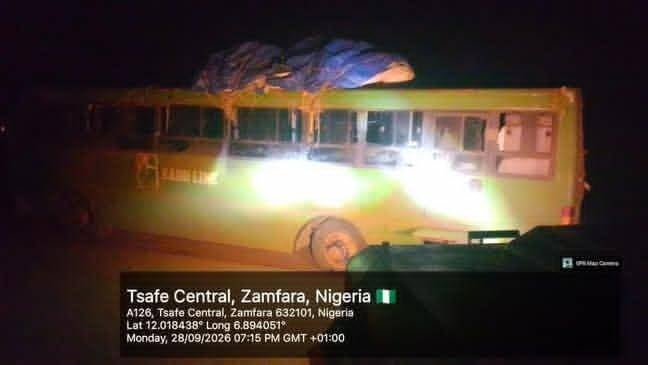
The commercial vehicle had been on the road for days, carrying its passengers across borders and through the vast, unforgiving stretches of the Sahel. They were coming from Senegal, heading to Kano State, many of them returning from a Maulud programme, a religious observance that had brought them together in West Africa. They were 41 in number: 24 men, 10 women, and seven children. For most of the journey, the road had been long but uneventful. Then, somewhere along a highway in Tsafe Local Government Area of Zamfara State, the vehicle broke down.
A mechanical fault. It was the kind of thing that happens on Nigerian highways, where vehicles are often old, roads are poorly maintained, and the nearest mechanic might be hours away. The passengers were stranded, exposed, and vulnerable. They did not know it yet, but they had just become targets. Bandits operating in the area saw the broken-down vehicle and the people around it. They saw an opportunity. They moved in, attempting to force the travellers away from the vehicle and into the surrounding bush, where they would be held captive and used as bargaining chips for ransom.
What happened next is the reason this story did not end in tragedy. Troops of Sector 2, Operation FANSAN YAMMA, received intelligence about the ambush. They mobilised swiftly, moving to the scene and engaging the armed group with what the military described as superior firepower. The bandits, unprepared for the speed and intensity of the response, abandoned the travellers and fled into nearby farmlands. All 41 victims were rescued unharmed. The military said the rescued travellers were receiving support and would be reunited with their families and transit authorities. Troops have maintained a presence in the area to protect travellers and pursue the fleeing suspects.
The rescue is a snapshot of the daily reality along the highways of Nigeria's North-West, where bandits have turned major roads into hunting grounds. Travellers are ambushed, abducted, and held for ransom. Some are killed. Many are never found. The fact that these 41 people survived is a testament to the swift response of the troops, but it also raises uncomfortable questions about how many others have not been so fortunate. Just days before this incident, bandits stormed Tsafe town itself, abducting five residents despite a curfew and the blocking of all entrances by security personnel and vigilantes. Earlier in September, six Imams were abducted while travelling along the Dakko-Damri feeder road. In August, troops rescued 33 passengers who had been abducted by terrorists in Tsafe Local Government Area. The pattern is relentless, and the geography is always the same: the highways of Zamfara, where a broken-down vehicle can mean the difference between life and death.
The military has consistently emphasised the importance of intelligence-led operations and rapid response in the fight against banditry and kidnapping. The rescue of the 41 travellers is a case study in how that strategy is supposed to work: actionable intelligence, swift mobilisation, superior firepower, and the safe recovery of victims. But it is also a reminder of the limitations of a purely reactive approach. The troops cannot be everywhere at once. They cannot prevent every breakdown, every ambush, every attempt to drag travellers into the bush. What they can do, and what they did on this occasion, is respond when they are called, and hope that they arrive in time.
For the 41 travellers, the ordeal ended with a rescue and a journey home. For their families, it ended with relief. For the military, it ended with another operational success in a campaign that has no clear end in sight. But for the people of Zamfara, who live with the daily threat of banditry and kidnapping, the rescue is both a source of hope and a reminder of how precarious life has become. A mechanical fault is a routine inconvenience. In Zamfara, it can be the beginning of a nightmare. On this day, the nightmare was interrupted. On another day, it may not be.
The military has urged travellers to remain vigilant and to report suspicious activities to security agencies. It has also called on communities to continue providing credible information that can assist in tracking bandits and preventing attacks. The rescue of the 41 travellers is a victory, but it is a victory in a war that is far from over. As troops pursue the fleeing bandits into the farmlands of Tsafe, the question on everyone's mind is not whether another attack will happen, but when, and whether the next group of stranded travellers will be as lucky as the 41 who made it home.
📩 Stone Reporters News | 🌍 stonereportersnews.com
✉️ info@stonereportersnews.com | 📘 Facebook: Stone Reporters News | 🐦 X (Twitter): @StoneReportNew | 📸 Instagram: @stonereportersnews
Add comment
Comments