

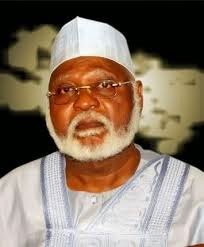
Former Nigerian Head of State, General Abdulsalami Abubakar, has become the subject of public debate after an Indian hospital featured him in promotional material following a total knee replacement surgery, renewing questions about medical tourism and Nigeria’s healthcare system.
The controversy gained attention on Tuesday and Wednesday, September 29 and 30, 2026, after footage from Krishna Shalby Hospital in Ahmedabad, India, circulated widely on Nigerian social media. The material showed the former Nigerian leader receiving care and undergoing rehabilitation following his surgery.
The hospital itself publicly confirmed that Abubakar had undergone total knee replacement surgery at the facility.
In promotional material describing the treatment as a milestone in international patient care, Krishna Shalby Hospital said it was honoured to have treated the former Nigerian leader and presented his successful treatment as evidence of its expertise in advanced orthopaedic care.
The hospital promotes itself internationally as a specialist destination for joint replacement and other medical services and specifically targets patients travelling from outside India.
However, the decision to feature a former Nigerian leader in such promotional material has generated criticism from some Nigerians, who argue that the episode highlights the country's continuing dependence on foreign healthcare.
One of the most prominent reactions came from human rights activist and African Action Congress presidential candidate Omoyele Sowore.
“This is former Nigerian Head of State, General Abdulsalami Abubakar, being used in a hospital advert after undergoing knee replacement surgery in India,” Sowore said.
He described the development as what he considered an indictment of successive Nigerian leaders' failure to build healthcare institutions capable of retaining the confidence of political leaders and other Nigerians seeking specialised treatment.
Sowore's comments represent his political assessment of Nigeria's healthcare record and should not be interpreted as evidence that Abubakar committed any wrongdoing by receiving treatment abroad.
Patients, including former public officials, can choose where to seek medical treatment.
The wider controversy concerns what the continued preference of prominent Nigerians for overseas hospitals says about confidence in Nigeria's healthcare system.
Lawyer Aloy Ejimakor also criticised the development, describing the use of Abubakar's image by the Indian hospital as embarrassing for Nigeria.
Other reactions online have taken a different position, arguing that criticism should concentrate on improving Nigeria's hospitals rather than attacking an individual for choosing a healthcare provider he believes can meet his medical needs.
There is also an important unanswered question surrounding the promotional material.
No reliable evidence reviewed by Stone Reporters News establishes that Abubakar was paid to promote the hospital.
There is similarly no verified evidence that he entered into a commercial endorsement agreement with Krishna Shalby Hospital or that his surgery was provided free of charge in exchange for publicity.
The fact that a hospital publicised the treatment of a prominent patient should therefore not automatically be interpreted as evidence that the patient became a paid ambassador for the institution.
The financial circumstances surrounding the treatment are also unclear.
Premium Times reported that it was not immediately established whether the Federal Government fully funded Abubakar's treatment.
Nigeria's Remuneration of Former Presidents and Heads of State (and Other Ancillary Matters) Act provides medical benefits for former heads of state and members of their immediate families, including treatment abroad where necessary at federal government expense.
The 2026 federal budget reportedly provides ₦2.3 billion for entitlements involving former presidents, heads of state and their deputies.
That provision does not establish that public funds paid for Abubakar's particular surgery.
Without specific records identifying the source of payment, it would be inaccurate to conclude that Nigerian taxpayers financed the procedure.
The controversy nevertheless comes amid longstanding concerns about the amount Nigerians spend seeking medical treatment overseas.
Nigeria's Coordinating Minister of Health and Social Welfare, Muhammad Ali Pate, said in April 2025 that the country loses an estimated $2 billion annually to medical tourism.
Pate argued that reducing that outflow requires more than simply discouraging Nigerians from travelling.
He said Nigeria needs the healthcare capacity, institutions, expertise and public confidence necessary to treat people successfully at home.
Abubakar's case has therefore become part of a much larger discussion.
Successive Nigerian presidents, senior politicians and other wealthy citizens have travelled abroad for medical treatment, while ordinary Nigerians frequently depend on domestic public and private hospitals.
Late President Muhammadu Buhari's repeated medical trips to the United Kingdom generated similar debates during his presidency.
Critics argued that political leaders responsible for healthcare policy should have sufficient confidence in the system they oversee to receive treatment within Nigeria.
Supporters of overseas treatment have countered that healthcare decisions are personal and that patients should be free to seek specialists wherever they believe they can receive appropriate treatment.
Another important point is that knee replacement surgery is not a procedure completely unavailable in Nigeria.
Nigerian orthopaedic hospitals and specialists perform joint-replacement procedures.
The issue raised by the controversy is therefore more complicated than simply whether a Nigerian hospital can perform knee replacement surgery.
Questions of specialist experience, equipment, rehabilitation, cost, waiting periods, individual medical history and patient confidence can all influence where a person chooses to undergo treatment.
Krishna Shalby Hospital has built part of its international reputation specifically around orthopaedic and joint-replacement procedures.
The hospital says its wider group operates several hospitals and orthopaedic centres and actively provides services for international patients, including people travelling from African countries.
The publicity surrounding Abubakar's treatment also increased after Vice President Kashim Shettima visited the hospital.
The hospital subsequently used images relating to Shettima's visit in its online promotion, saying the vice president met management and discussed Abubakar's progress and wellbeing.
It described the interaction as demonstrating growing international confidence in Indian healthcare.
For the Indian hospital, featuring a prominent international patient can strengthen its efforts to attract medical tourists.
For Nigeria, however, the same publicity has been interpreted by critics as evidence that another country's healthcare industry is commercially benefiting from Nigerians who travel abroad for specialised treatment.
Those two interpretations explain much of the public reaction.
From the hospital's perspective, the successful treatment of a former head of state is evidence of its international reach.
From the perspective of critics such as Sowore, it raises the question of why Nigerian political leaders and former leaders continue to rely on foreign medical institutions decades after independence.
Abubakar's historical position adds significance to the debate.
He served as Nigeria's military Head of State from June 1998 until May 1999 and supervised the transition that resulted in the inauguration of President Olusegun Obasanjo and the beginning of Nigeria's current democratic era.
He has remained active in national peace and election-related initiatives since leaving office.
The present controversy does not establish misconduct by the former leader.
Instead, his appearance in the Indian hospital's promotional material has provided another focal point for an older national debate: whether Nigeria has invested enough in specialist healthcare to make its hospitals the preferred destination for its citizens, including those with the financial means to seek treatment anywhere in the world.
There is presently no verified evidence that Abubakar was paid for the promotion, that he was required to appear in it as part of his treatment, or that Nigeria lacked doctors capable of carrying out the procedure.
What is established is that he underwent total knee replacement surgery at Krishna Shalby Hospital in Ahmedabad, the hospital publicised his treatment as part of its international-patient promotion, and that publicity has triggered criticism and renewed discussion about medical tourism and investment in Nigeria's healthcare system.
For Nigerians, the larger question extends beyond where one former head of state chose to undergo surgery.
It concerns whether the country can build specialist hospitals with sufficient funding, equipment, personnel and public confidence to ensure that Nigerians who currently travel abroad for treatment increasingly choose to receive comparable care at home.
📩 Stone Reporters News | 🌍 stonereportersnews.com
✉️ info@stonereportersnews.com | 📘 Facebook: Stone Reporters News | 🐦 X (Twitter): @StoneReportNew | 📸 Instagram: @stonereportersnews
Add comment
Comments