

Reported by Ariajegbe Sylvia Esezobor
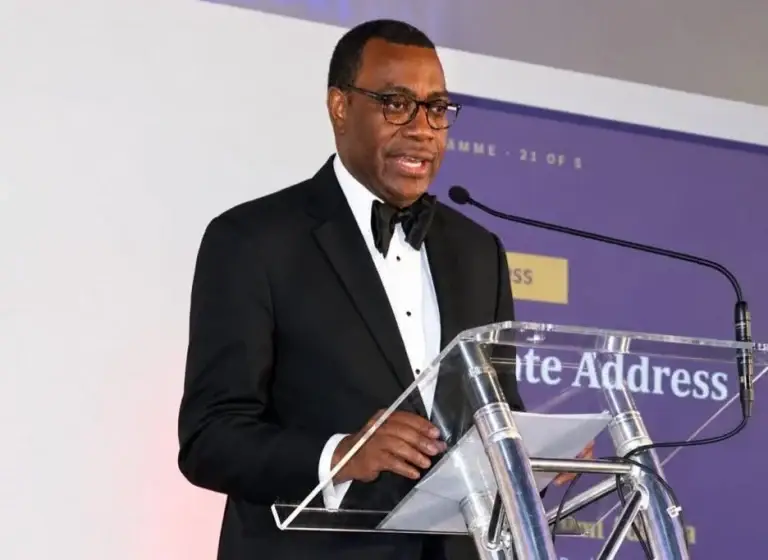
Former President of the African Development Bank Group, Dr Akinwumi Adesina, has urged African leaders to prioritise industrialisation, technological innovation and ethical leadership to strengthen the continent's competitiveness in the global economy, warning that Africa must move beyond exporting raw materials to processing its resources, manufacturing goods and building globally competitive industries. Adesina made the call on Saturday while delivering a keynote address titled "Africa's Next Leap: Visionary and Ethical Leadership for an Integrated and Prosperous Africa in the Global Economy" at the BPI Iconic Awards in Johannesburg, South Africa. In a statement issued by his media team on Sunday, he said the continent's youthful population, natural resources and expanding markets could drive economic growth if properly harnessed.
"Africa's greatest asset is its people," Adesina said, stressing the need to equip young people with relevant education, technical skills and opportunities to create businesses and jobs. He urged African governments, universities and vocational institutions to prepare young people not only to use emerging technologies but also to develop them. "Artificial intelligence, robotics, advanced manufacturing, biotechnology, cybersecurity and data science are areas in which African talent should build capacity and compete," he said. He was emphatic that the continent must move beyond consumption to become a builder of tomorrow's innovations. "Africa must not simply adopt the technologies of the future; we must help build them," Adesina said. He identified artificial intelligence, semiconductors, robotics, data science and cybersecurity as critical areas for investment and called for stronger universities, research laboratories, computing infrastructure and industrial ecosystems to enable African scientists and entrepreneurs to develop indigenous technologies and intellectual property. "Our ambition must go beyond teaching people how to use AI. We must prepare people to build it," he said. "Africa must be among the builders."
On continental integration, Adesina described the African Continental Free Trade Area as more than a trade agreement, saying it could provide a platform for industrial growth by connecting markets, attracting investment and enabling African companies to compete globally. He said countries should combine their strengths in minerals, energy, processing and manufacturing to establish complementary production networks. "The success of integration should be judged by the products and companies Africa creates, the value it retains and the competitiveness it achieves in global markets," he said. Adesina cited Nigeria's 20 billion dollar Dangote Refinery as an example of the scale of industrial investment possible in Africa, urging countries to develop more industrial champions in automobile manufacturing, electric vehicles, batteries, steel, pharmaceuticals, food processing and technology. "Africa must move further along resource value chains, from extraction to processing, refining, manufacturing, research and innovation, rather than remain primarily a supplier of raw materials," he said. He also called for increased investment in universities, laboratories, computing infrastructure and industrial ecosystems to enable Africa to participate in the global development of advanced technologies.
However, the former AfDB president stressed that industrialisation and technological advancement must be supported by ethical leadership and strong institutions. He said transparency, accountability and due process should guide decisions on public finances, infrastructure projects, mining agreements and strategic partnerships. "The national interest must stand above all other interests," Adesina said, urging leaders to prioritise decisions that expand opportunities and create lasting value for future generations. He said Africa's next phase of development would depend on governments investing in people, building competitive industries, supporting entrepreneurs and strengthening institutions that citizens could trust. He called on African countries to act with ambition, discipline, imagination and integrity, saying the continent's next leap would depend not on potential alone but on the choices its leaders make.
The address comes amid a broader push for Africa's economic transformation. The African Development Bank has signed a memorandum of understanding with the United Nations Industrial Development Organization to accelerate the continent's industrialisation, with a focus on investment in innovation and technology, enterprise development and industrial ecosystems. The bank has also strengthened cooperation with South Korea on artificial intelligence and industrialisation, adopting the 2026 KOAFEC Joint Declaration during a meeting in Busan. In February 2026, Adesina declared at the Global Africa Investment Summit in Dubai that Africa had moved beyond being a continent of untapped promise to becoming an investable reality, citing improved macroeconomic stability, fiscal reforms and infrastructure investment as evidence that the continent was no longer just a promise but a portfolio. The continent holds an estimated six trillion dollars in critical minerals, including lithium, cobalt, manganese, chromium and rare earths, essential for electric vehicle batteries, AI systems, aerospace and renewable energy, yet much of this wealth continues to leave the continent in raw form.
For Nigeria, Adesina's message carries particular resonance. The country's Dangote Refinery has demonstrated the scale of industrial investment achievable on the continent, and the government has launched a Nigeria First Policy mandating government agencies to procure locally assembled vehicles and prioritise domestic production. The Minister of Innovation, Science and Technology, Dr Kingsley Udeh, has emphasised the administration's commitment to moving from infrastructure and connectivity to production, jobs and prosperity. However, the country's manufacturing sector continues to face structural challenges, including high energy costs, foreign exchange volatility and infrastructure deficits. The political context of Adesina's intervention is significant. The 2027 general elections are less than four months away, with the presidential and National Assembly elections scheduled for January 16, and the governorship and state assembly elections for February 6. President Bola Ahmed Tinubu is seeking a second term on the All Progressives Congress platform, while former Vice President Atiku Abubakar of the African Democratic Congress, former Anambra Governor Peter Obi of the Nigeria Democratic Congress and Oyo State Governor Seyi Makinde of the Allied Peoples Movement are among the major challengers. The economy, job creation and industrialisation have emerged as central issues in the campaign, and Adesina's call for visionary and ethical leadership speaks directly to the choices voters will face at the polls.
As the continent confronts a rapidly changing global economy, Adesina's message is both a challenge and a roadmap. The global race to develop advanced technologies is already underway, and Africa must position itself as a creator rather than merely a consumer of emerging technologies. That ambition requires investment in education, research, computing infrastructure and industrial ecosystems, along with the ethical leadership and strong institutions that can ensure public resources are deployed in the public interest. For the people of Africa, the stakes are considerable. The continent's youthful population could become a major source of economic strength if supported by education, relevant skills, technology and opportunities to create businesses and jobs. As Adesina put it, Africa's greatest asset is its people, and the continent's next leap will depend not on potential alone but on the choices its leaders make and the industries they build.
📩 Stone Reporters News | 🌍 stonereportersnews.com
✉️ info@stonereportersnews.com | 📘 Facebook: Stone Reporters News | 🐦 X (Twitter): @StoneReportNew | 📸 Instagram: @stonereportersnews
Add comment
Comments