

Reported by Ariajegbe Sylvia Esezobor
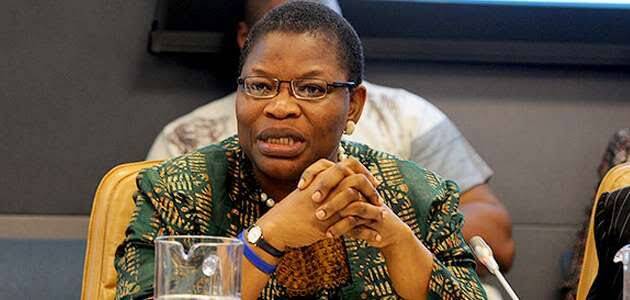
Former Minister of Education, Obiageli “Oby” Ezekwesili, has called on African governments to enforce 18 as the minimum age of marriage in law and in practice, describing child marriage as a development emergency that drains national human capital and costs the continent billions of dollars in lost productivity every year. Ezekwesili made the call on Sunday in a statement to mark the 2026 International Day of the Girl Child, warning that Africa’s education challenges were undermining efforts to protect girls’ rights and develop the continent’s human capital.
“A girl who learns is a girl who is not a bride,” Ezekwesili said. “Today the world is asked to end child marriage and invest in girls’ rights. I join that call wearing three hats: as a member of the advisory council behind Columbia University’s report Accelerating Efforts to End Child Marriage; as Civil Society Representative on the Steering Committee of the African Union’s Decade of Accelerated Action for the Transformation of Education and Skills Development in Africa; and as the leader of Human Capital Africa, an organisation that has spent years arguing that Africa’s human capital crisis begins in the early-grade classroom.”
Citing UNICEF’s 2026 estimates, Ezekwesili said about one in five girls worldwide is married before 18, amounting to roughly 650 million women and girls alive today who were married as children. More than 12 million girls are still married each year, about one every three seconds, and sub-Saharan Africa has the highest prevalence at 31 per cent. In Nigeria, 23.6 million women and girls were married before 18, the largest number in West and Central Africa. In Jigawa State, 78 per cent of women aged 20 to 49 were first married before 18, while 63 per cent of women left school to marry.
The cost of inaction is staggering. Ezekwesili cited new analysis by the Center for Global Development, included in the Columbia University report, which estimates losses of up to $175 billion a year, or almost $2.5 trillion by 2040, from lost productivity and higher health risks caused by child marriage. “Child marriage is not a side issue in development. It drains a nation’s human capital directly,” she said. The report also warns that aid cuts, weakening global commitment to women’s rights, and rising conflict could slow or reverse progress. Ezekwesili was blunt about what that means for Africa. “As foreign aid shrinks, African budgets and African philanthropy must take over,” she said.
The evidence on what works is strong. Ezekwesili noted that each additional year of secondary education reduces a girl’s probability of child marriage by at least five percentage points. In Niger, when the government removed the direct costs of middle school for rural girls, each additional year in secondary school was associated with a 19 percentage point lower probability of marriage. An estimated 68 million child marriages have been averted over the past 25 years through girls’ education, legal reforms and social protection. “If every African girl completed secondary education, child marriage could be almost eliminated,” she said.
But the foundation for that progress is crumbling. Ezekwesili warned that 89 per cent of children in sub-Saharan Africa are in learning poverty, meaning they cannot read and understand a simple text by age 10. “Schooling is not learning. Foundational literacy and numeracy are the first and cheapest protection a girl has,” she said. “A girl who cannot read by ten falls behind, then drops out. Once she is out of school, she is at the greatest risk of marriage.” She called on African governments to make foundational learning a child-protection priority and to use proven methods such as structured pedagogy to ensure every girl is reading with comprehension by age 10.
Ezekwesili outlined five measures for African governments. First, make foundational learning a child-protection policy. Second, remove financial barriers to girls’ transition into secondary school. Third, enforce 18 as the minimum age of marriage in law and in practice, in every state and every community, with traditional and religious leaders as partners. Fourth, fund these efforts domestically. Fifth, publish data tracking girls’ learning, school retention and child marriage rates.
The call comes amid renewed national attention to the legal framework governing marriage in Nigeria. The Child Rights Act, enacted in 2003, sets the age of marriage at 18. However, Section 29(4)(b) of the 1999 Constitution provides that a married woman is deemed to be of full age, a provision that critics say creates a loophole allowing child marriage to persist. The National Council of Women Societies has demanded the enforcement of Section 21 of the Child Rights Act and called on the National Assembly to review Section 29(4)(b). In October 2026, the Edo State First Lady, Mrs Edesili Anani, urged parents to reject child marriage, saying the Constitution stipulates that a girl must be 18 years and above before marriage. The Nigerian Senate has repeatedly rejected bills seeking to institute gender parity and equal rights for women in marriage.
The political context of Ezekwesili’s intervention is significant. The 2027 general elections are less than four months away, with the presidential and National Assembly elections scheduled for January 16, and the governorship and state assembly elections for February 6. President Bola Ahmed Tinubu is seeking a second term on the All Progressives Congress platform, while former Vice President Atiku Abubakar of the African Democratic Congress, former Anambra Governor Peter Obi of the Nigeria Democratic Congress and Oyo State Governor Seyi Makinde of the Allied Peoples Movement are among the major challengers. Education and the welfare of the girl child have emerged as key issues in the campaign, and the government has pointed to initiatives including the Nigeria Education Loan Fund and the expanded National Youth Service Corps reforms as evidence of its commitment to human capital development. Ezekwesili’s intervention places the enforcement of minimum-age marriage laws and the funding of girls’ education squarely on the agenda as the campaign intensifies.
For the millions of girls at risk of child marriage across Africa, the message from Ezekwesili is both a warning and a roadmap. The evidence shows that education is the most effective protection against early marriage, and that legal reform alone is not enough without enforcement, funding and data. As she put it, community programmes and advocacy are not enough on their own. Governments must lead. The coming months will determine whether African governments heed that call and whether the 2027 elections produce commitments to the policies and investments that could end child marriage within a generation.
📩 Stone Reporters News | 🌍 stonereportersnews.com
✉️ info@stonereportersnews.com | 📘 Facebook: Stone Reporters News | 🐦 X (Twitter): @StoneReportNew | 📸 Instagram: @stonereportersnews
Add comment
Comments