

Reported by Ariajegbe Sylvia Esezobor
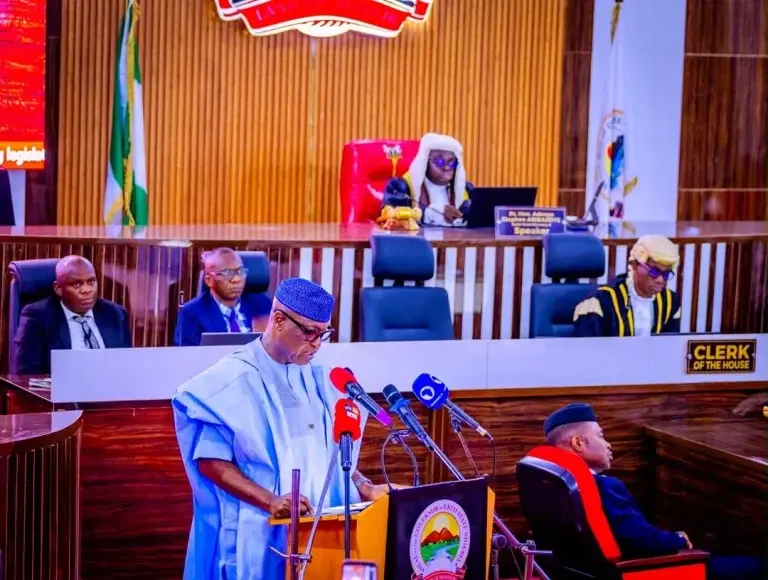
Ekiti State Governor Biodun Oyebanji has said his administration will prioritise investment in infrastructure, security and the business environment to drive industrial growth and attract private investment, arguing that no state can achieve meaningful industrialisation without the foundational infrastructure that makes business viable.
Oyebanji spoke on Monday, October 12, 2026, at the opening of the Ekiti State Economic Development and Investment Summit in Ado Ekiti, where he outlined his administration's strategy for transforming the state's economy from a predominantly agrarian base to a diversified industrial one. "You cannot bring industry to a state without roads. You cannot attract investors to a state without security. You cannot retain businesses without a conducive environment. These are the foundations on which industrial growth is built," the governor said. He said his administration had invested heavily in road construction across the state's 16 local government areas, with a focus on linking rural farming communities to urban markets and creating corridors that would support agro-processing and manufacturing.
The governor disclosed that his administration had completed over 200 kilometres of roads since assuming office in 2022, including the dualisation of the Ado–Ikere road, the reconstruction of the Ado–Ijan–Agbado road and the ongoing construction of the Ikole–Omuo road, which is expected to open up the northern axis of the state to commercial activity. He said the government had also invested in rural electrification, water supply and the rehabilitation of schools and healthcare facilities, all of which he described as essential to creating an environment where businesses could thrive. "Our approach is deliberate. We are not just building roads; we are building the arteries of commerce. We are not just providing electricity; we are powering the factories of tomorrow," he said.
The summit, themed "Ekiti Beyond Oil: Industrialisation, Innovation and Inclusive Growth," brought together investors, policymakers, development partners, academics and representatives of the organised private sector. Oyebanji said his administration had identified agriculture and agro-processing, solid minerals development, tourism and the creative economy, technology and innovation, and light manufacturing as priority sectors for investment. He said the state had already attracted interest from investors in cassava processing, rice milling, palm oil production and the development of the state's granite and kaolin deposits. He announced that the government had concluded arrangements with a private investor to establish a cassava processing plant in Ikole Local Government Area, with an estimated investment of N15 billion, and that discussions were ongoing with two other companies interested in rice milling and palm oil refining.
The governor said his administration had streamlined the process of obtaining land and business permits, reduced the cost of land acquisition for industrial purposes and established a one-stop shop for investor services through the Ekiti State Investment Promotion Agency. He said the government had also strengthened the state's security architecture, including the recruitment of additional personnel into the Amotekun Corps and the deployment of technology for surveillance and crime prevention, to reassure investors that their investments would be protected. "Investors want predictability. They want to know that their investment is safe, that the rules will not change arbitrarily, that they can get the permits they need without unnecessary delays. We have worked hard to create that environment," he said.
The Commissioner for Trade, Industry and Investment, Mrs Omotayo Adeola, said the state had identified specific industrial clusters and was developing infrastructure around them to reduce the cost of doing business. She said the government had also partnered with the Bank of Industry and other financial institutions to provide affordable credit to small and medium enterprises, and that a N500 million matching fund had been established to support entrepreneurs in the state. "We understand that industrialisation is not just about big factories. It is about creating an ecosystem where small businesses can grow, where artisans can access markets, where young people can develop skills and find opportunities," she said.
The Chief Executive Officer of the Nigerian Economic Summit Group, Dr Olusegun Omisakin, who delivered the keynote address, said Ekiti State had the potential to become a model for subnational industrial development in Nigeria if it sustained its investment in infrastructure, education and security. He said the state's proximity to Lagos and its agricultural potential gave it a comparative advantage in agro-processing and logistics, and urged the government to focus on developing industrial parks and providing incentives for value addition rather than the export of raw materials. "The states that will prosper in the coming decades are those that move from consumption to production, from raw materials to finished goods, from dependence on federal allocations to internally generated revenue," Omisakin said.
The political context of the summit is significant. The 2027 general elections are less than four months away, with the governorship and state assembly elections scheduled for February 6. Oyebanji is completing his first term and is expected to seek re-election, and his administration's record on infrastructure, education, healthcare and economic development will be central to his campaign. He has consistently pointed to his six-pillar development agenda as evidence of his commitment to transforming the state, and the investment summit is part of an effort to position Ekiti as a destination for private capital. The state has also been in the news for its education reforms, including the recruitment of teachers and the improvement of school infrastructure, and for its security initiatives, including the establishment of a new Army battalion and the expansion of the Amotekun Corps.
For the people of Ekiti State, the summit represents both an opportunity for economic transformation and a test of whether the government's promises of industrialisation will materialise. For investors, it is a signal that the state is open for business and willing to provide the infrastructure and security necessary for their investments to succeed. For Oyebanji, it is an opportunity to present his administration as one that is not content with the status quo but is actively working to change the state's economic trajectory. As he put it, the foundation of industrial growth is infrastructure, security and a conducive business environment, and his administration is committed to building all three. The coming months will determine whether the investments and partnerships announced at the summit translate into factories, jobs and prosperity for the people of Ekiti State.
📩 Stone Reporters News | 🌍 stonereportersnews.com
✉️ info@stonereportersnews.com | 📘 Facebook: Stone Reporters News | 🐦 X (Twitter): @StoneReportNew | 📸 Instagram: @stonereportersnews
Add comment
Comments