

Reported by Ariajegbe Sylvia Esezobor
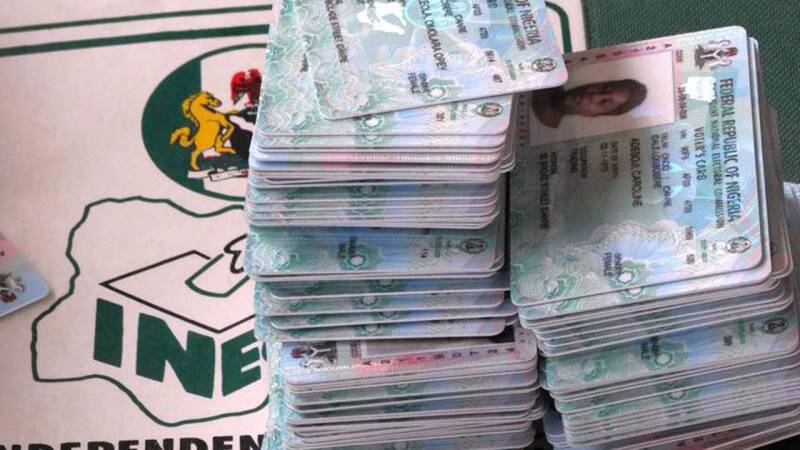
The Independent National Electoral Commission in Lagos State has introduced Quick Response codes to help eligible voters locate their designated Permanent Voter Card collection centres ahead of the 2027 general elections, in a move aimed at simplifying access to voter information and reducing the difficulties many residents face in finding where their cards are ready for pickup.
The Lagos Resident Electoral Commissioner, Professor Ayobami Salami, disclosed the initiative on Tuesday during a press briefing at the commission's headquarters in Lagos on preparations for the 2027 elections . He said voters can scan the codes, which are available through INEC's official social media platforms and website, to identify their designated PVC collection locations . The QR codes form part of the commission's broader effort to improve access to voter information and encourage registered voters to confirm their details and collect their cards before election day .
Salami urged eligible voters to collect their PVCs promptly and safeguard them, stressing that the card remains essential for accreditation on election day . He also advised voters to rely only on official sources for election-related information .
The commission clarified which cards are currently available for collection. Salami said PVCs are ready for persons who registered between August 25 and December 10, 2025, as well as those who registered between 2011 and 2022 but have yet to collect their cards . However, PVCs for persons who registered between January 5 and July 26, 2026, are not yet available. "The collection of their cards will be announced through official channels in due course," Salami said .
Lagos State has the highest number of registered voters in Nigeria, with 7,488,633 voters across 20 local government areas, 245 Registration Areas and 13,325 polling units . The size and density of the state's electorate make the logistics of PVC collection particularly challenging, which is why the commission has turned to technology to streamline the process. The QR code initiative is expected to simplify access to information about collection centres and help voters avoid difficulties locating the facilities assigned to them.
The introduction of QR codes is part of a broader set of preparations the commission is undertaking ahead of the 2027 polls. Salami said preparations were ongoing in other critical areas, including the procurement and testing of voter accreditation devices, improvements to election-result transmission systems, logistics arrangements, and the recruitment and training of electoral personnel . INEC has acquired 57,000 new Bimodal Voter Accreditation System machines for the elections, and a mock accreditation and election simulation exercise has been scheduled for November 2026 to assess the commission's readiness .
The commission is also collaborating with the Economic and Financial Crimes Commission, the Independent Corrupt Practices and Other Related Offences Commission, the National Electoral Integrity Unit and the Federal Ministry of Justice to tackle electoral offences. Engagements with political parties on financial reporting, auditing and compliance with campaign finance regulations will be intensified between October 28, 2026, and January 1, 2027 . Salami pledged to strengthen measures to curb vote-buying, illicit campaign financing and other electoral offences .
The display of the preliminary register of voters, which began on October 9, is taking place across the state's 245 Registration Areas and wards in line with Section 19(1) of the Electoral Act 2026. The exercise, which ends on October 15, allows registered voters to confirm the accuracy of their personal information and identify discrepancies requiring correction . Salami urged voters to take advantage of the exercise before the deadline .
The political context of the initiative is significant. The 2027 general elections are less than four months away, with the presidential and National Assembly elections scheduled for January 16, and the governorship and state assembly elections for February 6 . President Bola Ahmed Tinubu is seeking a second term on the All Progressives Congress platform, while former Vice President Atiku Abubakar of the African Democratic Congress, former Anambra Governor Peter Obi of the Nigeria Democratic Congress and Oyo State Governor Seyi Makinde of the Allied Peoples Movement are among the major challengers. Lagos State, as Nigeria's commercial capital and a key electoral battleground, will be one of the most closely watched states in the country. The commission's ability to ensure that millions of registered voters in Lagos can collect their PVCs efficiently will be critical to the credibility of the electoral process in the state.
The QR code initiative reflects a growing recognition that voter access to information is a critical component of electoral participation. In a state as large and densely populated as Lagos, where traffic congestion and the sheer volume of registered voters can make physical visits to collection centres difficult to navigate, the use of technology to provide precise location information could help reduce confusion and improve the collection rate. For the millions of Lagos residents who registered during the Continuous Voter Registration exercise, the QR code offers a simple way to find out where to go. For INEC, it is a test of whether technology can bridge the gap between registration and actual voting, ensuring that the 7.4 million registered voters in Lagos are not disenfranchised by logistical barriers. As Salami put it, eligible voters should collect their cards promptly and safeguard them, because the PVC remains essential for accreditation on election day.
📩 Stone Reporters News | 🌍 stonereportersnews.com
✉️ info@stonereportersnews.com | 📘 Facebook: Stone Reporters News | 🐦 X (Twitter): @StoneReportNew | 📸 Instagram: @stonereportersnews
Add comment
Comments