

Reported by Ariajegbe Sylvia Esezobor
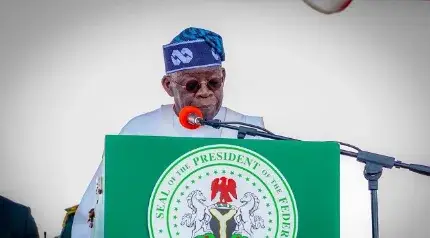
As political maneuverings for Nigeria’s 2027 general elections gather momentum across the country, President Bola Ahmed Tinubu has sent subtle yet unmistakable signals about his approach to party activities and the upcoming national campaign trail. In discussions surrounding the ruling All Progressives Congress, the Nigerian leader has indicated that he will not personally attend every single campaign rally organized by the party leading into the next presidential cycle. This calculated posture reflects a major strategic shift in how modern political campaigns in Africa’s most populous democracy are conducted, balancing the heavy burdens of state governance with the unavoidable demands of retail partisan politics.
For decades, Nigerian presidential elections have been defined by grueling, multi-state campaign caravans where incumbent presidents and candidates travel to dozens of state capitals to address massive crowds in open-air stadiums. However, President Tinubu’s indication that he intends to selective about his physical appearances underscores a growing recognition of the administrative toll such non-stop political travel takes on an sitting head of state. Facing complex economic challenges, deep-seated fiscal reforms, and pressing security priorities across the geopolitical zones, executive advisors contend that governance cannot take a backseat to electoral rallies, even as the party prepares to defend its mandate at the polls.
The announcement has triggered intense strategic recalibration within the leadership structure of the ruling All Progressives Congress. Party organizers, accustomed to relying on the physical presence of the president to mobilize local party machinery and demonstrate federal unity, must now adapt to a decentralized campaign model. Senior officials within the party have moved swiftly to clarify that a reduced physical appearance schedule does not signal any diminishing commitment to the party’s electoral prospects or its national leadership. Instead, the strategy will lean heavily on regional surrogates, state governors, national working committee members, and political alliance networks to carry the administration’s message to every corner of the nation.
Political analysts across Africa view this strategic evolution as a pragmatic response to the unique challenges of governing a diverse and complex nation while maintaining electoral readiness. Under traditional political playbooks, presidential incumbents often found themselves stretched thin during election cycles, risking governance lapses while attempting to fulfill exhaustive public appearance commitments. By delegating campaign presence to trusted lieutenants, cabinet ministers, and regional party champions, the administration aims to ensure that federal statecraft proceeds uninterrupted while the party machinery continues its grassroots outreach, voter registration drives, and local constituency engagement without requiring constant presidential intervention on the podium.
The reaction among opposition political parties has been swift and varied, with critics attempting to frame the president's decision as a sign of detachment from the electorate or political vulnerability. Key figures within rival political formations contend that direct public engagement through traditional rallies remains a essential test of presidential accountability and popularity. Opponents argue that voters expect to see their leaders face public crowds directly to account for economic policies, inflation trends, and security measures enacted during their tenure. However, government supporters maintain that effective governance and policy delivery ultimately matter far more to everyday citizens than repeated ceremonial rally appearances that offer little substantive policy dialogue.
Within the ruling party’s ranks, state governors and regional stakeholders are preparing to shoulder a far greater share of the public campaigning load than in previous national election cycles. In Nigeria’s federal system, state governors exert tremendous influence over local party structures, voter mobilization networks, and political communications. By placing primary responsibility for state-level rallies on local party leaders and gubernatorial figures, the ruling coalition hopes to foster stronger local ownership of the campaign while allowing the president to focus on major national town halls, key policy addresses, media appearances, and strategic high-profile events in major metropolitan centers.
This shifting dynamic also highlights the increasing role of digital communications, broadcast media, and targeted messaging in modern West African elections. While traditional rallies continue to play a symbolic role in demonstrating organizational strength, contemporary campaign strategists recognize that televised town halls, social media engagement, and community-level roundtables often reach a broader and more diverse demographic than physical stadium gatherings. The administration’s public relations strategists are reportedly designing a campaign blueprint that prioritizes high-impact communication channels capable of reaching millions of voters directly, reducing the physical strain and logistical complexity associated with continuous nationwide roadshows.
Looking ahead toward 2027, the political landscape in Nigeria appears poised for an unprecedented tactical contest between traditional rally-driven politics and modernized, decentralized campaign structures. The decision of the incumbent president to streamline his rally attendance sets a noticeable precedent for political governance during election seasons across the continent. While political opponents will undoubtedly continue to question the move, the success of this strategy will ultimately depend on whether the party’s regional machinery can effectively communicate the administration's achievements and maintain voter enthusiasm without the constant physical presence of its standard-bearer at every campaign stop.
Ultimately, President Tinubu’s stance reinforces the delicate balance required of any sitting head of state managing the intersecting pressures of national administration and partisan survival. By explicitly defining the boundaries of his campaign participation early, the president has sent a clear message to both his party and the national electorate that maintaining executive focus on economic stability, national security, and key institutional reforms remains his paramount duty. As the country gradually approaches the next electoral cycle, voters and political observers alike will closely watch how this strategic calculation shapes the broader dynamic of Nigerian democracy and party politics in the coming years.
📩 Stone Reporters News | 🌍 stonereportersnews.com
✉️ info@stonereportersnews.com | 📘 Facebook: Stone Reporters News | 🐦 X (Twitter): @StoneReportNew | 📸 Instagram: @stonereportersnews
Add comment
Comments