

Reported by: Ijeoma G | Edited by: Oravbiere Osayomore Promise.
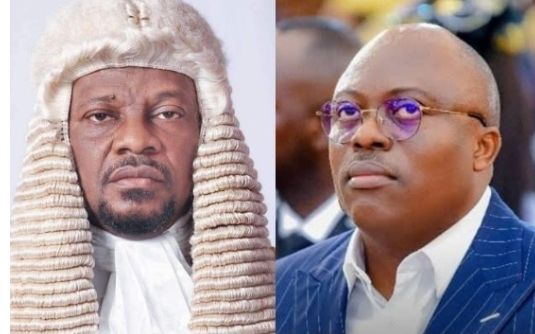
The political standoff in Rivers State has deepened after the Rivers State House of Assembly confirmed five commissioner nominees while rejecting four others submitted by Governor Siminalayi Fubara, a decision widely interpreted as a reflection of the ongoing power struggle between the governor and his political predecessor, Nyesom Wike. The development marks another chapter in the prolonged conflict that has dominated the politics of the oil-rich state since late 2023.
The confirmation exercise took place during a plenary session at the Assembly complex in Port Harcourt, where lawmakers screened nine nominees forwarded by Governor Fubara for appointment as commissioners in the Rivers State Executive Council. After deliberations that lasted several hours, the lawmakers approved five of the nominees while rejecting the remaining four.
Those confirmed as commissioners include Tonye Bellgam, Professor Temple Nwofor, Dr. Peters Nwagor, Lekue Kenneth, and Sir Amairigha Edward Hart. The Assembly directed that the approved nominees be sworn in by the governor to assume their roles in the state executive council.
However, four nominees failed to secure legislative approval. The rejected nominees are Professor Datonye Alasia, Charity Deemua, Tamuno Williams, and Otonye TKD Amachree. Lawmakers explained that the rejection followed concerns raised during the screening process regarding their performance and controversies surrounding their nominations.
Speaker of the Rivers State House of Assembly, Martin Amaewhule, who presided over the plenary, said the decision of the House was based on the evaluation of the nominees during the screening exercise. According to him, the Assembly concluded that some of the nominees did not sufficiently demonstrate their readiness or competence to serve in the state executive council.
The Speaker also stated that the Assembly would formally communicate its resolution to Governor Fubara, requesting that the confirmed nominees be sworn in while leaving the governor with the option of submitting new nominees to replace those rejected.
The development has been widely interpreted by political observers as another sign of the deepening rivalry between Governor Fubara and former Rivers governor Nyesom Wike, who currently serves as Minister of the Federal Capital Territory. The Rivers State House of Assembly is largely dominated by lawmakers considered loyal to Wike, placing the governor in a politically delicate position whenever executive nominations require legislative approval.
Governor Fubara, who previously served as the state’s accountant-general before emerging as Wike’s political protégé during the 2023 governorship election, has been embroiled in a prolonged political dispute with his former mentor. The rift between the two leaders began only months after Fubara assumed office and has since triggered multiple institutional confrontations within the state.
The struggle for political dominance has manifested in legislative confrontations, cabinet changes, legal disputes, and competing claims of political authority within the state government. At various points, tensions escalated to the level of attempted impeachment proceedings, clashes within the House of Assembly, and widespread uncertainty about the legitimacy of rival legislative factions.
The political crisis reached a dramatic turning point in March 2025 when President Bola Tinubu declared a state of emergency in Rivers State, citing a breakdown of governance caused by the escalating confrontation between political actors. The declaration temporarily suspended the governor and other elected officials while a sole administrator was appointed to oversee the state’s affairs for six months.
When the emergency rule ended in September 2025, Governor Fubara returned to office while the Amaewhule-led House of Assembly was reinstated as the recognized legislative authority in the state. The restoration of the Assembly leadership effectively strengthened the position of lawmakers widely believed to be aligned with Wike’s political structure.
The latest commissioner screening exercise is therefore viewed as a key moment in the ongoing contest for influence within the state government. Commissioners play a central role in implementing government policies, managing ministries, and coordinating administrative functions across the state. As a result, the composition of the executive council often reflects the balance of political power between competing factions.
Political analysts say the confirmation of five nominees and the rejection of four others demonstrates the continuing influence of the Assembly in shaping the governor’s cabinet. The legislature’s decision also highlights how the power struggle between the two political camps continues to affect governance in Rivers State.
Observers note that the rejected nominees were believed by some political insiders to be more closely aligned with the governor’s camp, while the approved candidates were considered less controversial within the Assembly. Although lawmakers did not publicly frame the decision in political terms, analysts say the outcome reflects underlying tensions between the executive and legislative branches.
The confirmation process itself is a constitutional requirement in Nigeria. Under the provisions governing state governments, the governor nominates commissioners while the House of Assembly must screen and approve the nominees before they can assume office.
In Rivers State, however, this constitutional process has become deeply intertwined with political rivalries. Since the beginning of the Fubara-Wike conflict, every major government decision involving the Assembly has carried significant political implications.
Political stakeholders in the state have repeatedly called for reconciliation between the two camps, warning that prolonged instability could affect governance and development in the state. Rivers remains one of Nigeria’s most economically important states due to its strategic role in the country’s oil and gas industry.
Despite occasional attempts at reconciliation, tensions between the governor and his predecessor have persisted. The latest decision by the Assembly regarding commissioner nominees underscores how unresolved political disputes continue to influence key government processes in the state.
For now, the five confirmed nominees are expected to be sworn in as commissioners once the governor receives the official communication from the Assembly. Meanwhile, the governor may also be required to submit new names to fill the positions left vacant by the rejected nominees, a step that could further test the fragile political balance within Rivers State.
📩 Stone Reporters News | 🌍 stonereportersnews.com
✉️ info@stonereportersnews.com | 📘 Facebook: Stone Reporters | 🐦 X (Twitter): @StoneReportNew | 📸 Instagram: @stonereportersnews
Add comment
Comments