

Reported by: Oahimire Omone Precious | Edited by: Oravbiere Osayomore Promise.
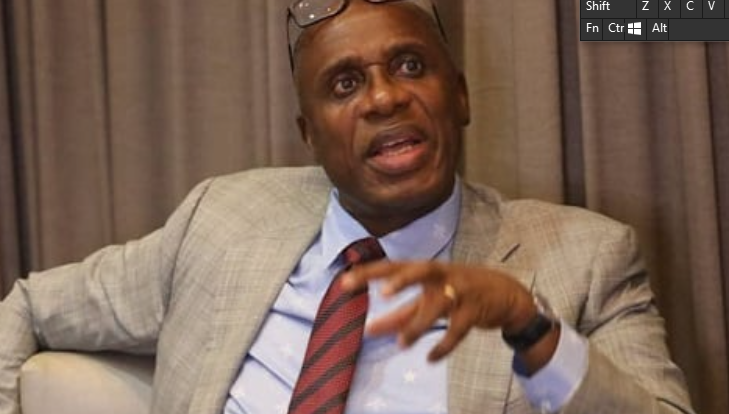
Rotimi Amaechi has called on the African Democratic Congress to prioritise competence and broad acceptability in selecting a presidential candidate ahead of the 2027 general elections, warning that reliance on ethnic or religious sentiment would weaken the opposition’s chances of unseating President Bola Tinubu.
He spoke at the party’s convention held in Abuja, where leaders gathered to discuss strategy and internal arrangements as the ADC seeks to position itself as a central platform for coalition-building among opposition figures ahead of the next election cycle.
Amaechi urged members of the party to move beyond divisions rooted in identity politics, insisting that only a credible and widely acceptable candidate could challenge the incumbent president effectively in a highly competitive electoral environment.
He cautioned that expectations that the ruling All Progressives Congress would willingly relinquish power were unrealistic, arguing that opposition parties must adopt strategic unity rather than rely on assumptions about political goodwill.
The former minister referenced past political realignments that led to the 2015 election outcome, noting that the success of that period was driven by deliberate efforts to identify a candidate capable of galvanising broad support across regions and interest groups.
Amaechi also criticised the current administration, alleging that opposition groups were facing increasing restrictions in accessing public venues for political activities, which he described as a troubling sign for democratic practice.
His remarks followed a dispute involving the African Democratic Congress and the management of key public facilities in Abuja, where the party initially planned to hold its national convention before relocating to an alternative venue.
Party officials had earlier alleged that access to venues such as Eagle Square and the Moshood Abiola National Stadium was denied, a development they linked to external pressure, though no official confirmation has been provided by authorities.
Amaechi questioned the state of democratic freedoms in the country, arguing that leaders who once advocated for civil liberties during past struggles should not be seen undermining similar rights in contemporary governance.
He further linked his comments to the legacy of the National Democratic Coalition, a pro-democracy movement that opposed military rule in the 1990s and championed the restoration of democratic governance in Nigeria.
The former governor said Nigeria is facing worsening economic hardship and insecurity challenges, insisting that these issues must be addressed urgently by those in leadership positions.
He maintained that public dissatisfaction with governance was growing and that political actors must respond with credible policies rather than rhetoric if they hope to retain public trust.
Political analysts say the remarks reflect broader opposition efforts to consolidate alliances ahead of the 2027 elections, although the landscape remains fragmented and competitive.
As political preparations intensify across parties in Nigeria ahead of the 2027 general elections, opposition groups have increasingly explored coalition arrangements aimed at consolidating fragmented support bases, a strategy analysts say has historically influenced electoral outcomes in the country’s multi-party system.
Within the African Democratic Congress, discussions have reportedly focused on how to broaden appeal beyond traditional voting blocs, with party stakeholders emphasising the importance of presenting a unified front capable of attracting support from diverse regional and demographic constituencies.
Observers note that Amaechi’s intervention reflects ongoing debates within opposition circles about leadership selection, strategy, and ideological cohesion, particularly as parties attempt to reposition themselves against the backdrop of evolving voter expectations and national challenges.
The issue of ethnicity and religion in Nigerian politics has remained a recurring concern, often influencing campaign narratives and voter alignments, but political leaders continue to debate how best to balance identity considerations with competence-based governance models.
In recent election cycles, Nigeria has witnessed shifting alliances and realignments among major political actors, with several prominent figures moving between parties in response to ideological disagreements, strategic calculations, and evolving electoral opportunities that reshape the political landscape ahead of major contests.
Analysts also point to the role of political communication and public perception in shaping candidate viability, noting that messaging, credibility, and grassroots engagement often determine how effectively parties can mobilise support across diverse regions.
We also consider governance challenges such as insecurity, unemployment, and inflation, which continue to dominate public discourse and influence voter sentiment as citizens evaluate the performance of incumbent administrations and alternative political platforms.
Against this backdrop, Amaechi’s remarks contribute to a broader national conversation about democratic consolidation, electoral competitiveness, and the criteria by which political leadership is assessed in a rapidly changing political environment.
Meanwhile, disputes over access to public facilities for political gatherings have sparked debate among legal experts and civil society organisations, who argue that equal access to state-controlled venues is essential for maintaining a fair and transparent democratic process during election seasons.
Security considerations and administrative approvals often play a role in the allocation of large public venues, and authorities typically assess logistics, safety, and competing bookings when determining availability for political events.
In Nigeria’s evolving democratic space, opposition rhetoric often intensifies in pre-election periods, with parties seeking to differentiate themselves from incumbents by highlighting governance gaps and proposing alternative policy directions intended to resonate with an increasingly politically aware electorate.
Such dynamics are particularly evident in coalition-building efforts, where political actors must negotiate competing interests, reconcile ideological differences, and establish leadership consensus capable of sustaining unity through electoral campaigns and potential governance responsibilities.
The legal and institutional framework governing political party activities in Nigeria provides for freedom of association and assembly, although these rights are subject to regulatory oversight intended to ensure public order, security, and compliance with established administrative procedures.
Ultimately, the unfolding political developments surrounding Amaechi’s remarks and the ADC’s internal deliberations reflect the broader dynamics shaping Nigeria’s 2027 electoral landscape, where questions of leadership selection, institutional credibility, and voter alignment are expected to play decisive roles. As parties continue to refine strategies and engage in consultations, the emphasis remains on building structures capable of sustaining competitive campaigns in a complex political environment marked by economic pressures and heightened public expectations. The outcome of these processes will likely influence not only party fortunes but also the direction of national governance in the coming years.
📩 Stone Reporters News | 🌍 stonereportersnews.com
✉️ info@stonereportersnews.com | 📘 Facebook: Stone Reporters News | 🐦 X (Twitter): @StoneReportNew | 📸 Instagram: @stonereportersnews
Add comment
Comments