

Reported by: Oahimire Omone Precious | Edited by: Oravbiere Osayomore Promise.
Fresh divisions within Nigeria’s Labour Party have come to the fore following a strong statement by Abayomi Arabambi, who has categorically ruled out any possibility of the party’s 2023 presidential candidate, Peter Obi, returning to its fold.
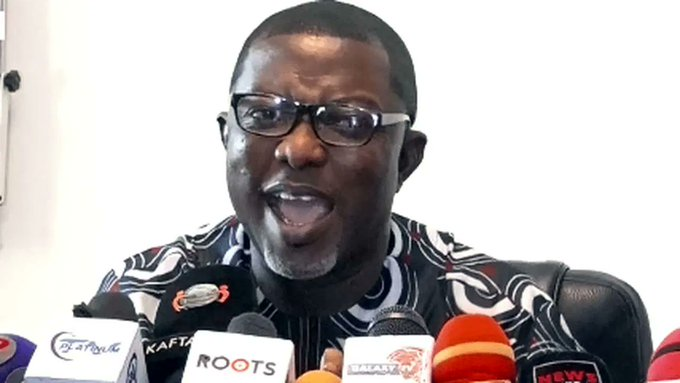
Arabambi, who serves as the National Vice Chairman (South-West) of the Labour Party Nigeria, made the remarks during a televised interview, where he dismissed ongoing efforts by certain stakeholders to reconcile with Obi and reintegrate him into the party. His comments highlight the deepening internal crisis that has plagued the party since the 2023 general elections and underscore a significant shift in its current political positioning.
According to Arabambi, discussions among key figures within the party have already led to a consensus that excludes Obi from any future role. He specifically rejected suggestions that reconciliation efforts, reportedly linked to Nenadi Usman, could pave the way for Obi’s return. He insisted that such attempts would not succeed, maintaining that the party has moved on from its former presidential flagbearer.
The Labour Party’s internal struggles have been widely documented, with factions emerging around different leadership blocs. Arabambi referenced consultations involving the leadership associated with Julius Abure as well as Alex Otti, suggesting that a unified decision had been reached regarding the party’s future direction. While details of these consultations remain unclear, his remarks indicate a level of alignment among certain influential figures within the party.
Perhaps the most striking aspect of Arabambi’s statement is the declaration that elements within the Labour Party are now inclined to support the administration of Bola Ahmed Tinubu, particularly in relation to a potential second-term bid. This position represents a significant departure from the party’s role as a major opposition force during the 2023 elections, when it attracted widespread support, especially among young voters and urban populations.
Arabambi justified this shift by pointing to what he described as an “intractable crisis” within the party, arguing that the internal divisions had necessitated a reassessment of its political strategy. He suggested that aligning with the incumbent administration could provide a more stable path forward, although this position is likely to be contested by other factions within the party who remain committed to opposition politics.
In his remarks, Arabambi also directed criticism at Obi and his supporters, attributing the party’s electoral challenges in 2023 to alleged organisational failures. He claimed that logistical issues, including the inability to adequately support polling agents across thousands of voting units, contributed to the party’s loss of millions of votes. These allegations reflect ongoing disputes within the party over the conduct of the election and the factors that influenced its outcome.
Obi, who emerged as a prominent political figure during the 2023 election cycle, has not publicly responded to Arabambi’s latest comments. His campaign, which was widely regarded as a departure from traditional political structures, galvanized a significant grassroots movement and reshaped public discourse around governance and accountability in Nigeria. Despite not winning the presidency, his performance established him as a major player in the country’s political landscape.
The suggestion that he may not have a future within the Labour Party raises questions about his next political move and the broader implications for opposition politics in Nigeria. Analysts note that Obi’s support base remains substantial, and any decision regarding his political alignment could have far-reaching consequences for future elections.
The role of Nenadi Usman in the unfolding situation also points to ongoing factional dynamics within the party. As a former minister and influential political figure, her reported efforts to facilitate Obi’s return suggest that not all stakeholders share Arabambi’s position. This divergence highlights the lack of cohesion within the party and the challenges it faces in presenting a unified front.
Observers say the Labour Party’s internal crisis reflects broader issues within Nigeria’s political system, where party structures are often shaped by shifting alliances and leadership disputes. The current situation underscores the difficulties of maintaining unity in a party that experienced rapid growth and heightened expectations during a highly competitive election cycle.
The potential alignment with the ruling party, as suggested by Arabambi, may further complicate the Labour Party’s identity and its appeal to supporters who viewed it as a platform for change. Such a move could lead to further fragmentation, as members and supporters reassess their positions in light of evolving political realities.
As the political landscape begins to take shape ahead of the next election cycle, the Labour Party’s trajectory remains uncertain. The exclusion of a high-profile figure like Peter Obi, combined with indications of a strategic pivot toward the ruling administration, signals a period of significant transformation within the party.
For now, Arabambi’s comments have added a new dimension to the ongoing debate about the future of the Labour Party and the role of opposition politics in Nigeria. Whether these positions will hold or be challenged by other stakeholders remains to be seen, but the developments point to a critical juncture for one of the country’s most closely watched political movements.
📩 Stone Reporters News | 🌍 stonereportersnews.com
✉️ info@stonereportersnews.com | 📘 Facebook: Stone Reporters News | 🐦 X (Twitter): @StoneReportNew | 📸 Instagram: @stonereportersnews
Add comment
Comments