

Published by: Oravbiere Osayomore Promise.
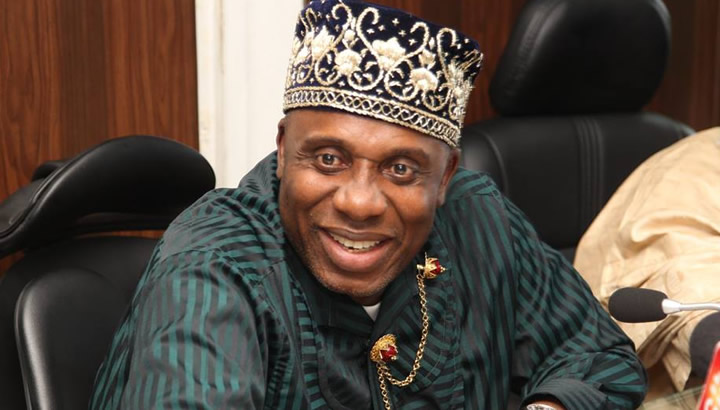
Former Minister of Transportation and ex-governor of Rivers State, Rotimi Amaechi, has formally signaled his intention to contest in Nigeria’s 2027 presidential election, declaring that his experience in governance and infrastructure development uniquely positions him to address the country’s mounting challenges.
Speaking during a televised interview on Channels Television’s “The Morning Brief” on Friday, Amaechi presented himself as a candidate driven by a clear understanding of Nigeria’s systemic issues. He emphasized that his decision to enter the race was rooted not in political rivalry but in what he described as a sense of national duty.
“I don’t care who else is running. I’m running because I’m a Nigerian candidate. Because I know the Nigerian problem. And I can solve the Nigerian problem,” he said, underscoring his confidence in his capacity to lead the country through its current economic and security difficulties.
Amaechi, who served as Minister of Transportation from 2015 to 2023 and was governor of Rivers State from 2007 to 2015, highlighted his record in public office as evidence of his competence. He pointed specifically to infrastructure projects executed during his tenure at the federal level, including the expansion of rail networks and developments in port infrastructure, which he said contributed to economic activity and national connectivity.
According to him, these projects demonstrate not only his administrative capability but also his commitment to long-term national development. He argued that effective governance requires both technical knowledge and political will, qualities he believes he possesses.
The former minister also pointed to his role in addressing insecurity during his time in government, asserting that his administration implemented measures that contributed to improved stability in certain regions. While he did not provide detailed metrics during the interview, he maintained that his experience in managing complex national challenges gives him an advantage over other potential candidates.
Amaechi is currently a leading figure within the African Democratic Congress (ADC), a party that has been gaining attention as a platform for opposition figures seeking to challenge the ruling government in the next election cycle. His declaration comes amid growing political activity among opposition groups aiming to consolidate their strength ahead of 2027.
In his remarks, Amaechi was sharply critical of the current administration led by President Bola Ahmed Tinubu, arguing that the country’s economic conditions have deteriorated significantly. He described widespread hardship among Nigerians, pointing to rising costs of living, inflation, and difficulties in accessing basic necessities.
“Everybody is suffering, everybody is looking for food to eat. People can’t buy fuel, can’t travel. The airlines are threatening to increase the cost of transportation; everything is skyrocketing,” he said, painting a picture of economic strain affecting large segments of the population.
His criticism extended beyond economic issues to questions of governance and accountability. Amaechi accused the administration of failing to fulfill key campaign promises, particularly in the area of power supply. He argued that Nigerians are increasingly disillusioned and are likely to express their dissatisfaction at the ballot box.
“For Christ’s sake, President Tinubu does not have the right to speak, he doesn’t. He promised power and said if he doesn’t give power, they should not vote for him. Nigerians are waiting to vote him out,” he added.
Amaechi also raised concerns about the state of Nigeria’s democratic institutions, alleging that there are efforts to weaken opposition parties and limit political competition. He called for the independence of critical institutions such as the Independent National Electoral Commission (INEC) and the judiciary, stressing that credible elections depend on their ability to operate without interference.
“Whether free, fair or not free, if we are on the ballot, President Bola Tinubu will lose the election. The problem is he does not want a strong candidate on the ballot,” he said, suggesting that the political environment may become increasingly contentious as the election approaches.
His comments come at a time when Nigeria is grappling with multiple challenges, including economic instability, security concerns, and public dissatisfaction with governance. Inflation has remained high, affecting the cost of food and transportation, while insecurity continues to impact various parts of the country, from banditry in the northwest to insurgency in the northeast.
Amaechi’s entry into the race adds to an already crowded field of prominent political figures positioning themselves for the presidency. Within the broader opposition landscape, names such as former Vice President Atiku Abubakar, former Anambra State governor Peter Obi, former Kano State governor Rabiu Kwankwaso, former Kaduna State governor Nasir El-Rufai, and former Osun State governor Rauf Aregbesola have all been mentioned as potential contenders.
The evolving dynamics among these figures suggest that coalition-building and party alignment will play a crucial role in shaping the outcome of the election. Analysts have noted that the ability of opposition parties to present a united front could significantly influence their chances against the incumbent administration.
Amaechi’s affiliation with the ADC places him within a party that is seeking to expand its national relevance. The party has been working to attract influential politicians and build a platform capable of challenging the dominance of larger parties. His candidacy could boost its visibility and organizational strength, although much will depend on internal party dynamics and broader alliances.
The Independent National Electoral Commission has already announced January 16, 2027, as the date for the presidential election, setting the stage for what is expected to be a highly competitive and closely watched contest. As the timeline progresses, issues such as electoral reforms, campaign financing, and voter engagement are likely to come to the forefront.
For many Nigerians, the upcoming election represents an opportunity to address longstanding concerns about governance and national development. The electorate’s expectations are shaped by years of economic hardship and security challenges, placing significant pressure on candidates to present credible solutions.
Amaechi’s assertion that he can “solve the Nigerian problem” reflects a broader trend among political aspirants who are positioning themselves as agents of change. However, translating such claims into concrete policy proposals and convincing a diverse electorate remains a complex task.
As political activities intensify in the coming months, attention will likely focus on how candidates articulate their visions for the country, engage with voters, and navigate the intricate landscape of Nigerian politics. For Amaechi, his experience in both state and federal government will be central to his campaign narrative, as he seeks to persuade Nigerians that he offers a viable path forward.
📩 Stone Reporters News | 🌍 stonereportersnews.com
✉️ info@stonereportersnews.com | 📘 Facebook: Stone Reporters News | 🐦 X (Twitter): @Stone ReportNew | 📸 Instagram: @stonereportersnews
Add comment
Comments