

Reported by: Ijeoma G | Edited by: Oravbiere Osayomore Promise.
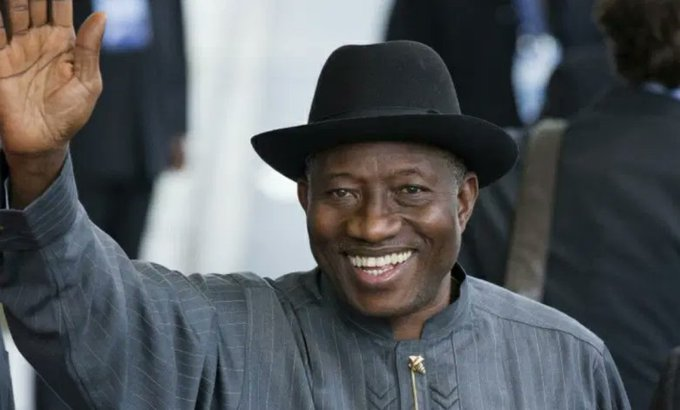
A political coalition advocating the return of former Nigerian president Goodluck Jonathan has declared him the most qualified and experienced figure to lead the country out of its current socio-economic and security challenges, intensifying early political alignments ahead of the 2027 general elections.
The position was made public on April 18, 2026, during an international press conference in Abuja organised by the Coalition for Goodluck Jonathan 2027. The group, led by its president, Tom Ohikere, said it had commenced coordinated efforts across Nigeria and within the diaspora to mobilise support for Jonathan’s possible return to national leadership.
According to the coalition, Nigeria is facing a convergence of crises, including economic instability, rising inflation, unemployment, currency volatility, and persistent insecurity, all of which have eroded public confidence in governance. The group argued that addressing these issues requires a leader with deep institutional knowledge and proven experience in navigating complex national challenges.
Ohikere described the coalition as a unifying platform bringing together multiple support groups and political actors with a shared objective of restoring stability and strengthening democratic governance. He stated that Jonathan’s extensive political career—from deputy governor of Bayelsa State to governor, vice president, and ultimately president—places him in a unique position to provide the leadership needed at this time.
The former president, Goodluck Jonathan, who served from 2010 to 2015, remains a significant figure in Nigeria’s political landscape. His tenure is often associated with key economic reforms, infrastructure initiatives, and a defining moment in Nigeria’s democratic history when he conceded defeat in the 2015 presidential election, marking the first peaceful transfer of power from an incumbent to an opposition candidate.
Supporters within the coalition emphasised that Jonathan’s previous leadership demonstrated a commitment to democratic values, institutional continuity, and economic management. They pointed to outcomes from the 2014 National Conference as still relevant to ongoing national discussions around restructuring and governance reform.
The coalition further argued that Jonathan’s leadership style, described as inclusive and conciliatory, could help ease political tensions and foster national unity in a country often divided along ethnic and regional lines. It also stressed the importance of rebuilding public trust in governance, which it said has declined amid current economic and security concerns.
This latest endorsement is part of a broader and growing movement urging Jonathan to re-enter active politics ahead of the 2027 elections. In recent weeks, multiple groups, including youth organisations and civil society coalitions, have staged rallies and issued public appeals calling on him to contest.
One such group, the Goodluck Presidential Support Campaign Group, described the call for Jonathan’s return as a response to what it termed a critical juncture in Nigeria’s history, requiring experienced leadership capable of stabilising the nation and restoring confidence both domestically and internationally.
Similarly, another coalition representing interests across all 36 states and the Federal Capital Territory stated that its appeal followed months of nationwide consultations, during which it claimed there was widespread demand for Jonathan’s return to leadership. The group characterised him as a bridge-builder capable of addressing deep-rooted divisions and steering the country toward recovery.
Despite the growing momentum, Jonathan himself has not formally declared any intention to contest the 2027 presidential election. His silence has fuelled speculation but also reflects a cautious approach that analysts say is consistent with his political posture since leaving office.
Under Nigeria’s constitutional framework, Jonathan remains eligible to contest the presidency again, having served only one elected term. The 1999 Constitution limits individuals to two terms in office, meaning his potential candidacy would not violate term-limit provisions.
The coalition also used the platform to respond to criticism from political opponents, including remarks questioning Jonathan’s experience. It dismissed such views as inconsistent with his track record, arguing that his rise through multiple levels of governance demonstrates a breadth of leadership unmatched by many contemporaries.
Beyond endorsing Jonathan, the coalition outlined broader objectives tied to its advocacy, including strengthening democratic institutions, ensuring credible elections, promoting the rule of law, and advancing inclusive governance that reflects Nigeria’s diversity. These goals, it said, are central to restoring national cohesion and economic stability.
Political observers note that the renewed push for Jonathan’s return highlights shifting dynamics within Nigeria’s political space, where alliances are beginning to form well ahead of the official campaign period. The emergence of coalitions around potential candidates is seen as part of a wider trend toward strategic repositioning among political actors seeking to influence the direction of the next election cycle.
However, the development has also drawn mixed reactions. While supporters frame Jonathan as a stabilising figure with proven leadership credentials, critics argue that Nigeria’s challenges require fresh ideas and new leadership rather than a return to former administrations. These differing perspectives underscore the complexity of the country’s political landscape as it approaches another electoral cycle.
The coalition, nevertheless, remains confident that its campaign will gain traction. It said it plans to intensify grassroots mobilisation, engage with stakeholders across political divides, and expand its outreach both within Nigeria and internationally.
“Our position is clear,” Ohikere said at the briefing. “Support for Goodluck Jonathan represents a pathway to restoring confidence, stability, and direction in Nigeria.”
As early political conversations around the 2027 elections continue to evolve, the spotlight is increasingly turning to figures like Jonathan, whose past leadership and potential future role are now subjects of renewed national debate. Whether he ultimately heeds the calls to return to the presidential race remains uncertain, but the growing chorus of support suggests that his influence in Nigeria’s political trajectory is far from diminished.
📩 Stone Reporters News | 🌍 stonereportersnews.com
✉️ info@stonereportersnews.com | 📘 Facebook: Stone Reporters News | 🐦 X (Twitter): @StoneReportNew | 📸 Instagram: @stonereportersnews
Add comment
Comments