

Reported by: Ijeoma G | Edited by: Pierre Antoine
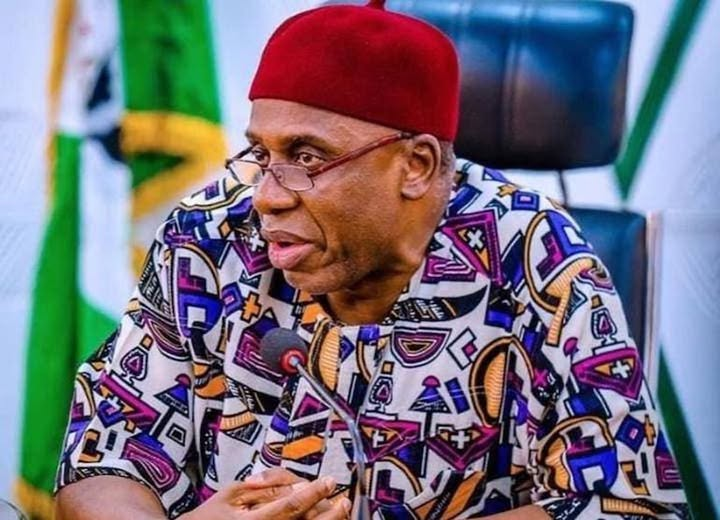
Former Minister of Transportation Rotimi Amaechi has publicly rejected any attempt to impose a consensus presidential candidate on the African Democratic Congress, insisting that the party must conduct a transparent primary if it wants to preserve credibility and demonstrate internal democracy ahead of Nigeria’s 2027 presidential election. Amaechi made the remarks during a Friday appearance on Channels Television’s Sunrise Daily, where he said he would support former Vice-President Atiku Abubakar if Atiku won fairly, but not through backroom arrangements. “It has to be through primaries,” Amaechi said, adding that he did not agree with those pushing for a consensus candidate and that party members should be allowed to vote for who they want.
His intervention lands in the middle of one of the most sensitive debates currently shaping the opposition’s strategy for 2027. The ADC has increasingly emerged as a platform around which several major anti-Tinubu figures are trying to rally, but the question of how to choose a standard-bearer has become a major fault line. Party spokesman Bolaji Abdullahi said in late March that the ADC was considering a consensus approach and described it as the preferred option because it would be cheaper and less logistically demanding than a nationwide direct primary. He also noted that indirect primaries were no longer available under the amended electoral framework, leaving parties with only direct primaries or consensus.
That legal context is crucial. According to reporting on the 2026 Electoral Act and the revised election timetable, opposition parties now face stricter nomination rules and tighter deadlines. PUNCH reported that the law limits parties to either direct primaries or consensus for candidate selection, and that INEC fixed the period for party primaries and dispute resolution from April 23 to May 30, 2026. Opposition figures have argued that these rules create significant financial and logistical pressure, especially for parties trying to manage multiple ambitious presidential aspirants at once. Within that environment, consensus has been attractive to some strategists not simply as a political preference, but as a practical survival tool.
Amaechi’s position directly challenges that calculation. His argument is that the ADC cannot claim to be rescuing Nigerian democracy while suppressing competition inside its own ranks. In the same interview, he said he would support Atiku if Atiku emerged through a proper primary, a remark that was both conciliatory and strategic. It signalled that his objection is not primarily to a rival aspirant, but to the process by which the nominee is chosen. He also rejected the growing emphasis on zoning, saying competence rather than geography should determine who leads the country. He stated plainly that he did not agree with north-south divisions and that the most qualified candidates should be allowed to govern.
That places him at a notable angle within the coalition. Atiku, by contrast, said this week that the ADC’s first option would be to work out a consensus candidate and that only if that failed would the party move to a primary election. He also said he would support whoever emerged. The difference in tone is important. Atiku did not reject primaries, but he clearly presented them as a fallback rather than the preferred route. Amaechi has now done the opposite, presenting a primary as the legitimate route and consensus as something he does not accept in principle.
The dispute matters because the ADC is not managing a normal internal contest. It is trying to contain competing ambitions from nationally known figures while also presenting itself as a credible umbrella for a fragmented opposition. PUNCH reported in March that major stakeholders expected the ADC to host aspirants including Atiku Abubakar, Peter Obi and Rotimi Amaechi, with some leaders already making moves toward consensus because direct primaries would be expensive and difficult to organise under the compressed timetable. The party’s own spokesman acknowledged that consensus would save significant money and logistics even while insisting that any eventual selection process must be fair and transparent.
That tension now sits at the core of the ADC’s 2027 problem. Consensus can project unity and prevent a bruising internal fight, but it can also breed resentment if aspirants and their supporters believe the outcome was engineered by a small elite. A primary, on the other hand, can confer legitimacy but may expose organisational weakness, deepen factional rivalry and consume money the opposition would rather save for the general election. Those are not abstract concerns. Reporting over the past month has shown that opposition parties broadly have been weighing consensus for exactly those reasons.
Amaechi’s comments also carry personal political weight. He is not speaking as an outsider offering procedural advice. He is a declared presidential hopeful on the ADC platform and a former presidential aspirant of the APC who finished second in that party’s 2022 primary. In the Friday interview, he cast himself as a viable national contender and argued that Nigerians are looking for someone with the capacity to solve insecurity and economic hardship. That framing suggests he is not merely defending a democratic principle; he is also making the case that he expects to compete seriously and does not want the race decided before the first ballot is cast.
Beyond the immediate issue of candidate selection, the disagreement reveals how unsettled the opposition still is. ThisDay noted this week that the opposition has momentum but still has substantial work to do, including resolving internal leadership issues and converting elite movement into voter appeal. The candidate-selection question is part of that wider challenge. If the ADC cannot settle the rules of the contest in a way that its top figures accept, it risks entering the campaign weakened by the very divisions it says it wants to cure in Nigerian politics.
What Amaechi has now done is force that argument into the open. He has told the ADC, its aspirants and the broader electorate that process will matter as much as personality. For a coalition trying to present itself as a democratic alternative to the ruling party, that may prove to be one of the most consequential fights of the 2027 build-up.
📩 Stone Reporters News | 🌍 stonereportersnews.com
✉️ info@stonereportersnews.com | 📘 Facebook: Stone Reporters News | 🐦 X (Twitter): @StoneReportNew | 📸 Instagram: @stonereportersnews
Add comment
Comments