

Published by Oravbiere Osayomore Promise.
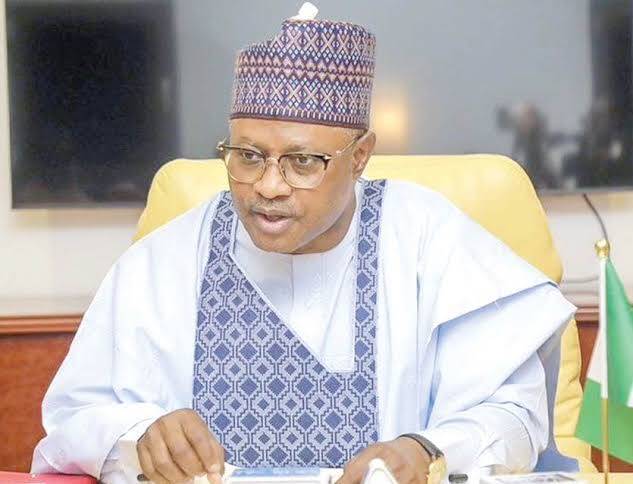
Kaduna State Governor, Senator Uba Sani, on Sunday declared that the June 20 governorship election in Ekiti State will serve as a “critical political barometer for the All Progressives Congress (APC)”, testing the party’s strength and acceptability ahead of the 2027 general elections. Sani, who is the National Chairman of the APC’s Ekiti State Governorship Election Campaign Council, made the remarks upon his arrival at the Ado-Ekiti Airport on Sunday evening, ahead of Monday’s official flag-off of the campaign for Governor Biodun Oyebanji’s re-election bid.
“The outcome of the Ekiti State governorship election will reflect the strength and acceptability of the ruling party’s leadership under President Bola Tinubu,” the Kaduna governor told journalists. His comments place the upcoming Ekiti poll within a broader national context, framing it as a crucial early test for the APC’s political machinery as the country edges closer to the 2027 presidential election.
Sani expressed confidence in the ruling party’s chances, citing what he described as Governor Oyebanji’s outstanding performance and people-oriented policies. “My dear brother, Governor Oyebanji has done extremely well, and for me, I’m just here to support what he has done. I have no doubt in my mind that the people of Ekiti will support him for continuity,” Sani said. He listed infrastructure, education, youth empowerment and human capital development as key areas where the incumbent governor has recorded visible progress, arguing that these achievements have translated into widespread acceptance among Ekiti people.
Governor Sani, who is also the National Chairman of the Ekiti APC Campaign Council, received a high-powered reception upon arrival, with a delegation led by Deputy Governor Monisade Afuye, Senate Leader Opeyemi Bamidele, members of the National Assembly from Ekiti State and other top government officials. He was later ushered into the Government House by Governor Oyebanji.
Sani’s assessment that the election is “just a formality” is grounded in the reality of the race: thirteen political parties are cleared to contest, but the two main opposition parties, the Peoples Democratic Party (PDP) and the Social Democratic Party (SDP), are notably absent from the final list of candidates released by the Independent National Electoral Commission (INEC). The PDP candidate, Dr. Wole Oluyede, was excluded after a protracted internal leadership crisis that split the party into two factions, one loyal to former Vice President Atiku Abubakar and another aligned with the Minister of the Federal Capital Territory, Nyesom Wike. Although the Court of Appeal in Akure affirmed Oluyede as the validly nominated PDP candidate, his name has still not been restored to INEC’s final list, leaving the party in a precarious position just weeks before the poll. The SDP’s candidate, David Bankole, was also excluded.
The APC leadership has already deployed significant resources to secure the state. Governor Sani’s chairmanship of the campaign council is itself a strategic move by the party’s national leadership, tapping into the Kaduna governor’s experience in grassroots mobilisation and his reputation as a bridge-builder between the north and south. The party is determined not to repeat the near-loss of 2018, when the PDP’s candidate, Prof. Kolapo Olusola, came within 4,000 votes of defeating the APC.
Sani’s framing of the Ekiti poll as a “barometer” for the ruling party also reflects the heightened stakes of the 2027 election cycle. Nationwide, the APC is consolidating its base, with state chapters such as the Yobe APC pledging 3.5 million votes for President Tinubu’s re-election. At the same time, the opposition is moving to present a unified front. Fourteen opposition parties including the Peoples Democratic Party (PDP), Labour Party (LP), New Nigeria Peoples Party (NNPP) and African Democratic Congress (ADC) have resolved to field a single presidential candidate under the “Ibadan Declaration”, which was adopted at a summit hosted by Oyo State Governor Seyi Makinde on Saturday. That resolution demands the resignation of INEC Chairman, Professor Joash Amupitan, whom the opposition has accused of bias in favour of the APC, and calls for an extension of the deadline for party primaries to the end of July 2026.
However, APC National Secretary, Senator Ajibola Basiru, has dismissed the opposition coalition as lacking structure and legitimacy. “The gathering in Ibadan was merely an assemblage of individuals rather than a formally constituted meeting of political parties,” Basiru said on Sunday.
Political analysts note that the outcome in Ekiti on June 20 will be more than a state election; it will be a measure of the public’s sentiment toward the APC’s reform agenda, which includes the removal of fuel subsidies, the unification of exchange rates, and a steep rise in the cost of living. A convincing victory for Governor Oyebanji would likely be interpreted by the APC as an endorsement of the president’s policies, while any significant inroads by the splintered opposition, despite the PDP’s legal exclusion, could signal voter dissatisfaction.
Governor Sani, for his part, remained steadfast in his projection. “The people of Ekiti will support him for continuity, which is very important. This election is just a formality,” he said.
📩 Stone Reporters News | 🌍 stonereportersnews.com
✉️ info@stonereportersnews.com | 📘 Facebook: Stone Reporters News | 🐦 X (Twitter): @StoneReportNew | 📸 Instagram: @stonereportersnews
Add comment
Comments