

Reported by: Ijeoma G | Edited by: Oravbiere Osayomore Promise.
Former Nigerian President Goodluck Jonathan has fuelled fresh speculation over a possible return to presidential politics after declaring that he would “consult widely” before deciding whether to contest the 2027 presidential election, following mounting calls from supporters and political groups urging him to re-enter the race.
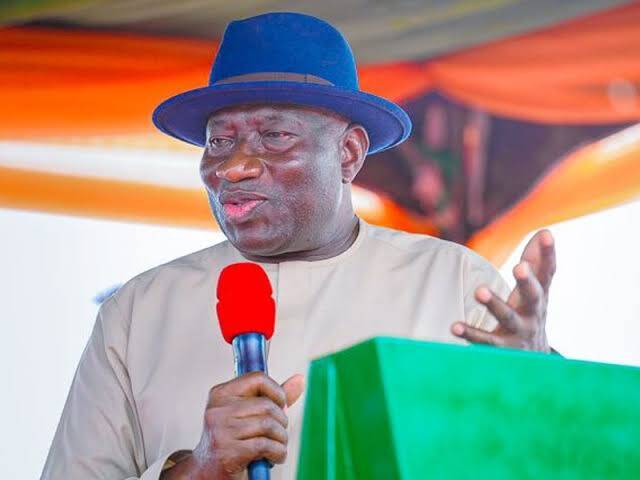
Jonathan made the remarks during a meeting with members of the Coalition for Jonathan 2027, a political support group that visited him in Abuja to formally appeal for his return to active politics ahead of the next general election. The former president’s comments, now dominating political discussions across Nigeria, are being interpreted as his strongest indication yet that he may consider a comeback more than a decade after leaving office.
Addressing the gathering, Jonathan acknowledged the pressure being mounted on him by supporters across the country but stressed that democratic participation remained a major concern, especially with millions of Nigerians still outside the electoral process due to lack of Permanent Voter Cards.
“You’re asking me to run for president while over 50 per cent of Nigerians still don’t have voter cards. I will consult widely before making a decision,” Jonathan said during the meeting.
The former president also urged Nigerian youths to become more politically involved and participate actively in the democratic process by registering to vote and obtaining their voter cards. He expressed concern about persistently low voter turnout despite Nigeria’s large population and growing youth demographic.
Jonathan’s latest comments come at a time when political alignments and coalition talks are already intensifying ahead of the 2027 election, even though the poll is still nearly two years away. Several opposition politicians and support groups have reportedly been making quiet consultations aimed at convincing the former president to contest against incumbent President Bola Ahmed Tinubu.
The Coalition for Jonathan 2027, led by Dr. Tom Ohikere, told the former president during the meeting that Nigeria needed what it described as a “unifying and stabilising leader” capable of addressing worsening economic hardship, insecurity, and political division. The group reportedly urged Jonathan to obtain a nomination form under any political platform of his choice and promised to mobilise nationwide support if he agreed to run.
Political observers say Jonathan’s response has immediately altered conversations within opposition circles, where efforts have been ongoing to build a broad alliance capable of challenging the ruling All Progressives Congress in 2027.
Recent political developments have already exposed cracks within opposition coalition efforts. A major alliance involving leading opposition figures reportedly suffered setbacks after disagreements emerged among key stakeholders over strategy, leadership structure, and political trust ahead of the next election cycle.
Analysts believe Jonathan’s possible entry into the race could significantly reshape Nigeria’s opposition landscape, especially because of his national recognition, diplomatic profile, and political experience.
Jonathan served as Nigeria’s president between 2010 and 2015 after succeeding late President Umaru Musa Yar'Adua following his death in office. Jonathan later won the 2011 presidential election before losing re-election in 2015 to former President Muhammadu Buhari.
His defeat in 2015 marked a historic moment in Nigerian democracy, as he became the first sitting Nigerian president to peacefully concede electoral defeat to an opposition candidate. The move earned him international praise and strengthened his reputation globally as a statesman committed to democratic stability.
Since leaving office, Jonathan has largely focused on international diplomacy, election observation missions, governance advocacy, and peacebuilding initiatives across Africa. However, rumours of a political comeback have repeatedly surfaced over the years, particularly during periods of economic difficulty and political dissatisfaction within Nigeria.
The debate surrounding Jonathan’s eligibility to contest again has also resurfaced following his latest remarks. While some legal experts argue that the Nigerian Constitution permits him to seek another term because he was elected president only once in 2011, others maintain that his earlier completion of Yar’Adua’s tenure could become a legal issue if he eventually declares interest.
So far, Jonathan has not formally declared his intention to contest, nor has he identified any political party under which he could run if he eventually joins the race.
Across social media and political circles, reactions to his latest statement have remained mixed. Supporters describe him as a moderate leader with experience in managing national diversity, while critics argue that Nigeria’s political system requires a completely new generation of leadership rather than a return of former officeholders.
Meanwhile, the Independent National Electoral Commission has continued efforts to expand voter registration ahead of future elections. Electoral officials have repeatedly urged eligible Nigerians to obtain their voter cards and participate fully in the democratic process.
Although 2027 remains distant, Jonathan’s remarks have once again placed him at the centre of Nigeria’s evolving political calculations, with many observers expecting further consultations and political realignments in the coming months as parties begin early preparations for what is already shaping up to be one of the country’s most closely watched elections in recent history.
📩 Stone Reporters News | 🌍 stonereportersnews.com
✉️ info@stonereportersnews.com | 📘 Facebook: Stone Reporters News | 🐦 X (Twitter): @StoneReportNew | 📸 Instagram: @stonereportersnew
Add comment
Comments