

Reported by: Oahimire Omone Precious | Edited by: Oravbiere Osayomore Promise.
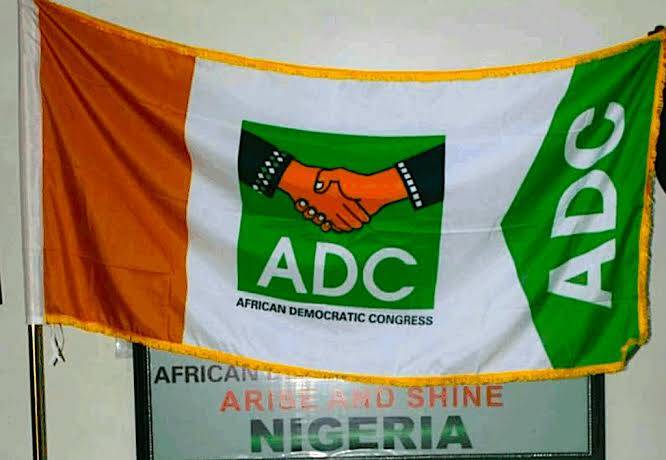
The protracted leadership crisis rocking the African Democratic Congress (ADC) took another dramatic turn on Friday, May 8, 2026, when the Federal High Court in Abuja adjourned indefinitely a suit challenging the party’s leadership under former Senate President David Mark. Justice Emeka Nwite ruled that the matter would be put on hold pending the outcome of a request by the plaintiff, Nafiu Bala Gombe, to transfer the case to another judge. The suit, marked FHC/ABJ/CS/1819/2025, has been at the centre of a fierce internal war within the ADC, which has seen the emergence of David Mark and former Osun State Governor Rauf Aregbesola as key figures in the party’s leadership structure.
At the resumed hearing, counsel for the plaintiff, Luka Musa Haruna, informed the court that the Supreme Court had on April 30, 2026, dismissed an interlocutory appeal filed by Mark and set aside the Court of Appeal’s order staying proceedings in the case. Haruna stated that the apex court found the appeal lacked merit and cleared the way for the Federal High Court to continue with the substantive suit. However, instead of asking the court to proceed, the plaintiff’s lawyer told Justice Nwite that he had written to the Chief Judge of the Federal High Court on May 4, 2026, seeking the reassignment of the case to another judge. Haruna urged the court to await the administrative decision of the Chief Judge before taking any further step in the matter.
The request was swiftly opposed by the defendants. Counsel for the first defendant, Realwan Okpanachi, argued that the defence had not been formally informed of the application, describing it as an ambush and a delay tactic. He noted that the appellate courts had earlier ordered an accelerated hearing of the case, and the plaintiff’s move was a calculated attempt to frustrate that directive. Counsel for the second defendant, Sulaiman Usman, also objected, characterising the plaintiff’s action as “forum shopping and judge shopping.” He urged the court to disregard the request and proceed with the hearing.
Justice Nwite, after listening to both sides, declined to adjourn the matter to a fixed date. Instead, he ruled that the court could not take any action on the Chief Judge’s letter without hearing all parties, as doing so would breach the principles of fair hearing. The judge said the matter would await the Supreme Court judgment documents and any directive from the Chief Judge regarding the request for transfer. Consequently, the case was adjourned sine die, meaning indefinitely.
The indefinite adjournment is the latest twist in a leadership crisis that has paralysed the ADC and forced many of its prominent figures, including Peter Obi and Rabiu Kwankwaso, to defect to the Nigeria Democratic Congress (NDC) earlier this week. The ADC had been positioned as a major opposition coalition platform, but internal legal battles over who legitimately controls the party have undermined its ability to present a unified front ahead of the 2027 general elections.
The emergence of former Senate President David Mark and former Osun State Governor Rauf Aregbesola into the ADC’s leadership structure had been seen by some as an effort to stabilise the party, but it also sparked resistance from other factions. Nafiu Bala Gombe, the plaintiff, has consistently argued that the current leadership is unconstitutional and that Mark and Aregbesola were imposed without proper adherence to the party’s constitution and the Electoral Act. The suit has been bogged down by a series of preliminary objections and interlocutory appeals, with both sides trading accusations of bad faith.
The Supreme Court’s dismissal of Mark’s appeal last week had raised hopes that the substantive case would finally be heard. However, the plaintiff’s decision to now seek a transfer of the judge has deepened the crisis and further delayed any resolution. Legal analysts note that the indefinite adjournment leaves the ADC in a state of legal limbo, with no clear timeline for when the leadership question will be settled. This uncertainty has already driven away key political actors, who have sought refuge in other platforms.
In his ruling, Justice Nwite emphasised that the court was not taking sides but was constrained by procedural requirements. He noted that the plaintiff’s communication to the Chief Judge was a matter of judicial administration, and the court could not simply ignore it. The judge also pointed out that the court had not received the Supreme Court judgment documents, which were necessary to properly understand the scope of the appeal. Until those documents were filed and the Chief Judge gave a directive on the transfer request, the case could not proceed.
Both the plaintiff and the defendants have indicated that they will await the next development, but the indefinite adjournment means that the ADC’s leadership dispute could stretch on for months, effectively crippling the party’s preparations for the 2027 elections. With the Independent National Electoral Commission (INEC) already watching the crisis, the party risks being deregistered if it fails to resolve its internal contradictions.
As of Friday evening, the Chief Judge of the Federal High Court had not issued any directive on the transfer request. Counsel for the plaintiff said he would follow up on the letter, while the defendants vowed to oppose any attempt to change the judge. The political future of the ADC hangs in the balance, and the indefinite adjournment offers no relief to a party that has seen its brightest stars abandon ship.
📩 Stone Reporters News | 🌍 stonereportersnews.com
✉️ info@stonereportersnews.com | 📘 Facebook: Stone Reporters News | 🐦 X (Twitter): @StoneReportNew | 📸 Instagram: @stonereportersnews
Add comment
Comments